Spider Mite Eggs Survive the First Spray, Plan the Second
One spray never ends a spider mite infestation, because nearly everything that kills the crawling stages leaves the eggs untouched. The fix is a schedule rather than a stronger bottle: repeat the application every five to seven days while the plant is sitting in warm, dry air, and keep going for two to three more rounds after the last mite you can find. Skip that tail, and the hatch that follows your final spray restarts the whole thing while you are still congratulating yourself.
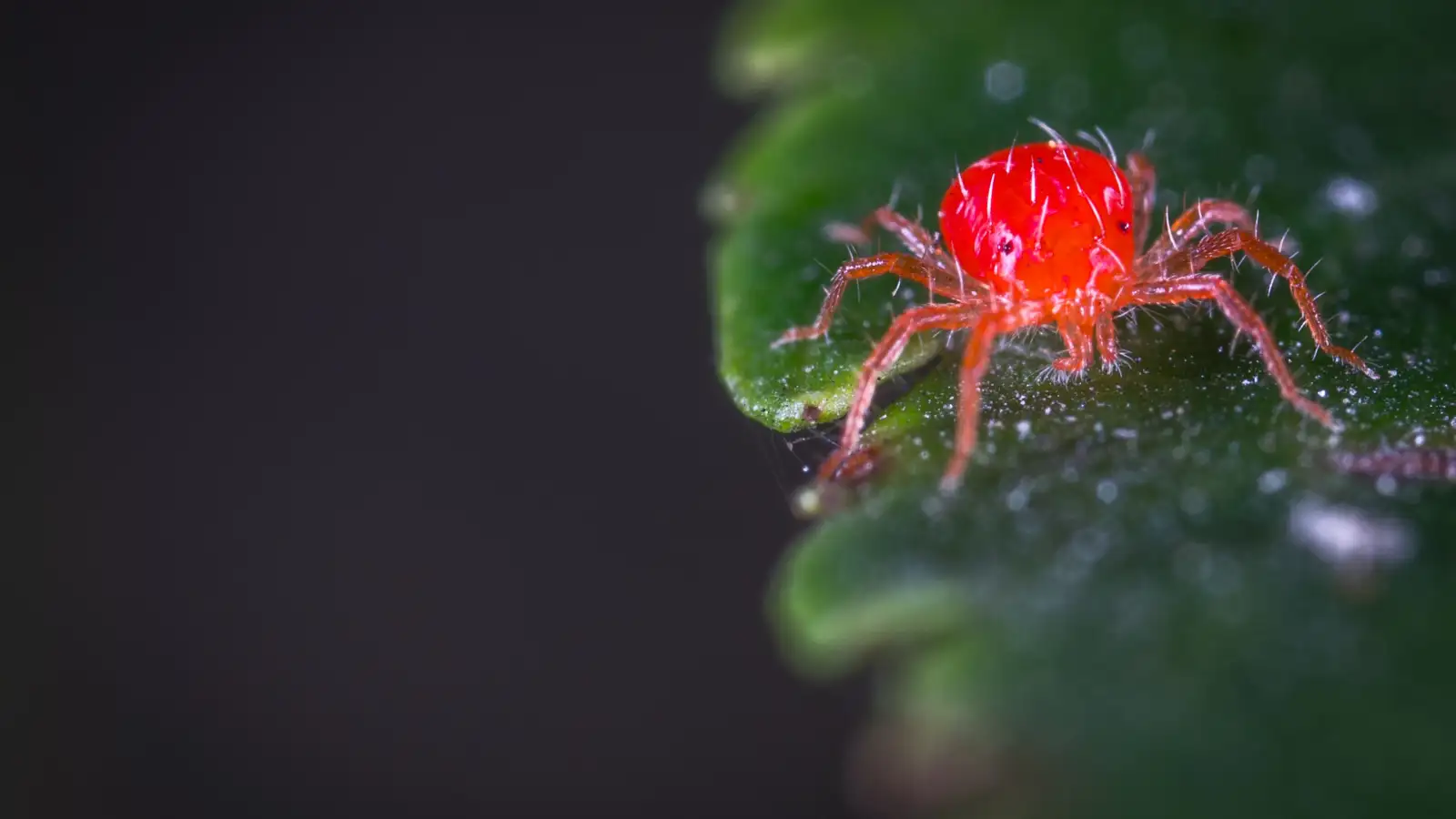
I keep a 10x hand lens in the drawer next to my snips, and it does most of its work on the windowsill above the heat register, where the air is dry enough to crack your lips by February. Set the pot under the window and tip it toward the light. There is the dusty grit along the leaf underside that will not wipe away, the faint webbing pulling the newest leaves together at the crown, a couple of specks that move when you breathe on them. Tap a leaf over a sheet of white paper and the specks start walking across it. That is the moment most of us reach for the bottle. It is also the moment the mistake gets made.
What you are actually spraying into
What is on the plant is not one pest. It is a queue. Eggs sit in fine webbing along the veins and tucked into the leaf axils, small translucent spheres that look like nothing much until you have the lens on them. Those hatch into six-legged larvae. The larvae molt into nymphs, the nymphs molt again, and everything from the second stage on has eight legs and looks like a slow-moving version of the adult. An adult that settled today can be laying eggs two days from now.
A contact spray that kills crawling mites hits the larvae, the nymphs, and the adults that are on the leaves the day you spray. It does essentially nothing to the eggs. That is not a product flaw, it is the shape of the animal's life cycle, and it means one application always leaves behind a surviving cohort.
So the arithmetic runs like this. You spray, the crawlers die, the plant looks dramatically better within about 48 hours, and every egg that was on that leaf when you sprayed is still on that leaf. Those eggs are on a clock. If you spray once and stop, you have killed the adults and left the next generation to hatch into a clean, predator-free plant with nothing standing in its way.
Temperature is the only dial that matters
The gap between sprays is not a preference, it is an estimate of how long the egg stage lasts, and temperature drives that harder than anything else you control.
In warm, dry air, the kind a heat vent or a July afternoon produces, eggs can hatch in as little as three days and the full egg-to-egg cycle can turn over in under a week. That is where the five-to-seven-day interval comes from. You are not trying to kill the eggs. You are trying to catch the larvae and nymphs while they are still small and soft, before the new adults get a chance to lay.
Drop the temperature into the 60s and the same cycle stretches out, sometimes past two weeks. A cool sunroom in winter is a different schedule. Spraying every five days in that room means you wash the same leaves three times before anything new has even come out of the egg. Cooler air slows the mites, so you can slow down with them.
Heating season is the worst of both worlds: warm air and indoor humidity low enough that your skin notices it. Mites do their fastest work hot and dry. When the furnace is running, run your interval like it is summer, even though it is January, and do not let the calendar talk you out of it.
The check that keeps the schedule honest
Before each repeat application, put the lens on the plant. Not the top of the leaf. Turn it over. Look at the crown, the leaf axils where the petiole meets the stem, the seam where two leaves are packed tight against each other, and the underside of the pot rim. Small numbers of mites sit in exactly those places, and that is why a plant that looks spotless after round one relapses two weeks later.
Here is what I am looking for, in order. Eggs first, because if eggs are still hatching the schedule is working and I keep going. Then live crawlers. If I find adults and no fresh eggs, I am near the end. If I find new webbing and a lot of movement, I am nowhere near the end, and the first thing I question is my interval rather than my spray.
The tap test works the same way each time: same white sheet, same leaf, same rough time of day. Consistency is what turns it from a feeling into a check you can actually act on.
How many rounds after the last sighting
Two to three more applications after the last mite you can find, on the same interval.
That number is not arbitrary. It is the tail of the queue. On the day you spot your last adult, there is almost certainly an egg cohort you cannot see, and a short way behind it another one. By the next round the first cohort is larvae, and if you stop there it molts, matures, lays, and you are back at the windowsill a month later wondering why a spray that obviously worked stopped working. The extra rounds are what catch the generation that hatches after the visible adults are gone.
If conditions are cool and the cycle is slow, stretch the interval and stretch the tail with it. If the plant lives outdoors and the weather turns, watch for rain or overhead watering washing the residue off before it has done its job, and re-set the clock when that happens.
The bill for repeating
Repetition has a cost, and it is worth naming. Repeated sprays and repeated wet-dry cycles stress the plant. Succulents with heavy farina or fine hairs on the leaves are the ones that show it first, as burn marks or a dull, blotchy finish. Keep the plant out of direct sun for a day or two after each application and you will avoid most of that.
There is also selection pressure. Hitting the same population with the same active ingredient round after round is how resistance builds in a species that already reproduces this fast. When I rotate, I read the label panel to see which actives are in the bottle rather than trusting the front of it.
Which brings up the one thing that changes the math: some products are labeled for egg stages, either as ovicides or as miticides that list eggs on the label. If the label says it handles eggs, you may need fewer rounds, and the interval printed on that label is the one to follow. But "kills mites" on the front tells you nothing about which stages, and I have learned to read the fine print before planning anything.
Outdoors, it is worth remembering that the mites have predators, and a broad spray takes them out along with the pest. If the plant lives outside, blasting the undersides with a hose does an honest share of the work and costs you nothing in beneficials.
What the schedule looks like end to end
Round one on the day you confirm them. Then rounds every five to seven days in warm air, longer if the room is cool, with the lens check before each one. Then two to three more rounds past the last mite you can find. Then wait two weeks and look again with the lens before you decide you are finished.
That is the whole plan. The plant looks better after the first spray. It looks better after the first spray every single time, and that is exactly why this keeps going wrong for people.
Educational content only: check with a qualified horticulturist, licensed pesticide applicator, or your local extension office before acting on anything specific.
