What a Grower Checks Before Spraying Anything on Succulents
Before a spray bottle comes out, the leaf surface gets read first — whether that plant carries a powdery farina coating, a thin waxy bloom, or a plain matte leaf decides the method more than the pest does — and then the light and heat at the moment of application, and then a single test leaf left alone for 24 to 48 hours. A farina-coated succulent dosed with insecticidal soap or neem oil loses that coating permanently; a plain-leafed succulent on the same bench takes the same spray without a mark. That is why the surface check comes before the pest check, even though the pest is the thing you noticed.
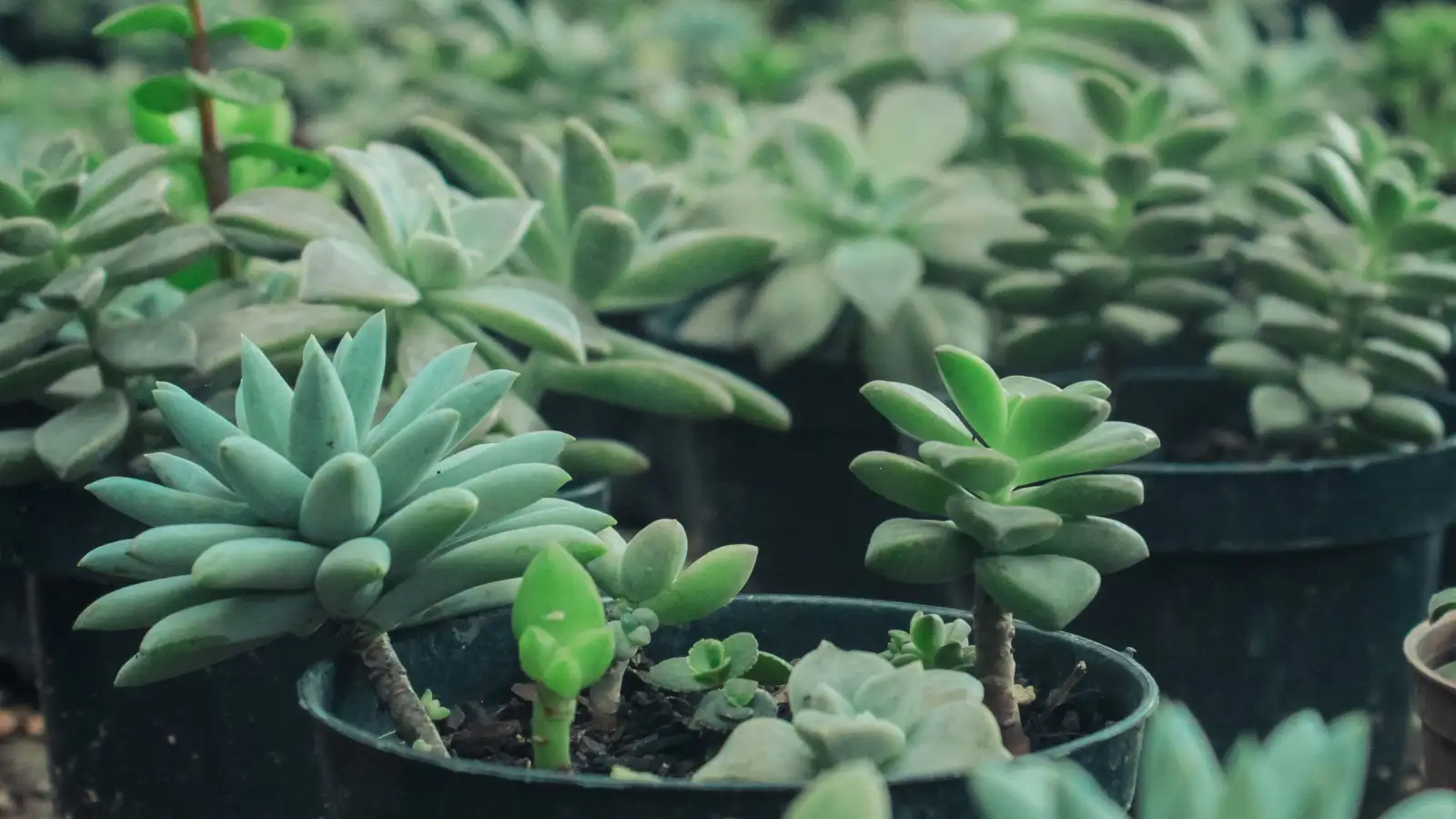
It's about a quarter to seven. The west window over the sink has gone from white to orange, and the sun is off the plants, which is the only reason I'm doing this now instead of at noon. I've got a four-inch pot tipped nearly on its side, one hand under the rim so it doesn't slide into the basin, the other holding a cotton swab. The plant is a Pachyphytum with a bloom so thick it looks like somebody dusted it with confectioners' sugar. Under a lower leaf, jammed right up against the stem, there's a small white cluster. Mealybugs. Maybe a dozen.
My thumb is hovering over it, and that hover is the whole thing.
Because what my hands want to do is grab the soap bottle, wet the entire plant, and come back in the morning. If I did that, I'd come back to a plant with a bald, shiny streak down one side where the powder used to be — and the mealybugs would be dead, and the plant would look worse, and it would look that way forever. New leaves would come out frosted. That one side wouldn't.
Read the surface before you read the label
The first thing I do — before I decide water, alcohol, soap, or neem — is rub a thumb across one inconspicuous leaf near the bottom of the plant. Not a leaf I care about. The lowest, oldest, half-hidden one.
If my thumb comes away with a clean shiny stripe and a faint ghost of powder on the skin, that plant is a dry-handling plant from that day forward. Whatever I use has to go on with a swab, a cloth, or a pinpoint stream. Nothing broadcast.
If the leaf just looks matte and slightly gray-green but nothing wipes off, that's a thin natural cuticle, not farina. Sprays are fine there, with care.
If the leaf is glossy and firm — jade, most kalanchoe, the thick leathery aloes — you can wipe it with a damp cloth and not think twice. Those leaves have a cuticle built like a raincoat.
And there's a fourth surface I check, because it bites people: fuzzy leaves. The ones with fine hairs, or a felted coat. Soap and oil sit on hair instead of running off, and they sit there wet. On those I go with the swab, too.
What farina actually is, and why losing it matters
Farina is a layer of epicuticular wax the plant builds on its own leaf surface — a real structure, not dust, not residue from your water. It sheds water, it cuts glare, and it is not something the plant can put back onto a leaf that already exists. Whether it's there mostly for the plant's benefit or mostly a byproduct of how the plant handles sun is a question I don't need answered. What I know from watching it is simple: new growth emerges frosted, old growth stays bald. The bald patch doesn't fill in.
So on a farina plant, the treatment decision has a cost column the pest never shows you. Killing a dozen mealybugs is cheap. Stripping a patch of wax off a plant you've grown for years is not.
Light and heat, checked at the moment, not at the start of the season
Droplets plus direct sun is a lens. That part everyone knows. What I check that people skip is the heat itself: a plant already pushing through a 95-degree afternoon, sprayed at noon, is a plant with thin margins. I work in the evening, after the sun is off the leaves, so the surface has the whole night to dry with no light on it.
I also check what's coming tomorrow. A plant sitting under a grow light at full intensity does not go back under that light wet. And a plant that came inside last week and hasn't adjusted is not a candidate for anything broadcast. Every spray is a stressor layered on top of whatever the plant is already handling.
The test leaf, and what I'm actually looking for
One leaf. One application. Twenty-four hours, and if I'm not in a hurry, forty-eight.
I put the product on a single leaf — same surface, same concentration I'd use on the whole plant — then look at three places afterward. The underside, because reactions show up there first. The base of the leaf, where it meets the stem, because that's where liquid pools. And the newest growth at the crown, because that tissue is the youngest and least defended.
A bad reaction isn't dramatic. It's a leaf that goes translucent in a patch, or develops a dark edge that wasn't there, or goes soft in a way that doesn't match the pest damage. Sometimes it's just a dull, water-soaked look that never dries off.
One leaf is a rounding error. The whole plant is not.
Matching the method to the surface
Water first, and lukewarm. A strong jet of lukewarm water knocks off small colonies, webbing, and honeydew without leaving any residue behind. Not cold water — a cold blast on a warm plant in a warm room is its own kind of shock. I tilt the pot so the water runs out the drain hole instead of into the crown, and I do it early in the day so everything dries before dark.
On farina plants, water is still the safest thing you own — but a hard jet is a physical force, and it will blast wax off. So the stream gets gentle, or I skip the jet and use a swab. Plain water is not the enemy of wax. Surfactants are.
Alcohol, dabbed, never poured. Seventy percent isopropyl alcohol on a cotton swab kills mealybugs and scale crawlers on contact. The swab is a pinpoint, which is exactly why it's my default on powdery plants — I can kill a bug without touching the wax around it. Two rules. Don't let it pool in the leaf axils or the crown; alcohol that sits is alcohol that damages tissue. And don't do it in direct sun. I've watched alcohol plus a hot windowsill leave a burn mark that looked nothing like the pest damage and took weeks to grow out of.
Insecticidal soap, and the coverage problem. Soap kills on contact and leaves nothing behind. No residual. Which means if you spray the top of the plant and call it done, you've made the plant wet and accomplished nothing else. Aphids sit on the undersides of leaves and deep in the growing point. That's where the spray has to go — undersides, crown, into the axils. Wherever the spray misses, the pest survives.
And this is the one that does the most wax damage. Soap is a surfactant; dissolving oils and waxes is what surfactants do. On a farina plant, soap is the wrong tool, no matter how good the label is.
Neem, and the patience problem. Neem-based products aren't a knockdown. They work as a repellent and a growth disruptor — insects stop feeding, stop molting properly, and the colony winds down over days instead of minutes. It also breaks down in light, which is why the label directions tell you to reapply, and why evening application is the right call. Those repeated applications aren't the label padding the schedule. They're the whole mechanism. Miss one and you're back where you started.
It's also an oil, so on a farina plant you're looking at wax loss plus oil sitting on tissue that doesn't shed it well. Same answer as soap: not there.
And the label is not a suggestion. The plants it lists, the dilution it gives, the re-entry interval. That interval is when you can put your hands back on the plant. Organic doesn't mean no re-entry time; neem has one. I've gotten lazy about this exactly once, and I don't anymore.
The check that happens before any of that
Sometimes the answer is that the treatment costs more than the pest.
A farina plant with a light mealybug infestation, in a collection where nothing else is showing — that's a swab, a quarantine, and a re-check in a week. Not a spray day. I'll take a balding leaf edge over a bald plant.
And if the crown itself is packed — the growing point, where you can't reach without flooding it — the head comes off. That sounds drastic and it usually isn't. Decapitating a succulent means the new growth comes out with fresh farina, on a clean stem, with nothing on it. The pests don't come along.
That's the check. Surface, then light, then one leaf. Everything after that is just which bottle.
Educational content only: check with a qualified horticulturist, licensed pesticide applicator, or your local extension office before acting on anything specific.

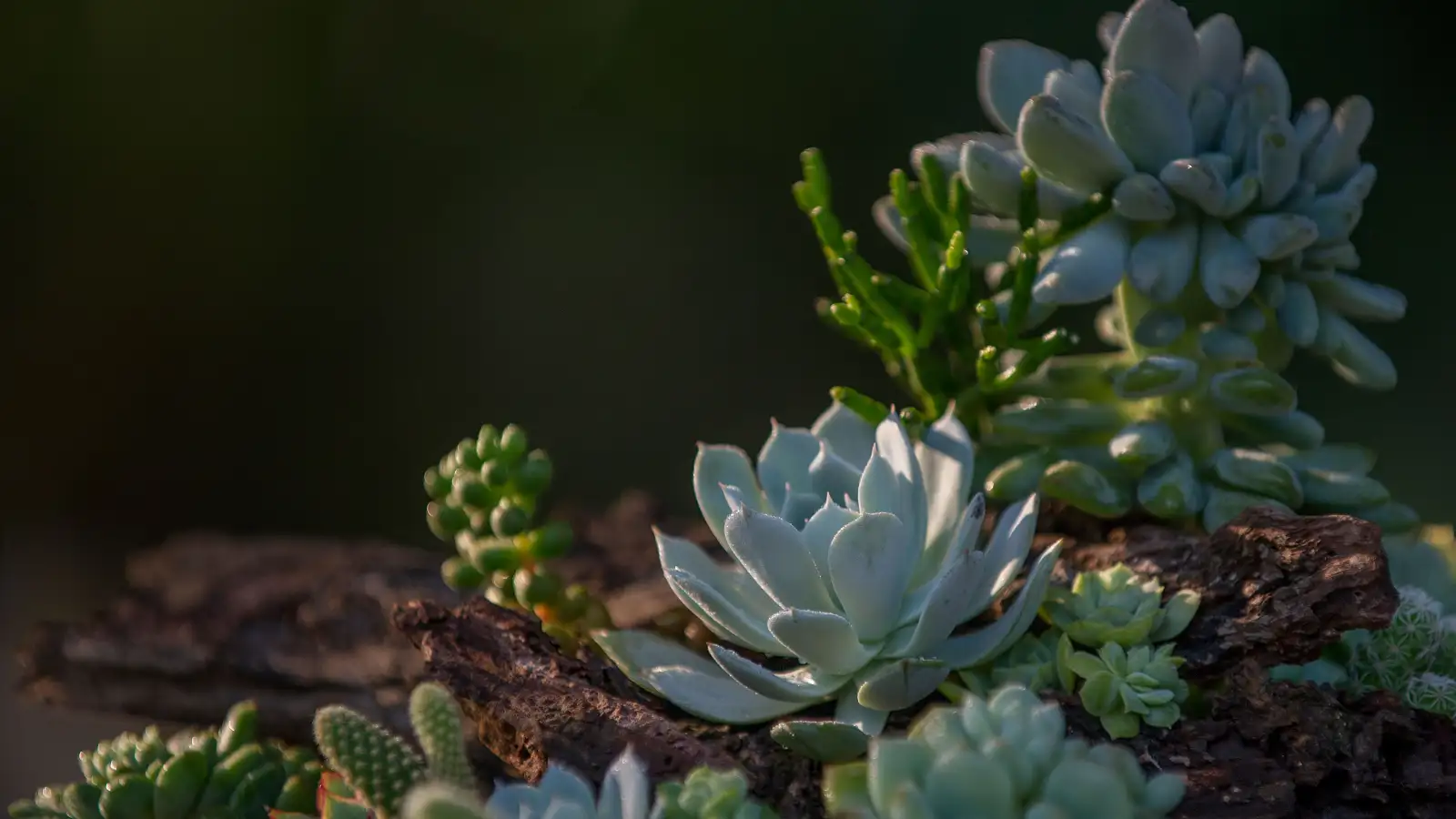
Aphids on Your Succulent? The Order That Saves the Plant
Aphids on a succulent aren't solved by a product. Confirm the colony, match removal to the leaf surface and light, then verify clean growth before it returns.
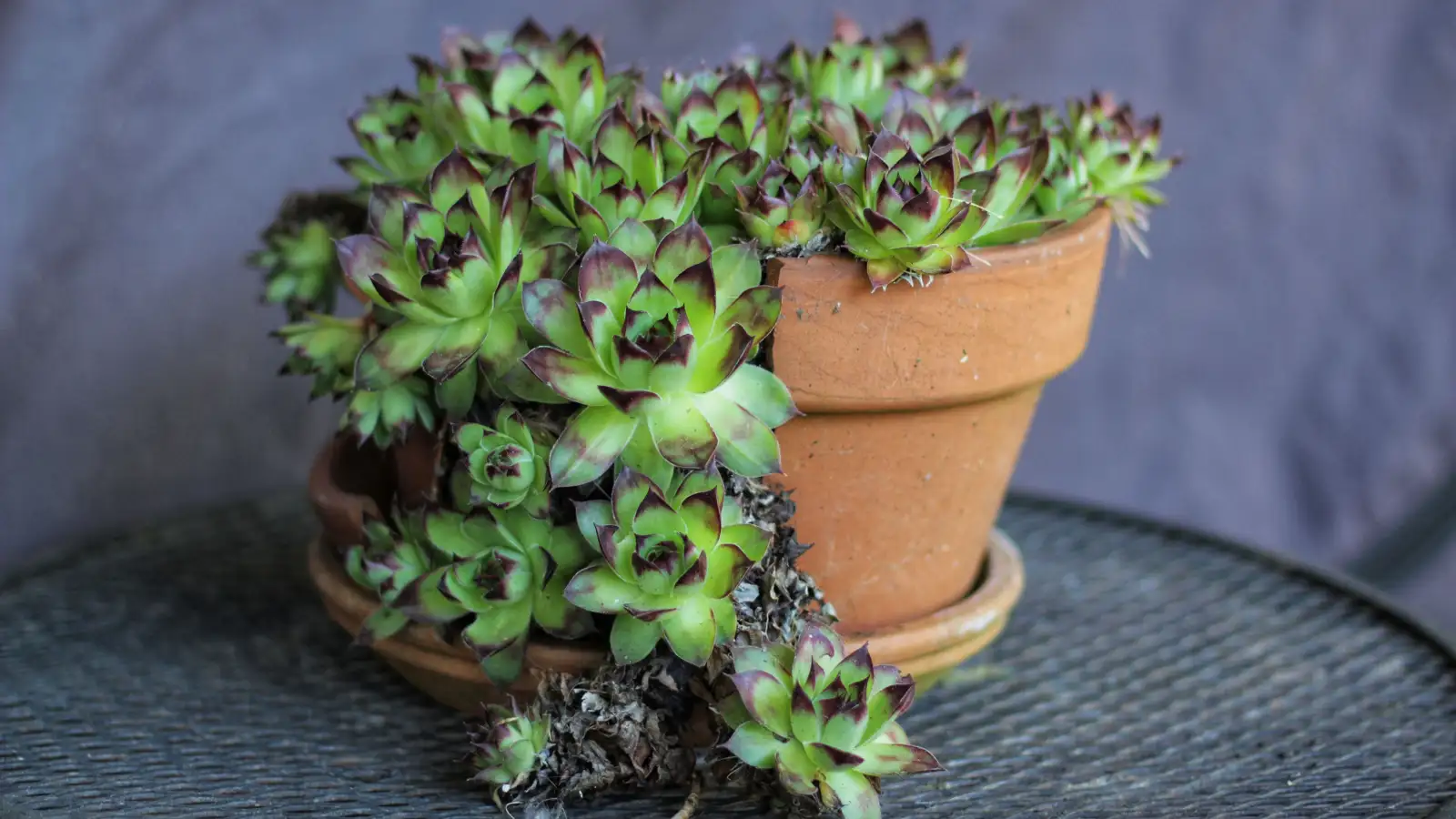
Why Are Your Succulent's Leaves Sticky and Turning Black?
Sticky leaves that turn black are honeydew plus sooty mold sitting on the surface, not rot. Wash it off, then find the insect still feeding above it.
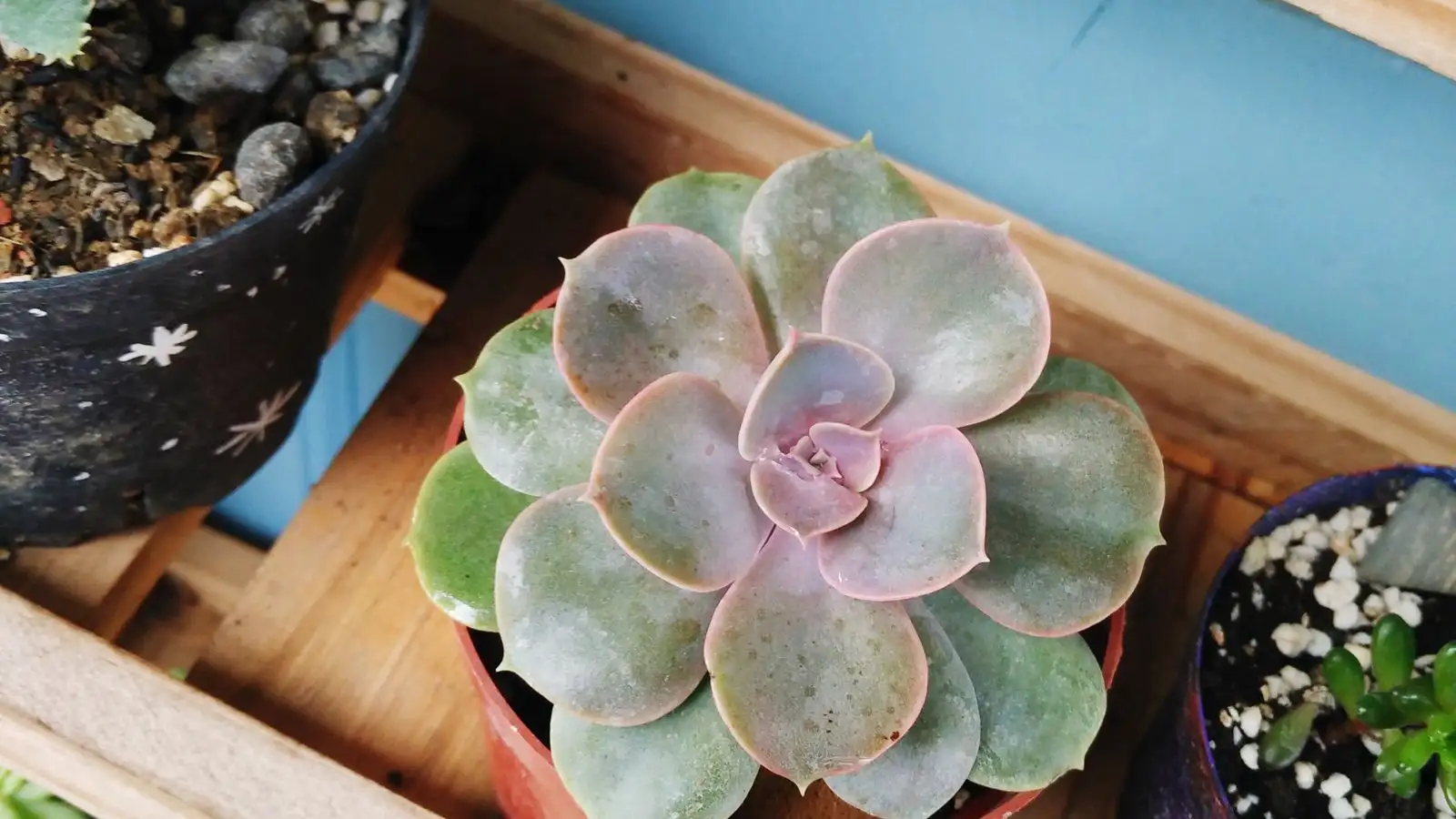
The First Two Weeks Decide If Aphids Spread to Your Shelf
A day-by-day quarantine routine for one new succulent: what to check, where aphids hide, and why tools and hands decide whether they reach your shelf.
Winged Aphids and Ants Keep Your Infestation Alive
A cleaned succulent gets recolonized by winged aphids, ant-carried survivors, and insects hidden in tight rosettes. Remove the restart source.
White Specks on Your Succulent Aren't Always Aphids
White specks on succulents aren't always aphids. Use position, movement, and residue to tell aphids from mealybugs, scale, thrips, and spider mites.