Winged Aphids and Ants Keep Your Infestation Alive
The colony comes back because something is still there to restart it, and it is almost never a spray that failed. Three things restart an aphid problem on a succulent: ants walking survivors back up the stem and carrying new ones onto the softest growth; winged aphids flying in from another plant two feet away on the same shelf; and one or two aphids tucked into the tight crown of a rosette that rode out the entire cleanup. Cut those three paths and the pot stays clean. Leave them and you will be standing over the same plant in a week and a half with the same bottle, wondering why nothing holds.
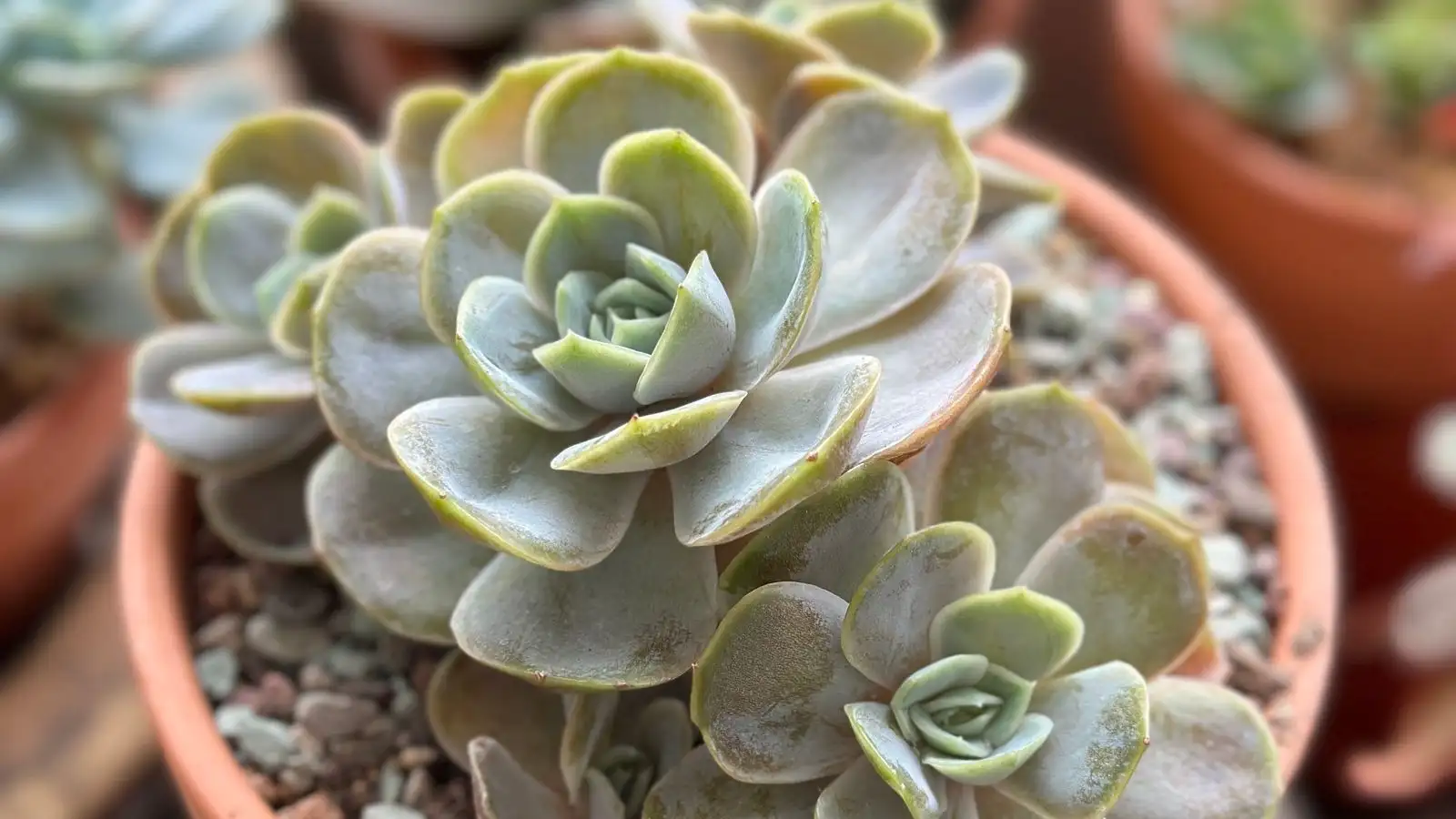
I keep my pots on the back steps, east-facing, and I was out there with the hose at maybe seven in the morning when this finally clicked for me. Coffee going cold on the step. Water sheeting off the leaves of an Echeveria and running down into the saucer.
What caught my eye was not the aphids. It was a thin dark line coming up the outside of the terracotta pot, over the rim, and down onto the newest leaves at the top of the rosette. Ants, moving in both directions, with the kind of purpose you only see when something is being farmed.
The leaves had a shine that was not water. Sticky under my thumb, and the pot rim was tacky where I touched it. I had sprayed that exact plant eleven days earlier. Everything visible was dead or gone. And here it was, dense again, on growth that had not even existed the first time.
The trail is the aphid problem, not a side issue
That morning I stopped treating the ants as a nuisance I would deal with after the aphids. They are the same job.
Ants move aphid colonies onto the tenderest growth, which is exactly where you see them: the tight new leaves at the center, and the flower buds when a stalk is pushing. Soft tissue is easier for the aphids to feed on, and it is easier for ants to defend. They also patrol predators off. When I killed the visible aphids and left the trail running, I was clearing a pasture and leaving the farmer to restock it.
So the first thing I do now is follow the line backward. Where does it start? In my case, a gap where the step meets the siding. Sometimes it is a crack in the slab, sometimes another pot they are using as a bridge. Then I follow it forward, and if it terminates on a plant, that plant is the problem plant even if it looks clean. Then I deal with the trail itself, and I read the label on anything I use before it goes near the plant, because a product labeled for one kind of plant is not automatically labeled for a potted ornamental, and I trust the label over anything I read online.
Where the survivors actually are
The reason a cleaned plant relights is usually that the cleanup only covered the outside of it. An aphid sitting between two leaf bases in a dense rosette is unreachable by a spray that runs off the top. From above, the plant looks perfect.
I check it differently now. Flashlight held low and to the side, so anything shiny or moving throws a shadow. Then I take a bamboo skewer and gently part the leaf bases at the crown, working around the center. Then the card test: hold a white index card under an outer leaf and tap the leaf from above. What falls onto the card tells you the truth. Cast skins look like tiny white flakes. Live aphids show up as specks that start walking.
Aphids give live birth and reproduce without mating for most of the season, so there is no egg bank you can wait out. One individual left in a crown is enough. Even in a slow spring, a single survivor can turn back into a visible, sticky colony in a week or two. That number is the whole argument for a second look.
The second pass, three to five days out
The first cleanup clears what you can see. The second one, three to five days later, catches what was hidden the first time and whatever was born in between. Same routine, same plant, same flashlight, same card. It takes four minutes and it is the difference between done and almost done.
This is also when I wash the plant rather than just de-bug it. Aphids leave honeydew, a sugar film that stays on the leaves and the rim after the insects are gone. Ants come back for the sugar. If the film is still there, the trail re-forms on its own, and the next colony arrives on schedule. So I run water over the leaves, wipe them with my fingers or a soft cloth, and wipe the pot rim and the saucer edge, which is where that film collects and where my thumb always finds it.
One thing I would not do: submerge a tight rosette to flush it out. Water sitting in the crown is its own problem, and it is a worse one than the aphids were. Repeated checks beat one aggressive dunk.
Winged ones make it a shelf problem
When a colony gets crowded, some aphids grow wings and fly. Not far. A couple of feet is a flight. That means my whole row of pots is one system, and the plant I have been avoiding because it looks rough is the most likely source.
So now I walk the shelf, not the plant. Anything crowded, anything pushing a flower stalk, anything I have not turned over in two weeks gets the card test. When I do find a source plant, it gets isolated to the far end of the step, away from the airflow between pots, until two consecutive checks come back clean.
Spring into early summer is when this matters most, because that is when the first wave hits new growth and buds. A flower stalk that has suddenly gone shiny and speckled is the earliest tell I get, usually before the leaves show anything.
What I do now
A short version of the routine, in the order I actually do it:
- Follow the ant trail to its start and its end before touching the plant.
- Clear the trail and keep a clean, sugar-free rim. Ant baits go along the trail, not on the plant, set out per the label.
- Wash the leaves, the crown area if it is open enough, the rim, and the saucer.
- Check the crown with a skewer and a card, not just the outer leaves.
- Come back in three to five days and do it again.
- Walk the rest of the shelf on the same trip, especially anything with buds.
Where this stops being a promise
I have not eliminated ants from my yard and I am not going to. If the nest is under the porch slab or inside a wall, I can manage the trail on the surface and keep the colony from settling in, but I cannot end the supply. What I can do is make my pots a poor place to land and a worse place to stay.
Dense rosettes will always be harder than open ones. That is not a failure of technique, it is geometry. The plants with tight crowns just get checked more often, and I accept that as the cost of keeping them.
The realistic goal is not a sterile porch. It is fewer restarts, and the ability to tell which of the three things caused the one you are looking at. When I find ants on the rim now, I do not reach for the spray first. I follow the line, because the line is telling me where the next colony is coming from.
Educational content only: check with a qualified horticulturist, licensed pesticide applicator, or your local extension office before acting on anything specific.

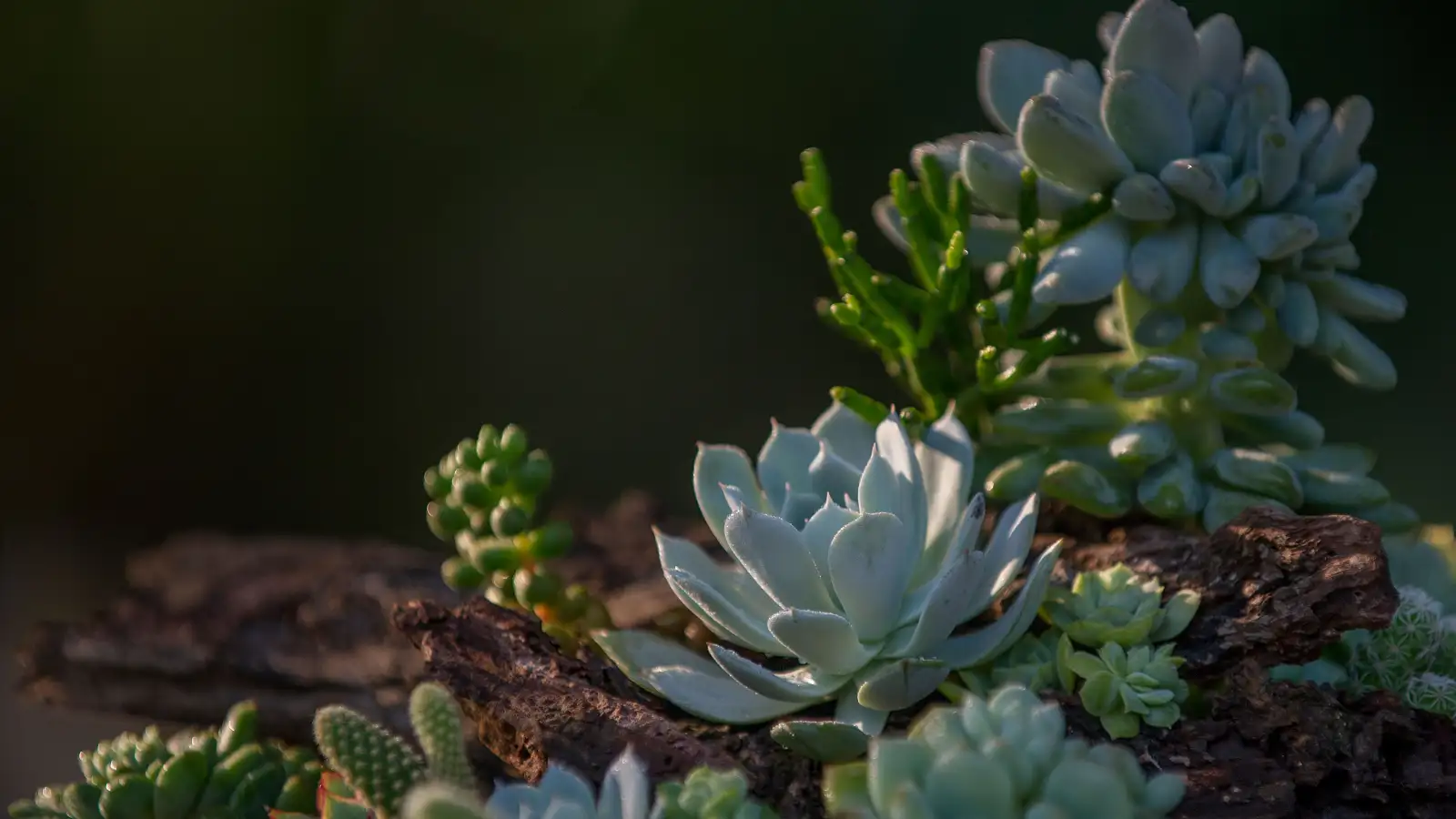
Aphids on Your Succulent? The Order That Saves the Plant
Aphids on a succulent aren't solved by a product. Confirm the colony, match removal to the leaf surface and light, then verify clean growth before it returns.
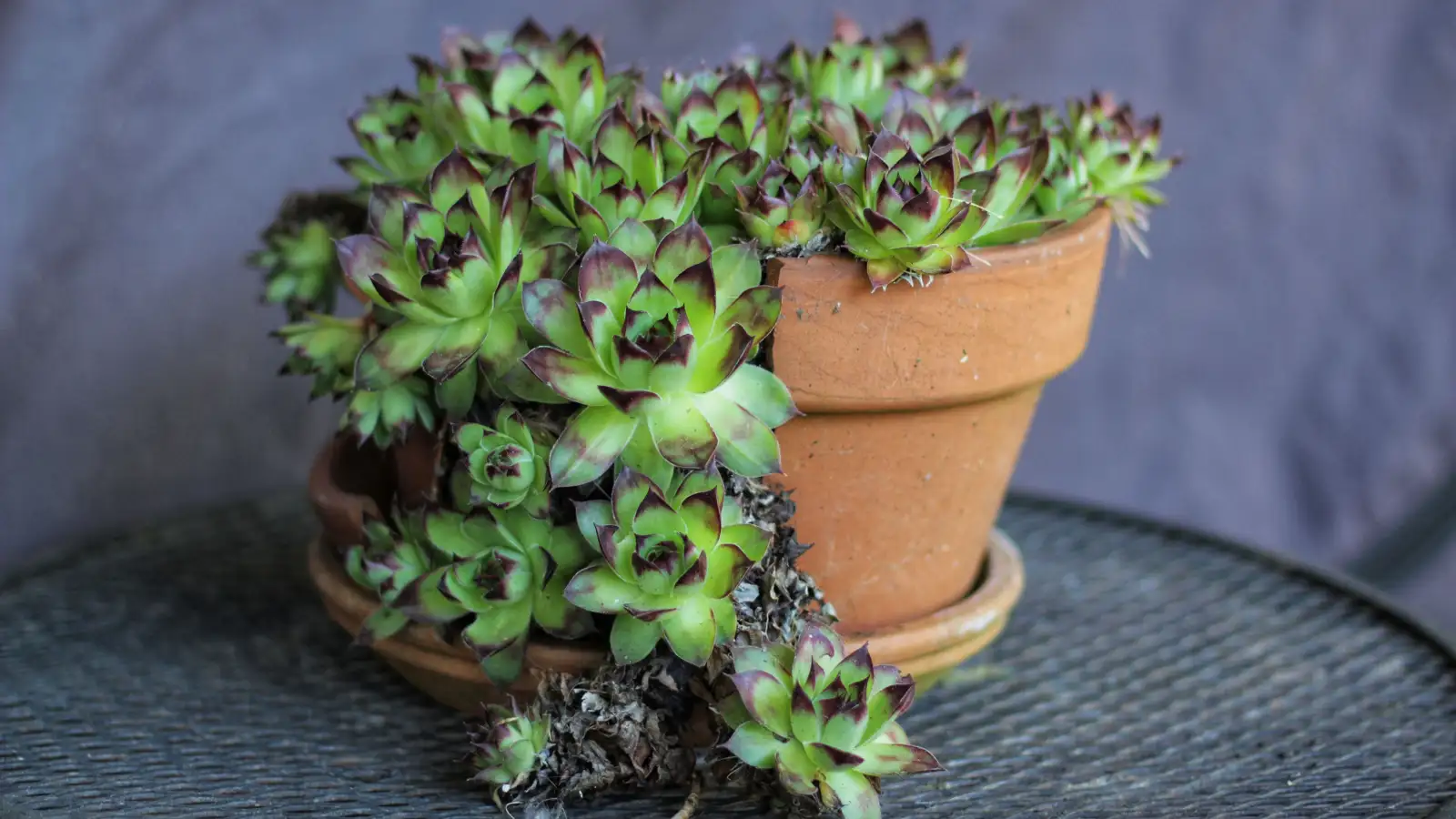
Why Are Your Succulent's Leaves Sticky and Turning Black?
Sticky leaves that turn black are honeydew plus sooty mold sitting on the surface, not rot. Wash it off, then find the insect still feeding above it.
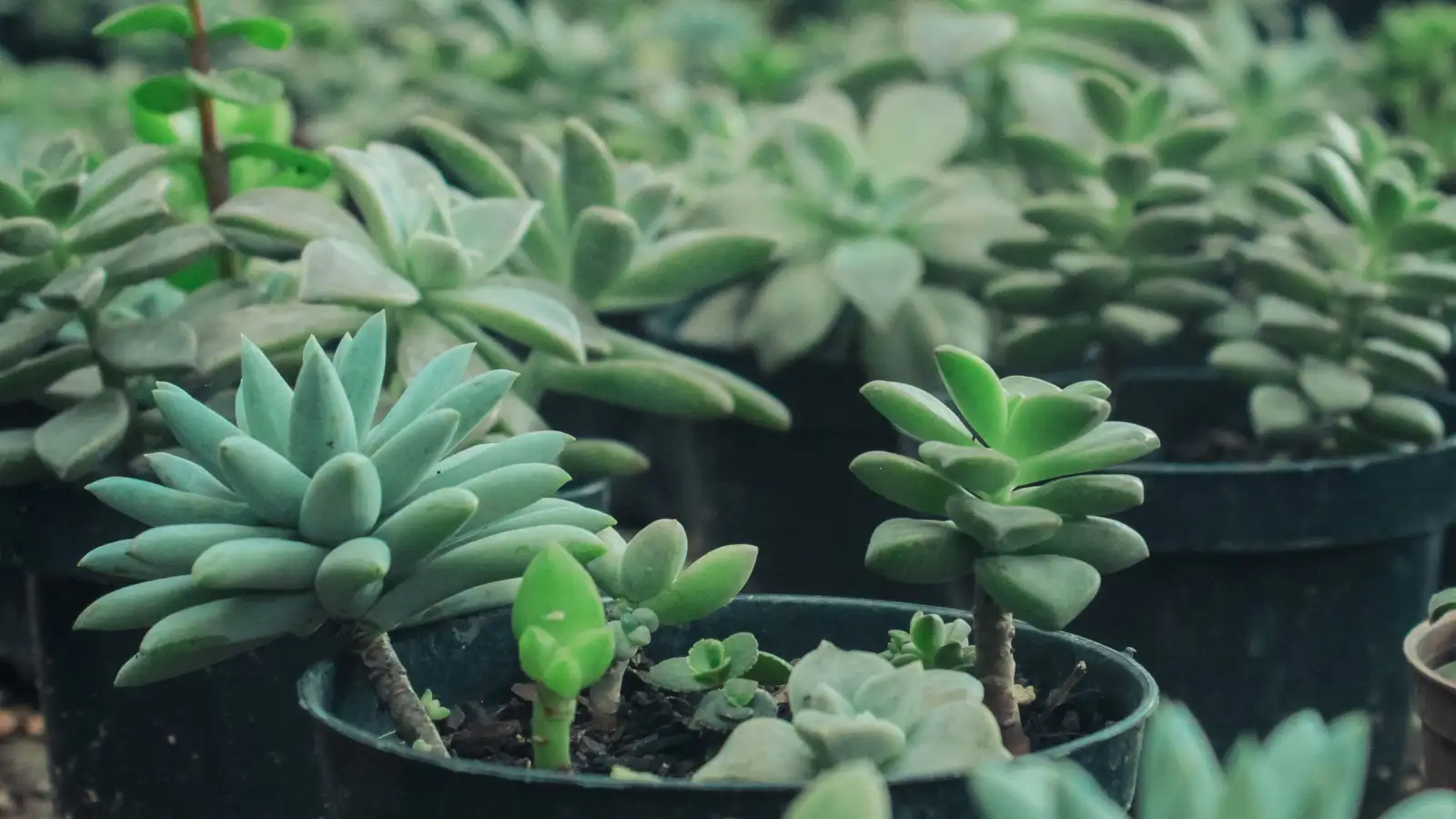
What a Grower Checks Before Spraying Anything on Succulents
Check the leaf surface before you spray a succulent. Farina and waxy bloom decide the method: water, alcohol swab, soap, or neem. Test one leaf first.
The First Two Weeks Decide If Aphids Spread to Your Shelf
A day-by-day quarantine routine for one new succulent: what to check, where aphids hide, and why tools and hands decide whether they reach your shelf.
White Specks on Your Succulent Aren't Always Aphids
White specks on succulents aren't always aphids. Use position, movement, and residue to tell aphids from mealybugs, scale, thrips, and spider mites.