White Specks on Your Succulent Aren't Always Aphids
White specks on a succulent are not automatically aphids. In most cases they are cast aphid skins, mealybug bodies, scale shells, thrips damage, or the stippled leaf texture left by spider mites, and the fastest way to tell them apart is to stop identifying by color and start identifying by position, response to touch, and residue. Check the growing point, the undersides of the leaves, and the top inch of soil with a hand lens before reaching for anything to spray.
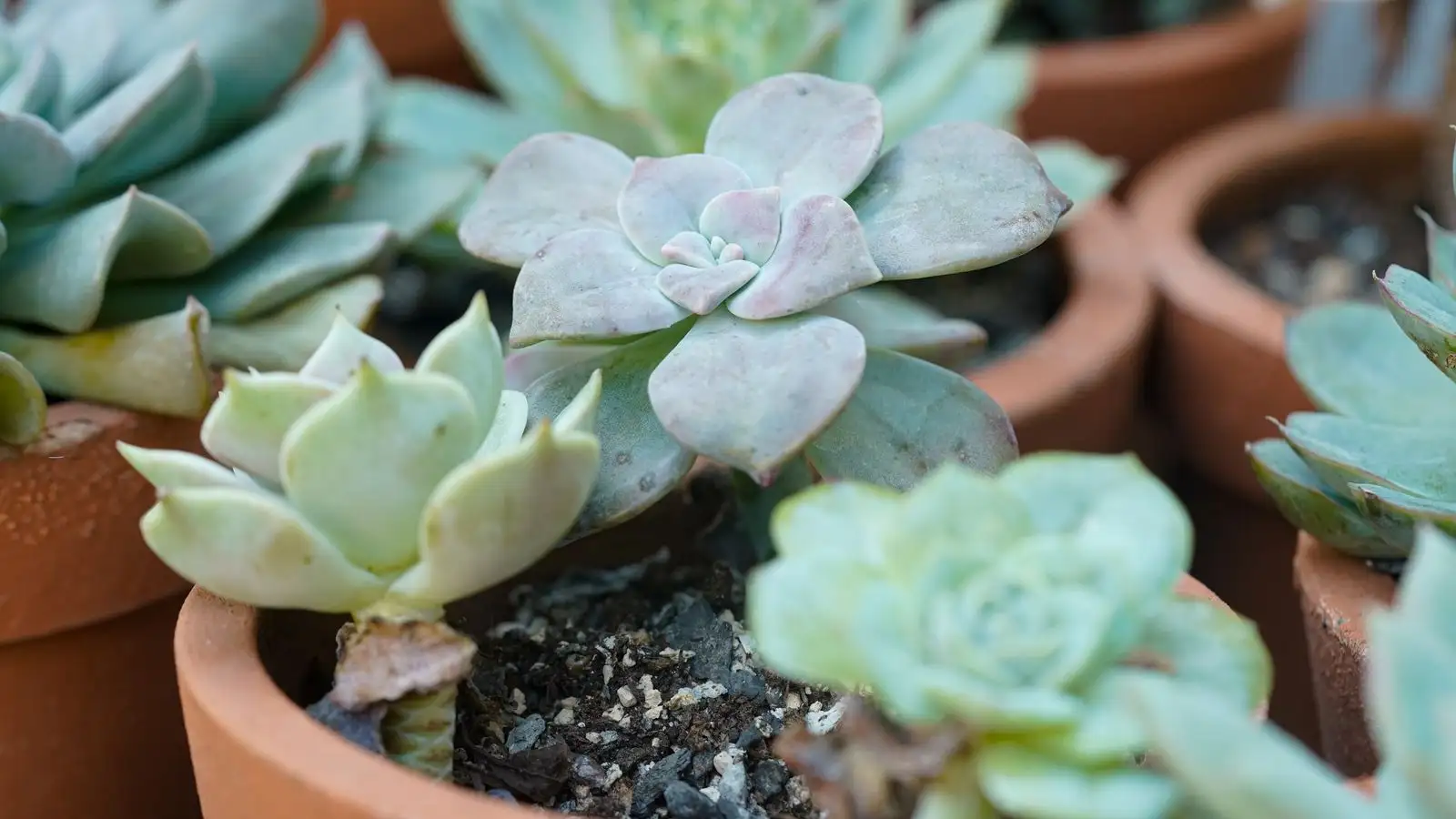
I learned that the expensive way, after I treated a jade for aphids for two weeks when there wasn't an aphid on it. What I had was a layer of molted skins that kept reappearing because I was killing the population that was making them, not the skins themselves. So now I don't ask "what is this white stuff." I ask three questions in a fixed order, and the answer falls out on its own.
Where the insects are sitting
The first question is location. Not the plant. The exact real estate on the plant.
Aphids cluster. They pick the newest, softest tissue, the growing point at the crown and the tender tips of a flower stalk, and they pile onto it in a tight group. If I tilt a rosette toward a window and see a knot of small bodies jammed into the newest leaves, that's aphids almost every time. They also line up along the stem of a flowering succulent like they're queuing for something.
Mealybugs do the opposite. They don't mob the tip. They tuck themselves into the angle where a leaf meets the stem, into the crevice between two leaves at the crown, and down around the base where the plant meets the soil. Individual white cottony blobs, not a crowd. If I have to pry a leaf back to see them, that's mealybugs.
Scale sits wherever it landed, and it stays there. Under a waxy or armored shell, motionless, often on the underside of a leaf or on a stem, looking less like an insect and more like a small tan or brown scab. In a bad case, the whole stem is paved with them. They don't cluster at the growing point and they don't hide in axils. They just don't move.
Thrips and spider mites are the two that break the pattern. Thrips tend to work the leaf surface and the flowers, and they're small and slender enough that I often see the damage before I see the insect. Spider mites are the opposite again: they don't present as a cluster of bodies at all. They present as a leaf that looks like someone dusted it with fine sand, plus a wisp of webbing down at the leaf base where the leaf meets the stem.
Whether it moves when you touch it
Second question, and this one is decisive more often than people expect. Touch it.
Scale doesn't move. I can run a toothpick along a stem and scale just sits there, a little bump that doesn't care. That single observation separates scale from aphids in about three seconds, and it's the cue that most people skip because they're staring at color instead of behavior.
Aphids move, but slowly, and mostly they just shift and resettle. They don't scatter. If I nudge a cluster and it stays clustered and rearranges itself, that's consistent with aphids. If I disturb a group and bodies drop off the plant or run, I want to look again at what I assumed I was seeing.
Mealybugs move even less, and they're usually wedged in so tightly that touching one mostly just smears the white wax. That smear is itself a clue. A white speck that smears into a waxy streak when I press it was a live mealybug or its egg mass. A white speck that flakes off cleanly and leaves nothing behind is usually a cast skin.
Spider mites are almost too small to see individually, which is why I stop trying. I hold a white sheet of paper under a leaf and tap the leaf. If tiny specks land on the paper and then start walking, that's spider mites. If the paper stays clean and the leaf still looks stippled, I go back and check my light and my lens before I conclude anything.
What's left behind on the leaf
Third question. The residue is the part that gets ignored, and it's often the tiebreaker.
Aphids leave honeydew: a sticky, glossy film on the leaf surface and sometimes on anything below the plant. Dust sticks to it. Ants show up for it. That stickiness is the signature, and it's what separates aphids from a lot of white-speck lookalikes.
Mealybugs also make honeydew, and in a heavy infestation the leaf and the pot rim get tacky, but usually the visible white blobs come first and the stickiness confirms it.
Scale makes honeydew too, but only some kinds, so the absence of stickiness doesn't rule scale out. The shell does that on its own.
Thrips are the odd one. They leave silvery, scratched-looking feeding scars, and small dark fecal specks scattered around those scars. Not sticky. That combination, silver scarring plus dark specks, points at thrips even before I spot an insect.
Spider mites leave the fine webbing at the leaf base and a stippled, speckled surface like the leaf lost its color in tiny dots. No honeydew, no shells, no cotton. Webbing and stipple.
And cast aphid skins leave nothing but themselves: small white flakes sitting on the leaf, lightweight, often concentrated around the growing point where the aphids were feeding. This is the one that fools the most people, because skins look like insects, they persist after the insects are gone, and if the infestation is active, new skins keep appearing. That's why I stopped treating skins. I look for the live insects underneath them. If there are none, and the plant is otherwise fine, I'm not spraying anything.
The shortcut that settles it fastest
If I only have time for one inspection, I go to the growing point with a hand lens, then the undersides of the newest leaves, then the top inch of soil, in that order. That's the highest-yield sweep, because it catches aphid clusters where they feed, mealybugs where they hide, scale where it's usually parked, and the first sign of mites or thrips damage before the population is large enough to see.
The lens is not optional for this. At arm's length, aphids, mealybugs, skins, and scale all look like white specks. At magnification, the shape, the legs, the waxy filaments, and whether the thing is attached or loose become obvious. I keep a cheap 10x loupe with my plant supplies for exactly this, and I use it before I use anything else.
One caveat worth saying out loud: none of these cues is a lab test. A heavy mealybug infestation and a heavy aphid infestation can both leave a sticky leaf and white debris. Mixed infestations happen. If I check all three cues and still can't call it, I isolate the plant, inspect again in a few days, and treat only what I can actually confirm. Guessing wastes product and time, and it's how a minor pest problem turns into a plant I have to repot and watch for a month.
So no, white specks on a succulent aren't always aphids. Where they are, whether they move, and what they leave behind will tell you what you have faster than any photo comparison will.
Educational content only: check with a qualified horticulturist, licensed pesticide applicator, or your local extension office before acting on anything specific.

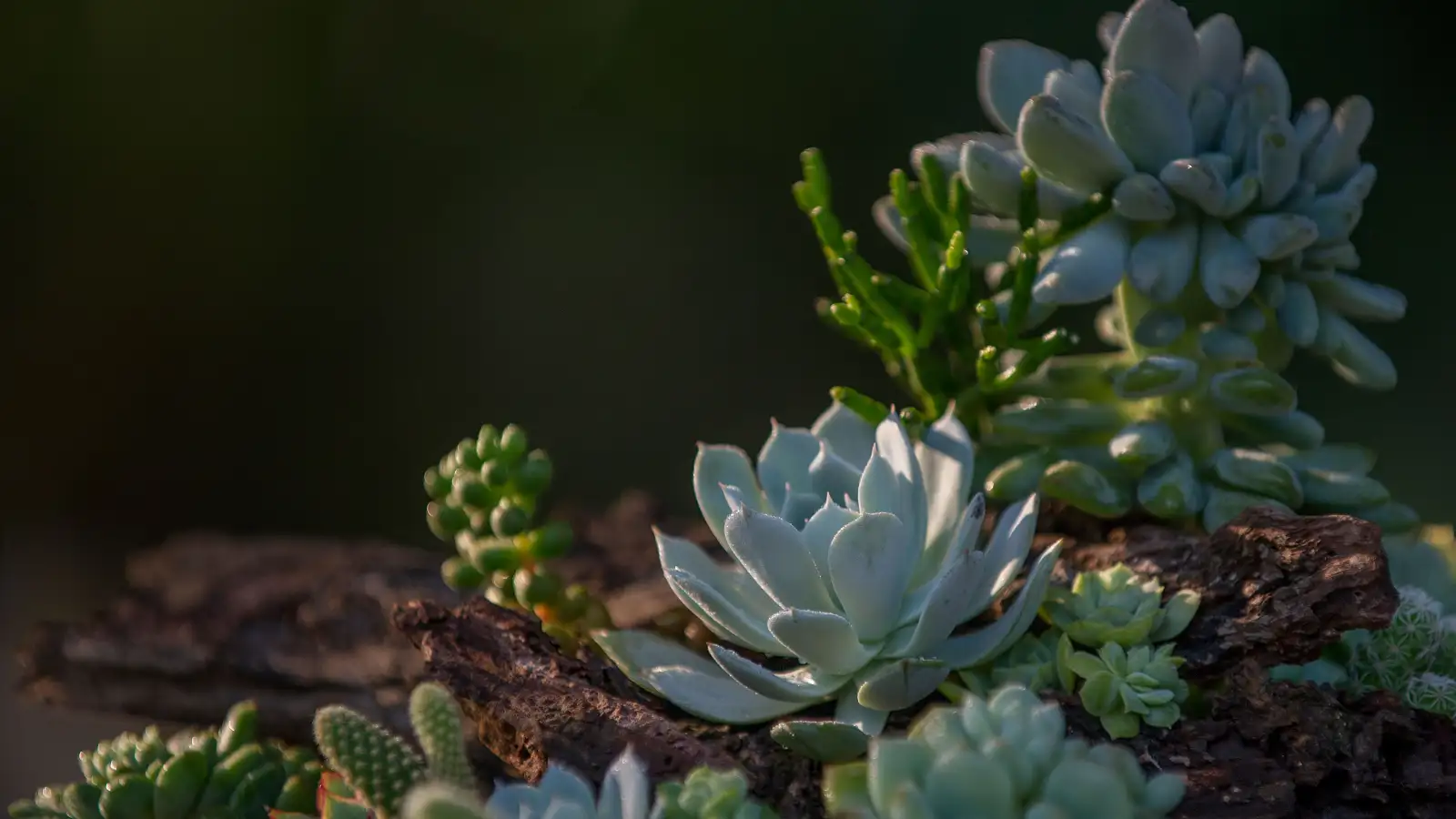
Aphids on Your Succulent? The Order That Saves the Plant
Aphids on a succulent aren't solved by a product. Confirm the colony, match removal to the leaf surface and light, then verify clean growth before it returns.
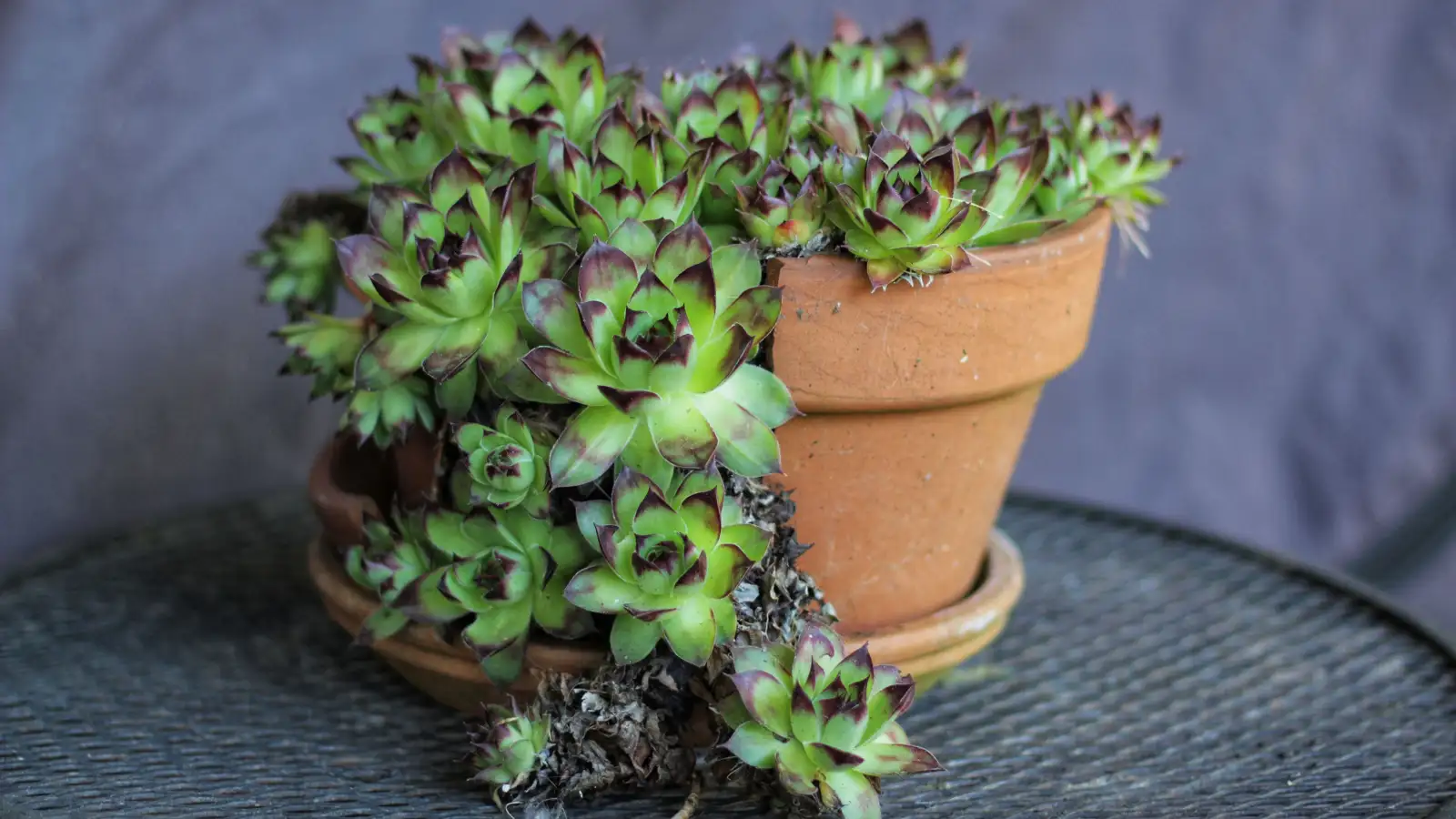
Why Are Your Succulent's Leaves Sticky and Turning Black?
Sticky leaves that turn black are honeydew plus sooty mold sitting on the surface, not rot. Wash it off, then find the insect still feeding above it.
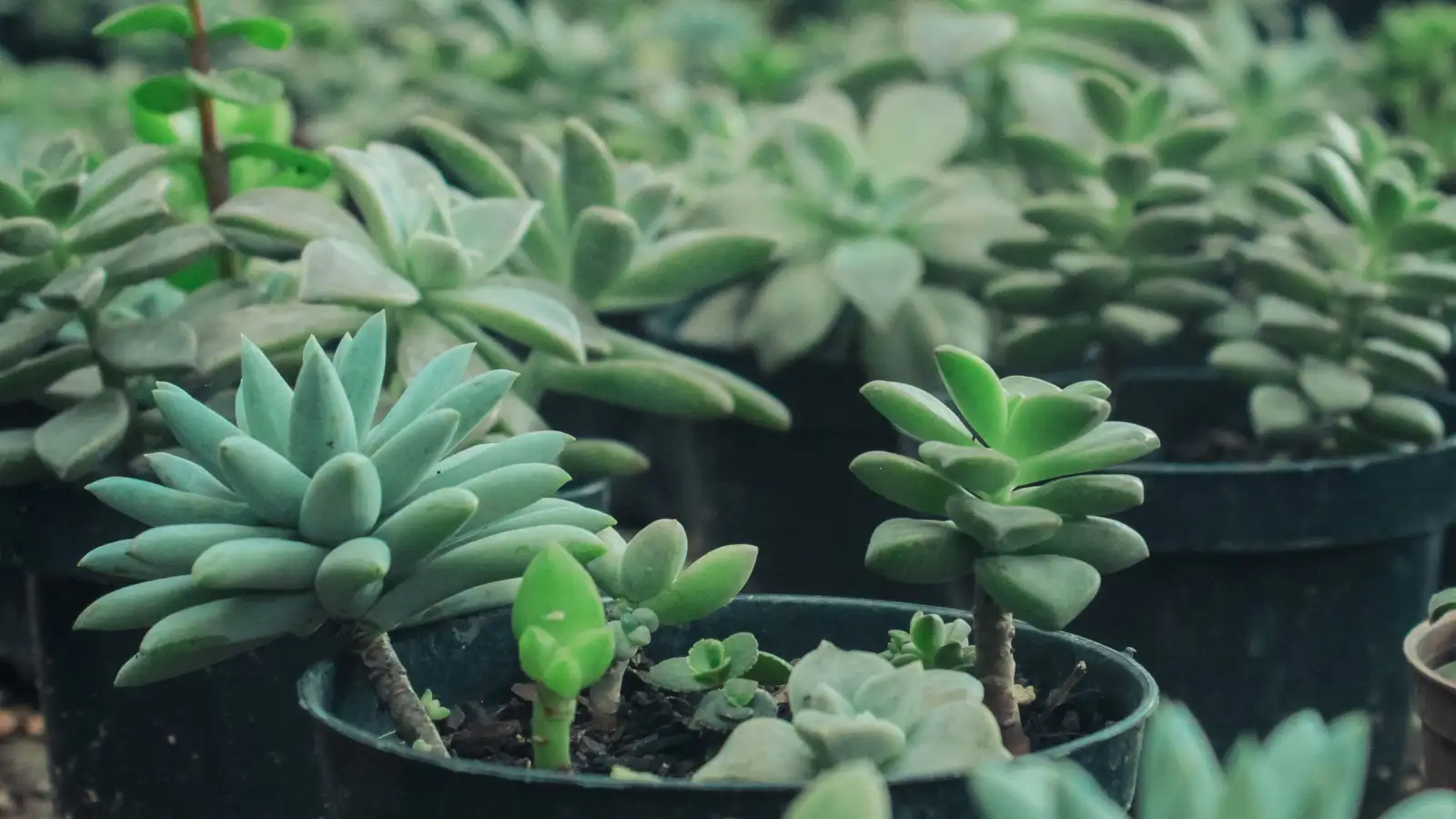
What a Grower Checks Before Spraying Anything on Succulents
Check the leaf surface before you spray a succulent. Farina and waxy bloom decide the method: water, alcohol swab, soap, or neem. Test one leaf first.
The First Two Weeks Decide If Aphids Spread to Your Shelf
A day-by-day quarantine routine for one new succulent: what to check, where aphids hide, and why tools and hands decide whether they reach your shelf.
Winged Aphids and Ants Keep Your Infestation Alive
A cleaned succulent gets recolonized by winged aphids, ant-carried survivors, and insects hidden in tight rosettes. Remove the restart source.