Beat powdery mildew on succulents without harsh chemicals
Powdery mildew on a succulent is handled with a sequence, not a product. Isolate the plant, cut off the worst leaves with sterile scissors, dab every visible patch of fuzz with 70% isopropyl alcohol on a cotton swab, then keep the plant in bright shade and rotate an insecticidal soap diluted to label rate (applied below 80°F) with neem oil applied at dusk. Repeat every 7 to 14 days until two full cycles pass with no new fuzz. The alcohol does the immediate killing, the soap and oil handle what you cannot see, and the 24 to 48 hours out of direct sun after each application is what keeps the cure from scarring the plant worse than the fungus did.
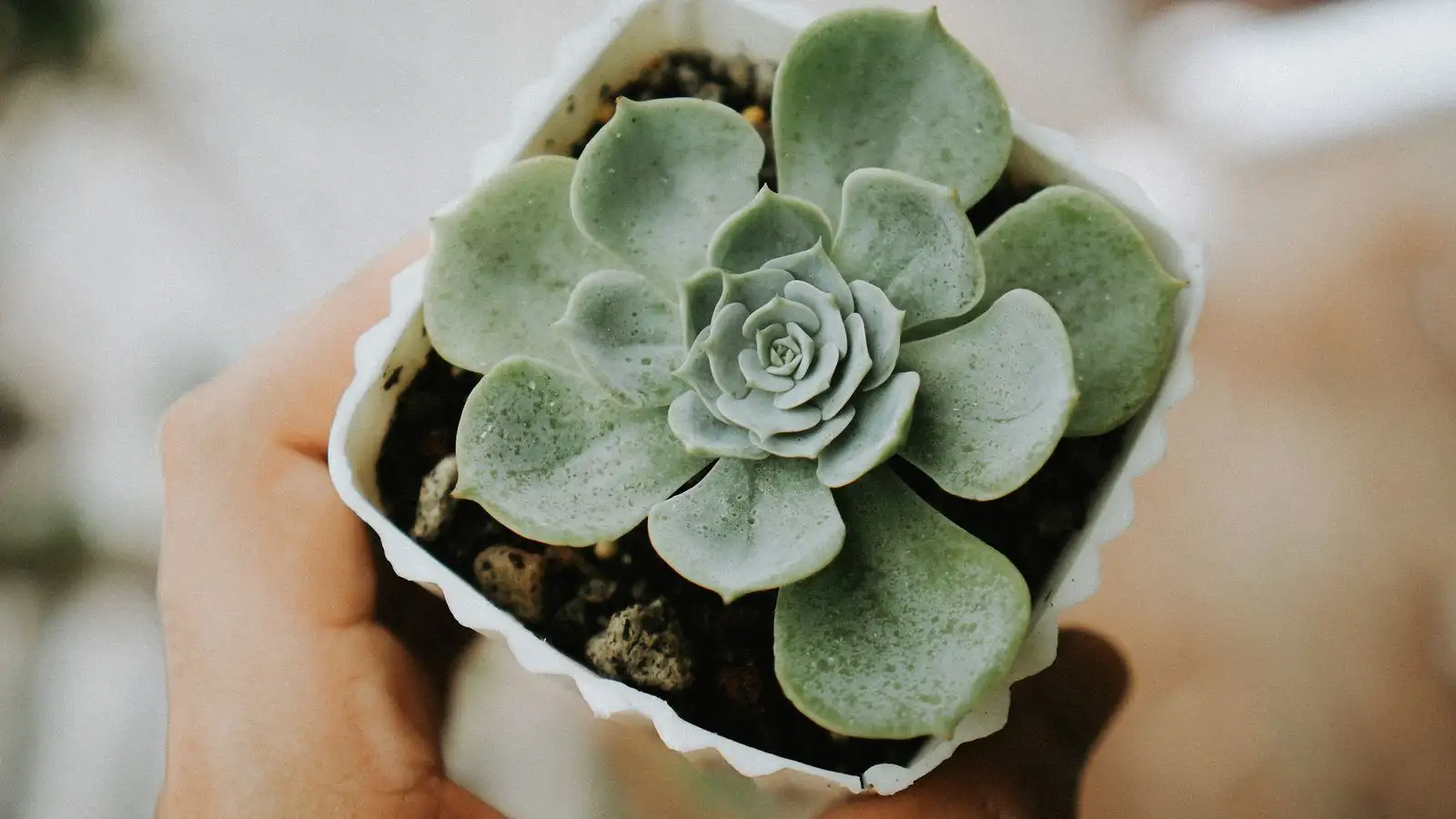
I learned the sun part the hard way. The first time I found fuzz on a Kalanchoe, I sprayed it with neem at nine in the morning on what turned out to be a cloudless day, set it back on the south sill, and went to work. By the time I got home, the treated leaves had pale, sunken blotches on them. Not rot, not mildew. Cooked tissue where the oil had sat under direct light. The fungus died. So did the top layer of those leaves.
Before anything else, be sure it is mildew
Succulents make farina, that pale matte bloom on the leaf surface, and it looks a lot like mildew if you have never compared the two side by side. I tell them apart with a thumbnail. Farina is even, it is part of the leaf, it does not wipe off in patches, and it usually covers the whole plant uniformly. Powdery mildew sits on top of the leaf. Drag a fingertip across it and you get a smudge, a greasy white streak, and fuzz on your skin. It is patchy, heavier on the shaded side, and once it has been there a while the leaf underneath starts to yellow or pucker.
Mealybugs are the other thing people mistake for it. Those are cottony and clumped, tucked into the leaf axils and stem joints, and if you touch one it either moves or it is a sticky wet mess. Powdery mildew does not move and it is not wet. That distinction matters because alcohol and soap will not do much for a mealybug population and you would be treating the wrong problem for weeks.
Isolate, then take the worst leaves off
The moment I am reasonably sure, the plant leaves the shelf. Not across the room. A different room, or at minimum the far end of the house. Spores move on air currents and on your hands, and I have seeded a healthy tray by handling one sick plant and then going down the line with the watering can. Two to four weeks of separation is my usual quarantine window.
Then the scissors. I keep a small pair for plant work and wipe the blades with the same 70% alcohol between plants. Any leaf that is more than about a third covered, or already yellow and puckered, comes off at the base and goes in the trash. Not the compost. A bag of infected leaves in a kitchen caddy is a spore nursery sitting next to your collection. Every leaf you remove is spore load you never have to fight on the plant.
The alcohol pass
I use 70%, not 91%. The 70% has enough water in it to stay on the surface long enough to do the work instead of flashing off. I pour a little into a small cup, dip a cotton swab, and dab rather than wipe. One swab per leaf at minimum, two on a heavily spotted one, so I am not dragging spores from a bad leaf onto a clean one. A swab lets me hit a patch the size of a dime without wetting a whole rosette, and I can work through a four-inch plant in about ten minutes.
Alcohol ruptures fungal cells on contact. That is all it does. It does not reach spores sitting in the leaf tissue or on the soil surface, so it is a spot treatment, not a cure. I also do it in the shade or in the evening, because alcohol plus direct sun is its own burn risk.
The tradeoff nobody mentions: alcohol strips farina. If you soak a swab and scrub a whole Echeveria, you get dull, water-spotted-looking leaves where the bloom used to be. It is cosmetic, and new leaves come in with their bloom intact, but it is why I dab instead of spray and why I leave clean leaves alone.
Soap and oil, and when each one is the right call
Insecticidal soap gets diluted exactly to the label. Over-concentrating is the most common way people burn a plant with it, and the second is temperature. Soap sprayed above 80°F can scorch, and I go by the thermometer, not the calendar. Where I live that makes soap a morning job in spring and fall and a bad idea in July. Spray to wet, tops and undersides, until it just starts to drip. Undersides matter. Soap is contact-only and does nothing once it dries, so a leaf you missed is a leaf you did not treat. I use a fine mist on succulents rather than a stream, because a soaking is hard on farina too.
Neem oil is what I reach for when I want some staying power. It leaves a light film that keeps working for a few days and discourages the next round of spores from settling. It is a mild fungicide and a reasonable preventive, which is not the same as a rescue treatment for a plant that is already half covered. Mix to the label rate, apply in the evening or on an overcast day, never in the morning before sun reaches the shelf. Oil plus strong light is exactly what scorched my Kalanchoe, and it took one bright afternoon.
Neem is also not invisible. It smells like peanuts and sulfur, it leaves a residue on the leaves and the pot rim, and it can be phytotoxic on some thinner-leaved succulents. Which is why I test first: one leaf, one application, then 24 to 48 hours of watching for darkening or a glossy sunken patch before I commit to the whole plant.
Why one round is never enough
Powdery mildew is not like spider mites, where you kill them and you are finished. Spores survive in the crevices of the plant, on the pot rim, on the shelf, in the gap between leaves. Every 7 to 14 days is the interval I use. Seven when it is warm and actively spreading, closer to 14 when things are cool and slow. Keep going for two full cycles after the last new patch appears, which in practice means four to eight weeks of work for a plant that looked clean after the first spray.
Between rounds I wipe the shelf, use a fresh cloth or paper towel rather than the one that touched the sick plant, and wash my hands before I go near anything healthy.
The 48 hours after every application
Whatever I applied, the plant goes into bright indirect light for 24 to 48 hours. No direct sun, no hot windowsill, no grow light at full intensity. That window is when phytotoxicity shows up, and it shows up fast on a plant that was already stressed. After that it can go back to its normal spot.
What I actually care about long term is air. Powdery mildew is unusual among fungal problems because it does not need a wet leaf to start. The spores germinate in humid air, but the leaf surface can be bone dry. Misting is not the cause. Still air is. Crowded shelves, warm days with cool nights, a winter windowsill with no movement at all. So spacing the pots and running a small fan does more for me than any spray, and it is the reason I see this most on Aeonium and Kalanchoe that come indoors in fall and sit in a tight row.
What organic will not do
Organic does not mean harmless. Soap and neem are still pesticides that burn plants at the wrong rate, in the wrong heat, or under the wrong light, and the label exists for those reasons. Keep the room ventilated, keep it off your skin, and do not treat a plant in the middle of a hot afternoon because you finally have time.
And be honest about the ceiling on all of this. If the same plant keeps throwing new patches after two months of consistent rounds, it is a spore source for everything else you own. At that point the reasonable move is to cut it back to clean growth, start the offsets fresh, or let the plant go. That is a hard call when it is one you have had for years, but a collection is worth more than any single pot in it.
The protocol itself is not complicated. Check the fuzz with your fingertip. Isolate. Cut. Dab. Wait. Spray in the cool part of the day and keep it out of the sun. Then do it again in a week or two, and keep doing it after the plant looks clean, because that is the part where most people stop too early.
Educational content only: check with a qualified horticulturist, licensed pesticide applicator, or your local extension office before acting on anything specific.

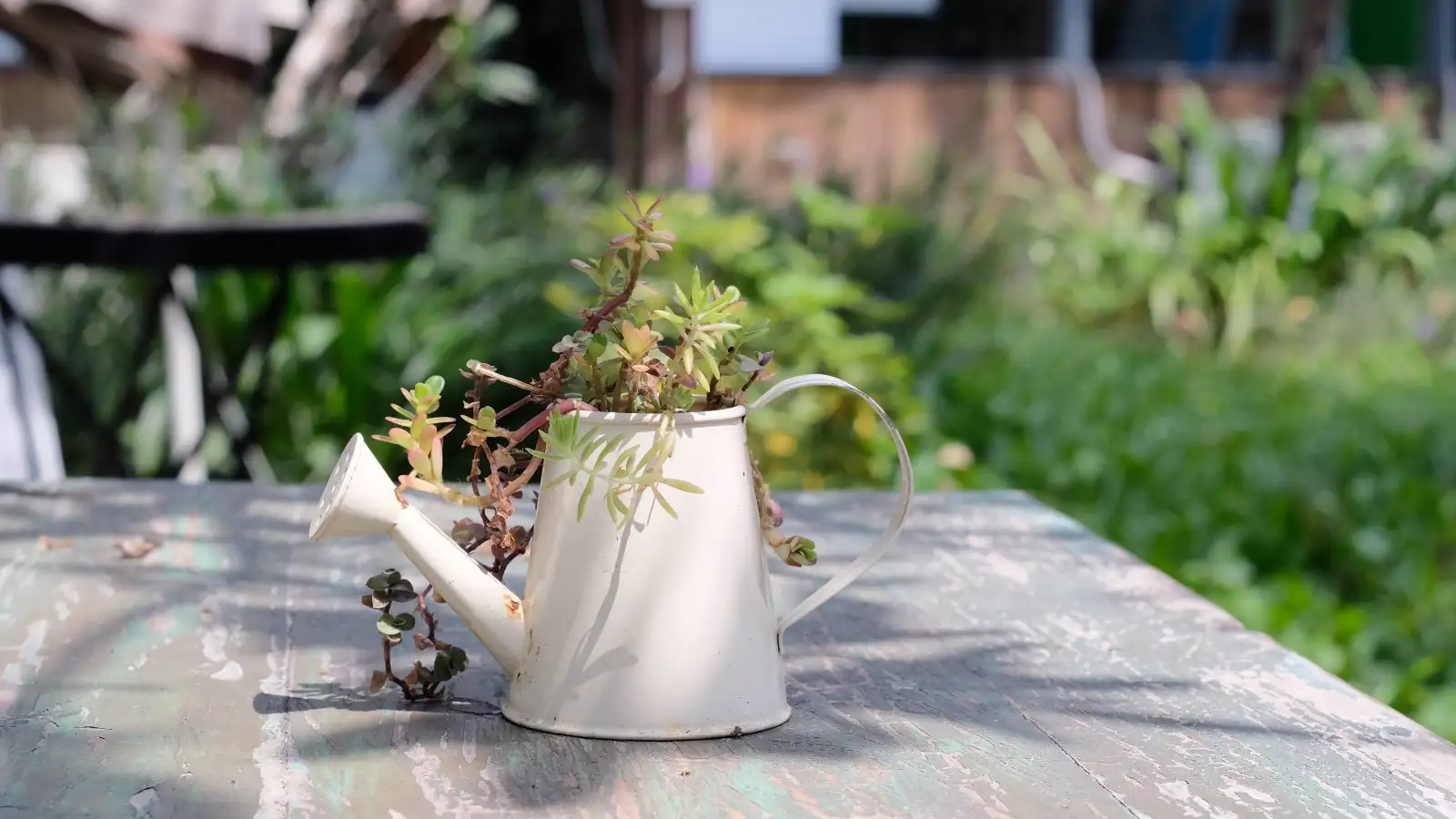
Your succulent can survive powdery mildew if you act fast
A white flour-like patch on a succulent is powdery mildew. Confirm it in two seconds, treat it the same day, and keep it off the rest of your collection.
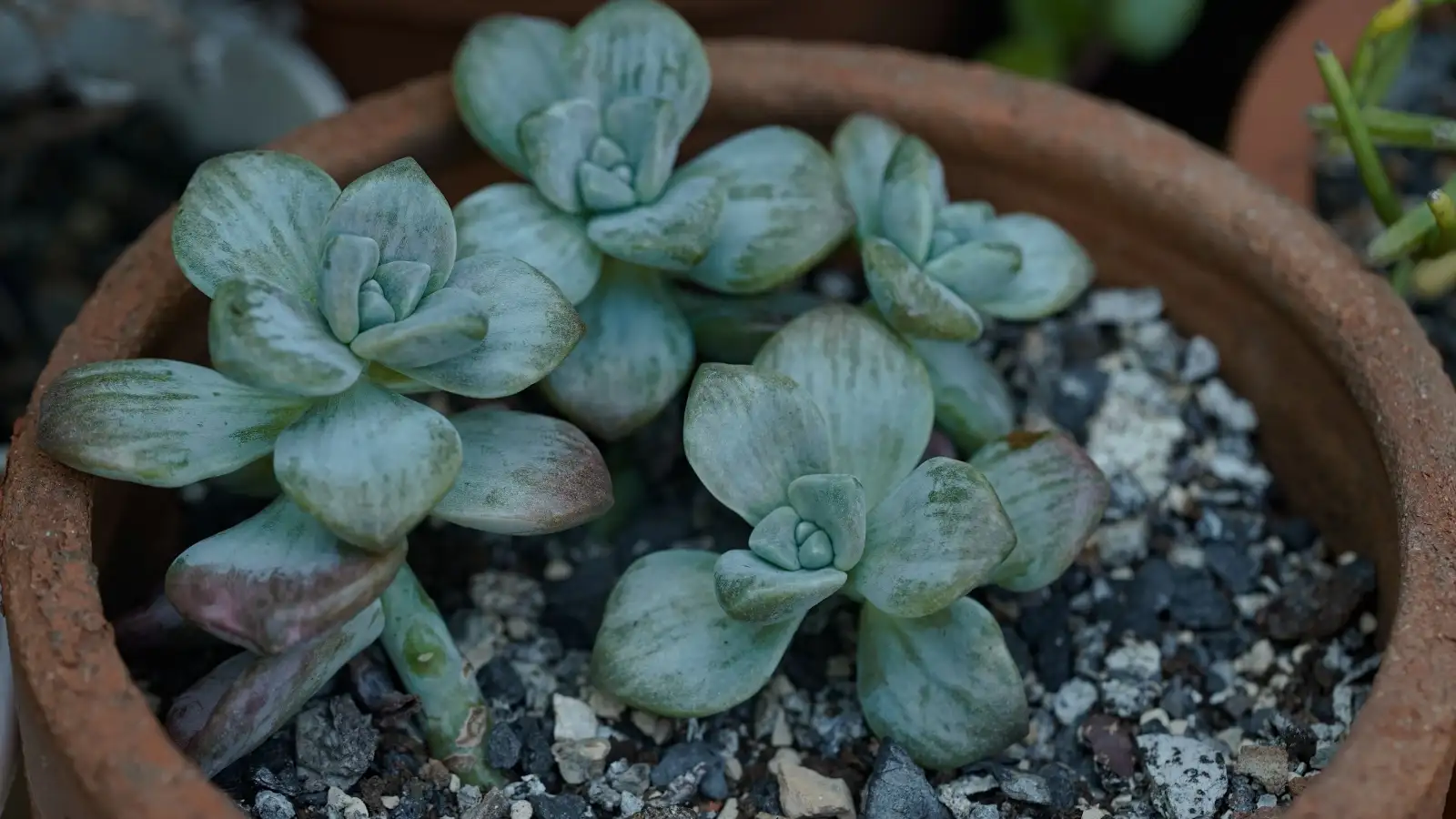
The reason your succulent's powdery mildew keeps coming back
Powdery mildew returns when the microclimate around your succulent still fits the fungus: high humidity, still air, and temperature swings. Fix the conditions.
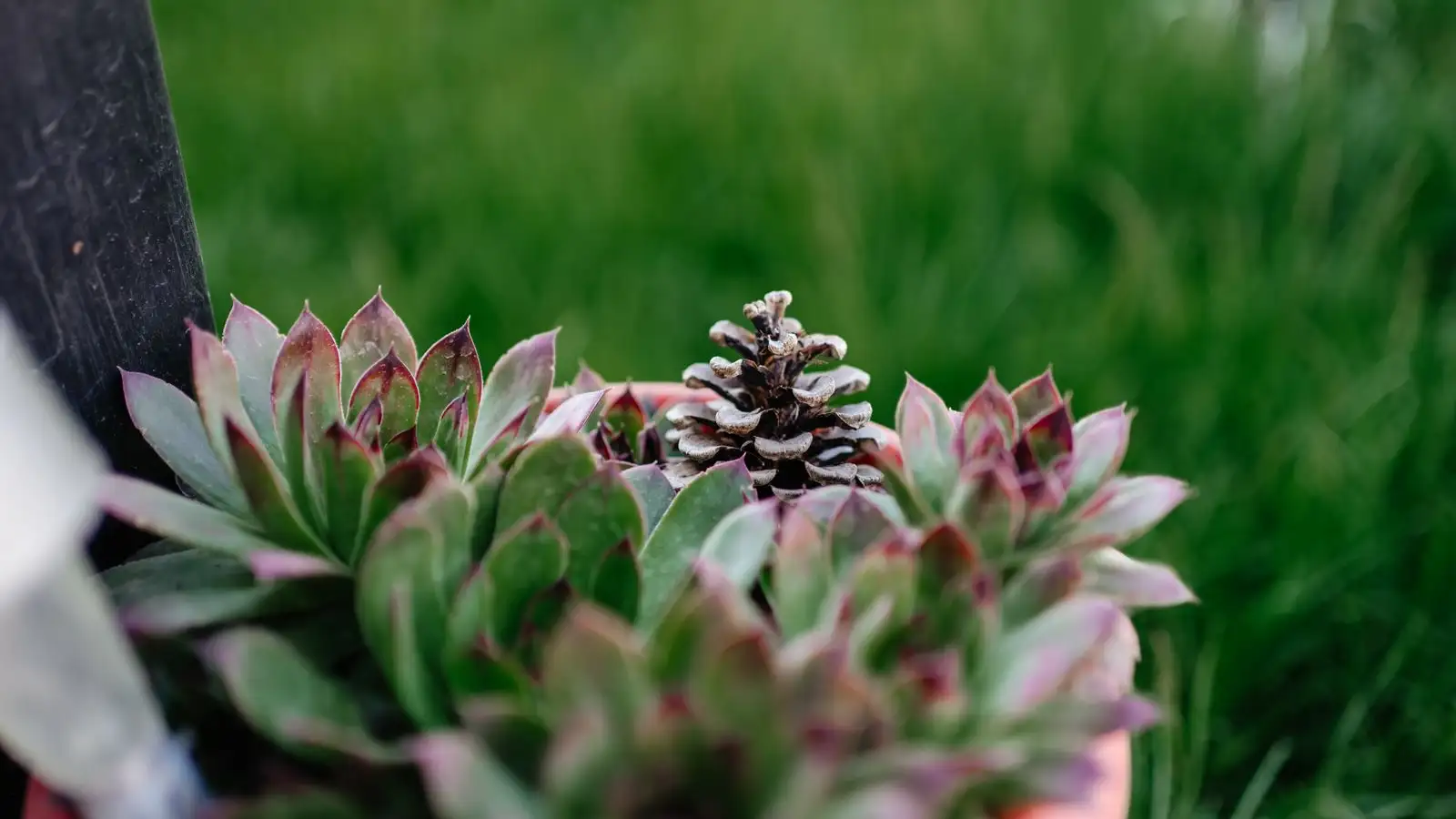
Stop powdery mildew spreading to other succulents now
Powdery mildew spreads on air, hands, and tools. A practical quarantine and 70% alcohol hygiene protocol to keep it off the rest of your succulent shelf.
Cutting off powdery mildew leaves can make it worse
Removing powdery mildew leaves from succulents often spreads spores and opens wounds. Here's when to cut, when to leave it, and how to propagate clean leaves.
Is that white fuzz on your succulent powdery mildew or not?
Tell powdery mildew from mealybug wax, hard-water crust, and edema blisters using texture, location, and how each one behaves when you wipe or poke it.
What fungicide experts choose for powdery mildew on succulents
Powdery mildew on succulents: when sulfur, copper, or chlorothalonil is the right call, how temperature and coverage decide the outcome, and the label rules.