Cutting off powdery mildew leaves can make it worse
The leaves that are only speckled should stay on the plant. Remove a leaf when the white coating has covered most of its surface, or when that leaf has already turned yellow and soft where it meets the stem — those two are finished, they will not recover, and they shed spores the entire time they sit there. Everything short of that gets treated in place. Pruning a few spots off a succulent does nothing to the fungus covering the rest of the plant, and every cut is a fresh wet wound on a plant that is already fighting something. That is the whole reason aggressive pruning so often makes an outbreak worse instead of ending it.
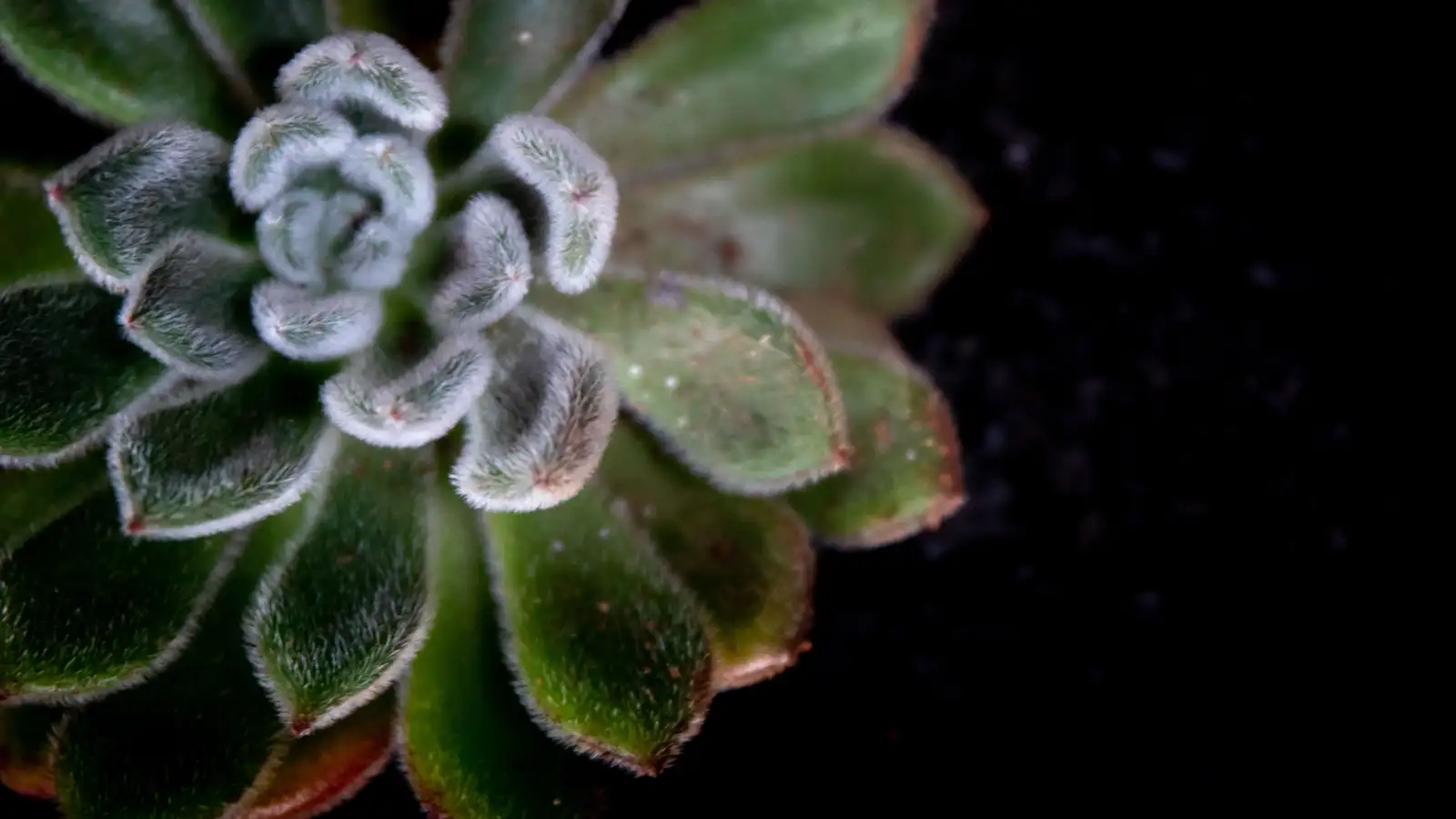
I keep a paper towel and a pair of scissors on the same tray when I'm working a mildewed plant, and the paper towel wins about nine times out of ten. Here is the first thing I do, and it isn't cutting. Fold a damp paper towel into a pad, press it onto one of the white patches, and look at what comes off.
If the powder lifts onto the towel and the same spots are white again within a few days, you're looking at mildew. If the white just smears into a faint, even streak and stays smeared, you probably wiped off farina — the waxy bloom a lot of succulents make on their own. That matters, because people cut leaves for farina all the time and take away a perfectly healthy leaf to solve a problem that was never a problem. Farina doesn't regrow on an old leaf, so once you've smeared it, it stays smeared. Mildew comes back. That's the whole test, and it takes about four days to run.
Treating in place means wiping the visible powder off with a damp towel, keeping the foliage dry, and getting air moving between the leaves. If you use a product, the label is the only rate that counts.
Where the fungus actually is
Powdery mildew isn't rot. Rot lives in the tissue, and you cut it out because the tissue is already dead and the infection is moving through it. Mildew feeds off living leaf surface, and its spores are dry and light and they are everywhere by the time you can see the white — on the pot rim, on the shelf, on the leaves above, on your hands. Pulling one leaf off doesn't remove the fungus. It removes one of its addresses.
Meanwhile you've done three things you can't undo. You've thrown spores into the air when the leaf snapped. You've left an open wound with no cuticle over it, wet and full of sugar, which is exactly what bacteria want. And you've taken away leaf area — the plant's only way to keep growing, which is the only thing that genuinely beats a mildew infection over time.
Also worth saying: if you're cutting into a crowded rosette, there's a real chance you clip the growing point in the center. That's the one injury a succulent usually doesn't walk off.
The leaves that genuinely have to go
Three cases, and I don't stretch them.
The leaf is more white than green. It isn't photosynthesizing anymore; it's a spore factory sitting in the middle of the plant.
The leaf has gone yellow and soft at the base. That's tissue death, not just a coating, and it will work into the stem if it sits there.
The leaf is already loose — it lifts with a light twist — and it's draped over the crown or resting on a neighboring plant.
Everything else stays. A plant with four or five speckled leaves on a five-inch rosette gets airflow, dry leaves, and time. It does not get a haircut.
One thing before the scissors come out: don't cut a plant you watered yesterday. Turgid leaves don't snap cleanly at the base, they tear, and a tear runs up into the stem instead of closing at a neat edge. Cut dry, in the morning, when the plant has some give.
Cutting so it doesn't backfire
Sharp scissors or a single-edge blade. Not the kitchen shears, not a dull pair that crushes the stem.
Wipe the blade with 70% isopropyl alcohol between every cut and let it flash off. This is the part people skip, and it's the part that undoes everything — a blade that just cut a coated leaf will carry spores straight into the next plant.
Cut at the base, close to the stem, not halfway up the leaf. A stump left behind is dead tissue the fungus keeps feeding on, and it keeps shedding spores.
Bag the trimmings. Not the compost, not the open wastebasket next to the shelf. A sealed bag and out the door. And don't blow on the white powder to see if it moves. It'll move.
Then leave the cut ends alone. For a cut plant, that means a few days in dry air, bright but out of direct sun, with nothing sprayed on the wound, before it goes back to its usual spot. For a leaf you're going to try to root, it means the same thing — a dry, papery, calloused base before it touches anything wet. Wet soil on a fresh wound is the fastest way I know to turn a mildew problem into a rot problem.
Propagation, and the part that trips people up
A leaf that comes off in your hand while you're cleaning up can be propagated — if it's whole and it's clean.
Whole matters. The new plant comes out of the base of the leaf, where it attached to the stem. A leaf you snipped in half to remove a bad patch has no base, so it's trash, not a cutting. This is the quiet reason not to cut: any leaf you cut is a leaf you can't grow. Any leaf that drops on its own, base intact, is a leaf you can.
Clean matters just as much. Hold it under good light, or under a magnifier, and look at the underside and the base. Any trace of the white and it goes in the bag with the rest. A leaf that's carrying mildew carries it into the new pot, where a small plant with no reserves is the worst possible host.
If you've got a clean one, set it on a dry surface out of the sun and let the base callous — several days, longer if it's humid. Then a well-draining mix, dry, and a pot far from the plant it came from. Not the same shelf. Not the same windowsill. Two weeks is the shortest honest quarantine I'd use, and what I'm watching in that window is the new growth, because mildew shows up first on the underside of a fresh leaf, long before it reaches the old ones.
When holding still is the wrong call
There are cases where leaving it alone is worse. If you've watched the yellow move up the plant one leaf at a time over a couple of weeks, you're past the point where the mild speckling stage helps you — take the spent leaves, open up the airflow, and accept that you're managing something rather than curing it in one sitting.
And if you've got a two-inch plant with the white sitting down in the crown, cutting may not be an option at all, because the leaves you'd remove are the ones guarding the growing point. That's not a failure of technique. Some plants are past what scissors can fix, and the useful move is to get the surface dry, get the air moving, and keep the rest of the collection out of range.
The line I actually use is this: if the leaf can still hold itself up and it's more green than white, it stays.
Educational content only: check with a qualified horticulturist, licensed pesticide applicator, or your local extension office before acting on anything specific.

Your succulent can survive powdery mildew if you act fast
A white flour-like patch on a succulent is powdery mildew. Confirm it in two seconds, treat it the same day, and keep it off the rest of your collection.
The reason your succulent's powdery mildew keeps coming back
Powdery mildew returns when the microclimate around your succulent still fits the fungus: high humidity, still air, and temperature swings. Fix the conditions.
Stop powdery mildew spreading to other succulents now
Powdery mildew spreads on air, hands, and tools. A practical quarantine and 70% alcohol hygiene protocol to keep it off the rest of your succulent shelf.
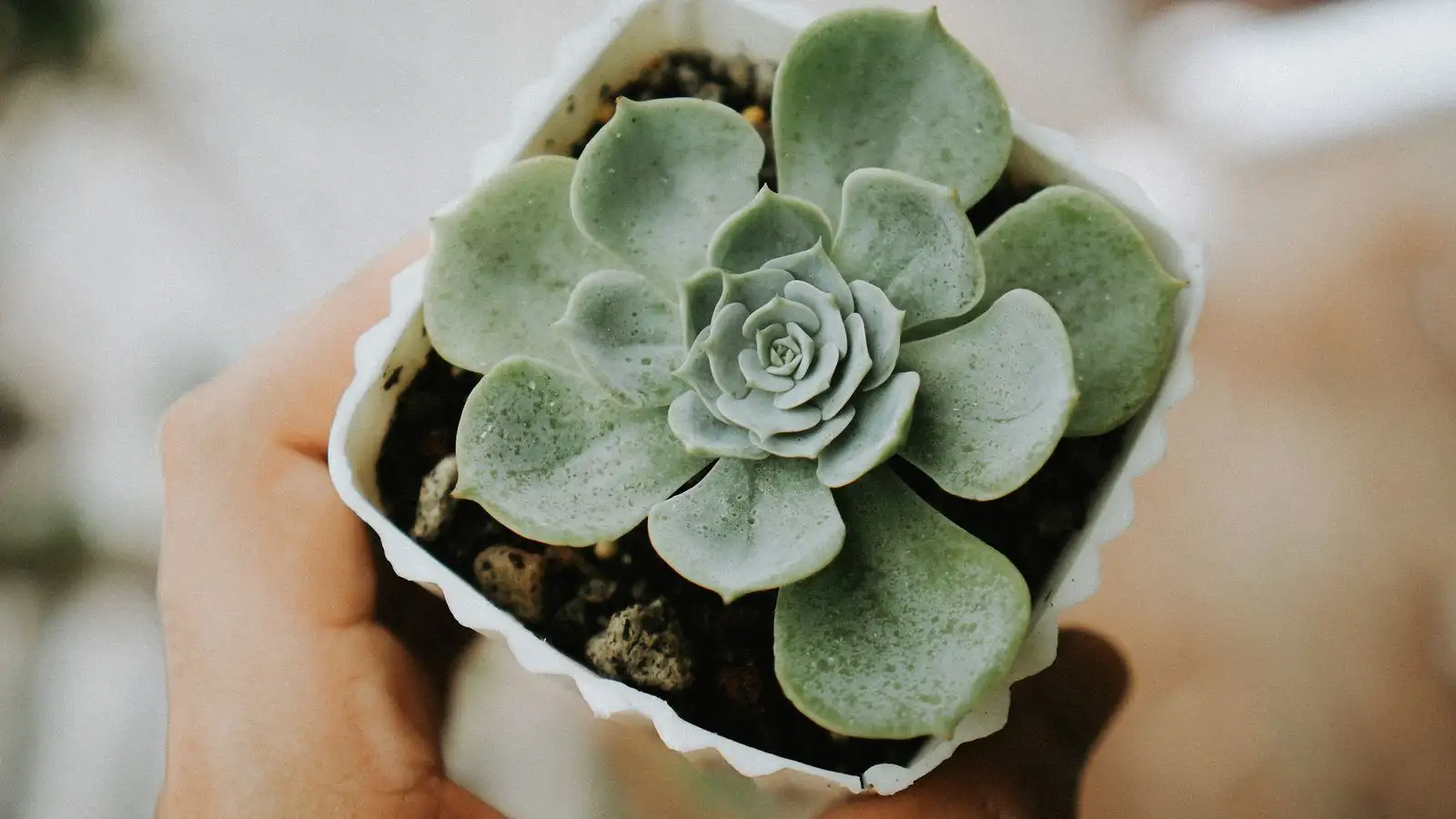
Beat powdery mildew on succulents without harsh chemicals
Isolate, strip bad leaves, dab 70% isopropyl on spots, then alternate insecticidal soap or neem oil every 7-14 days without burning the leaves.
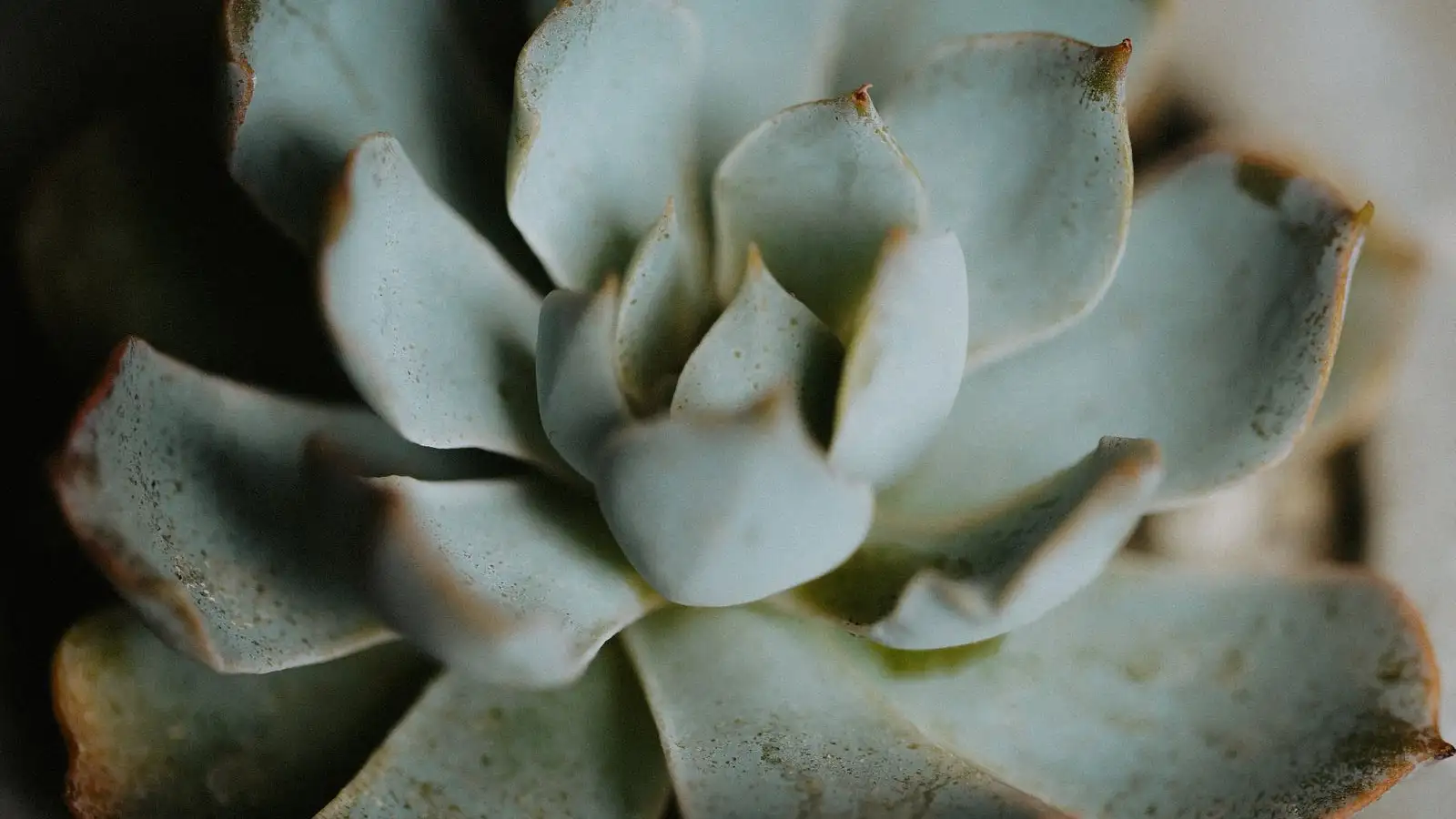
Is that white fuzz on your succulent powdery mildew or not?
Tell powdery mildew from mealybug wax, hard-water crust, and edema blisters using texture, location, and how each one behaves when you wipe or poke it.
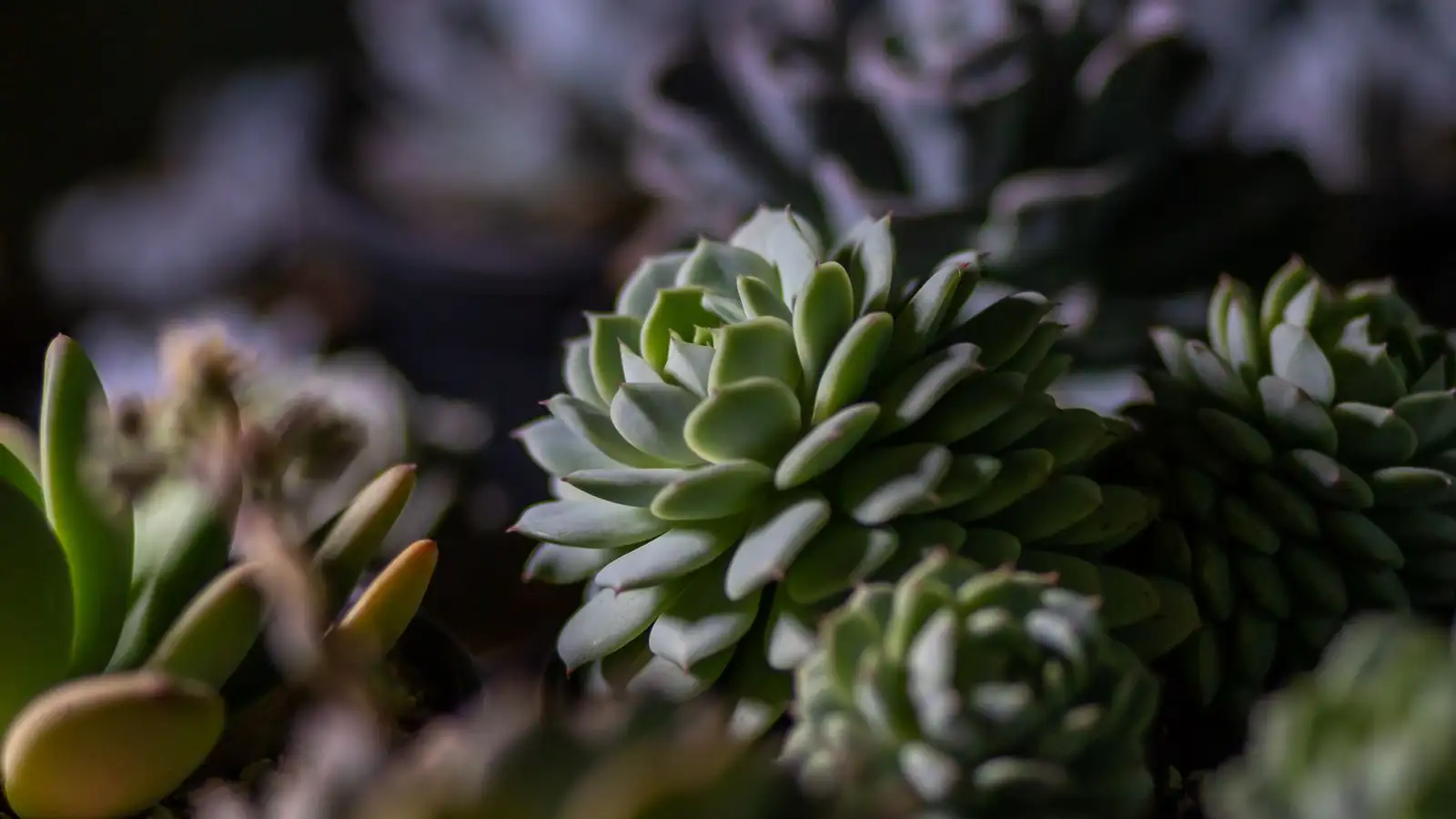
What fungicide experts choose for powdery mildew on succulents
Powdery mildew on succulents: when sulfur, copper, or chlorothalonil is the right call, how temperature and coverage decide the outcome, and the label rules.