The reason your succulent's powdery mildew keeps coming back
Powdery mildew keeps coming back on a succulent because the fungus was never removed — only the evidence of it was. Spores stay behind on the leaf surface, in the tight crevices of the crown, on the rim of the pot, in the saucer, on the shelf, on whatever rag you wiped with, and on the shears you used to cut the worst leaves off. What turns those leftovers into another visible outbreak is the same set of conditions that let the first one take hold: still air, relative humidity sitting at or above roughly 60 percent, temperatures parked in that mild 60-to-80 degree band, and a day-to-night swing wide enough to keep the plant stressed. Treat the spots without changing any of that and you haven't fixed anything. You've reset the clock.
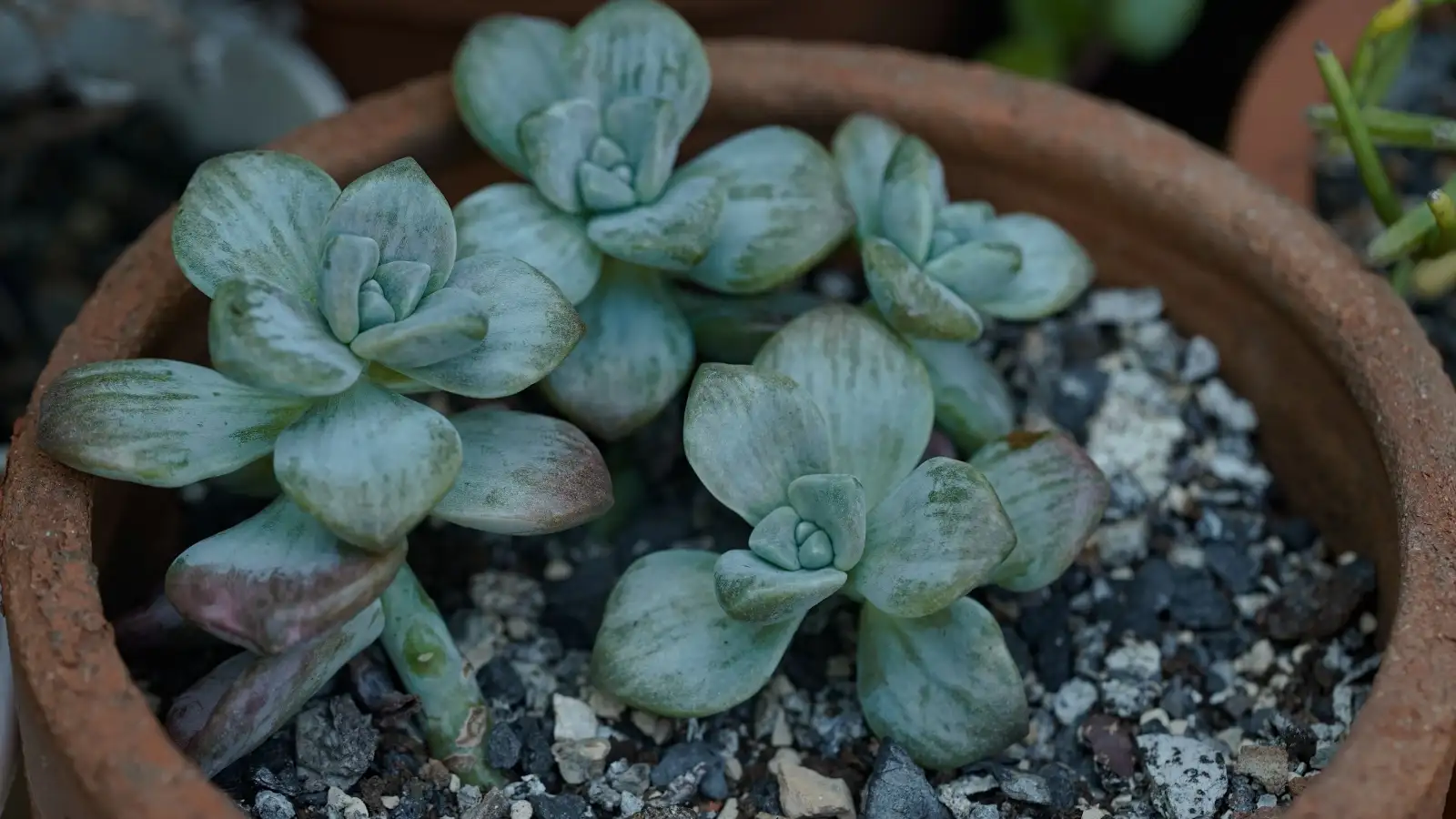
I found that out the slow way, over two winters and three rounds of the same white dust on the same four plants.
The number on the hygrometer
It was a February night, and I was standing in front of a five-shelf metal rack in the spare room with a hygrometer in one hand and a pair of reading glasses in the other. The room felt dry. It was the middle of a cold snap, the heat was running, my knuckles were cracking. The hygrometer said 68 percent.
I had been assuming the problem was water. It wasn't. It never was.
Here's what I'd been missing: powdery mildew does not need free water on the leaf to germinate. That is the part that breaks people's intuition. We grow succulents, so we hear "fungus" and we think "wet leaves." We stop misting, we stop watering from above, and then we sit there confused when the white patches show up again on bone-dry leaves. The fungus is using the water in the air, not the water sitting on the plant. A dry leaf in a humid room is still a wet leaf as far as a spore is concerned.
So the first thing I did was stop guessing and start measuring. Hygrometer on the shelf, at pot level, not across the room on a wall. That last part matters more than it sounds. The air two feet from a window in a heated house and the air sitting in the gap between three pots on a shelf are not the same air.
Still air does more than just sit there
The second thing I noticed was the dust.
Not plant dust. Actual dust, the kind that settles on a shelf you haven't moved anything on in months. It settled there because nothing was moving. That same stillness is what lets spores land on a leaf and stay landed. Moving air doesn't just dry things out; it keeps particles from parking in the first place.
My rack was the problem in a very specific way. Twelve pots on eighteen inches of shelf, leaves touching, saucers touching, a plastic greenhouse cabinet on the bottom shelf with the doors shut. Inside that cabinet the humidity ran higher than the room and the air didn't move at all. It was, functionally, a petri dish with drainage holes. I had built the exact environment the fungus wanted and then acted surprised when it showed up.
What I did about it was unglamorous. I took the rack from twelve pots down to seven, spaced so the widest rosette had a hand's width of open air on every side. I put a small clip-on fan on the shelf edge and aimed it across the shelf, not at the plants. Constant direct air on soft-leaved things like Haworthia will crisp the tips, which is its own problem. A couple of hours in the morning and a couple in the evening was enough to keep the boundary layer of trapped, humid air around the leaves from ever fully forming. On the cabinet, I propped the doors open for an hour a day instead of sealing it and hoping.
That boundary layer is the thing most advice skips over. You can have a room at 45 percent humidity and still have a pocket of 75 percent sitting down in the crotch of a tight rosette with no air moving through it. Fixing the room and ignoring the pocket is how you end up buying a dehumidifier that changes nothing.
The swing, and the water you're adding
Two more conditions kept pushing my plants back into susceptibility.
The first was temperature. My rack sat near a single-pane window. Daytime sun through that glass could push the leaf surface into the low eighties; by four in the morning, with the curtain closed and the heat cycling down, that same shelf dropped into the mid-fifties. A thirty-degree daily swing doesn't kill a succulent, but it does keep it spending energy on damage control instead of on the waxy cuticle and the tissue defenses that keep a mild spore landing from turning into an outbreak. I moved the rack four feet off the window and the swing shrank to something closer to ten degrees.
The second was me. I was watering from above with a squeeze bottle because it was easier than reaching behind the pots, and I was misting a couple of the thirstier ones on hot afternoons because someone online said they liked it. Both of those habits put moisture into the air right at leaf level and into the crown where it sits. Succulents don't need it. I stopped, and I switched to watering the soil at the rim of the pot, in the morning, so anything that splashed had the whole day to dry.
The part I kept re-infecting myself with
Here is the piece that took me longest to see, and it's the reason "it came back" is often the wrong phrase.
Powdery mildew spores survive on debris and on surfaces. When I repotted after the first round, I reused the same glazed pots after a rinse. When I trimmed the worst leaves, I went pot to pot with the same pair of shears. When I cleaned up, I swept the fallen leaves onto the floor and then set a new plant down in roughly the same spot.
I was moving the fungus around with my own hands and calling it a fresh start.
Now the pots get scrubbed and fully dried before anything goes back into them, the shears get wiped down between plants, and the dropped leaves go straight into the trash instead of onto the shelf. New plants sit on their own table across the room for a few weeks before they meet the rest. Nothing about that is dramatic. It just closes the loop that was reopening it.
What it costs
None of this is free. More air movement means the top of the soil dries faster, so my watering interval shortened by a few days and I had to actually check the soil instead of going by the calendar. Fewer plants on the shelf meant fewer plants on the shelf — I gave three away. The cabinet is less decorative with the doors propped open.
And there's a real limit here. If your growing space is a sealed cabinet in a humid climate, or a shelf in a bathroom where a shower runs two feet away, you can do everything right and still be fighting the room itself. In that case the honest answer is that the plant needs a different spot, not a different spray.
What I'd tell anyone stuck in this loop is to stop staring at the plant and start looking at the air around it. Get a hygrometer and put it where the plant actually sits. Feel for movement with the back of your hand at leaf height. Note how far the temperature drops between midafternoon and four in the morning. Count how many leaves are touching. Almost every recurrence I've had traces back to one of those four things, and none of them trace back to the plant being unlucky.
Educational content only: check with a qualified horticulturist, licensed pesticide applicator, or your local extension office before acting on anything specific.

Your succulent can survive powdery mildew if you act fast
A white flour-like patch on a succulent is powdery mildew. Confirm it in two seconds, treat it the same day, and keep it off the rest of your collection.
Stop powdery mildew spreading to other succulents now
Powdery mildew spreads on air, hands, and tools. A practical quarantine and 70% alcohol hygiene protocol to keep it off the rest of your succulent shelf.
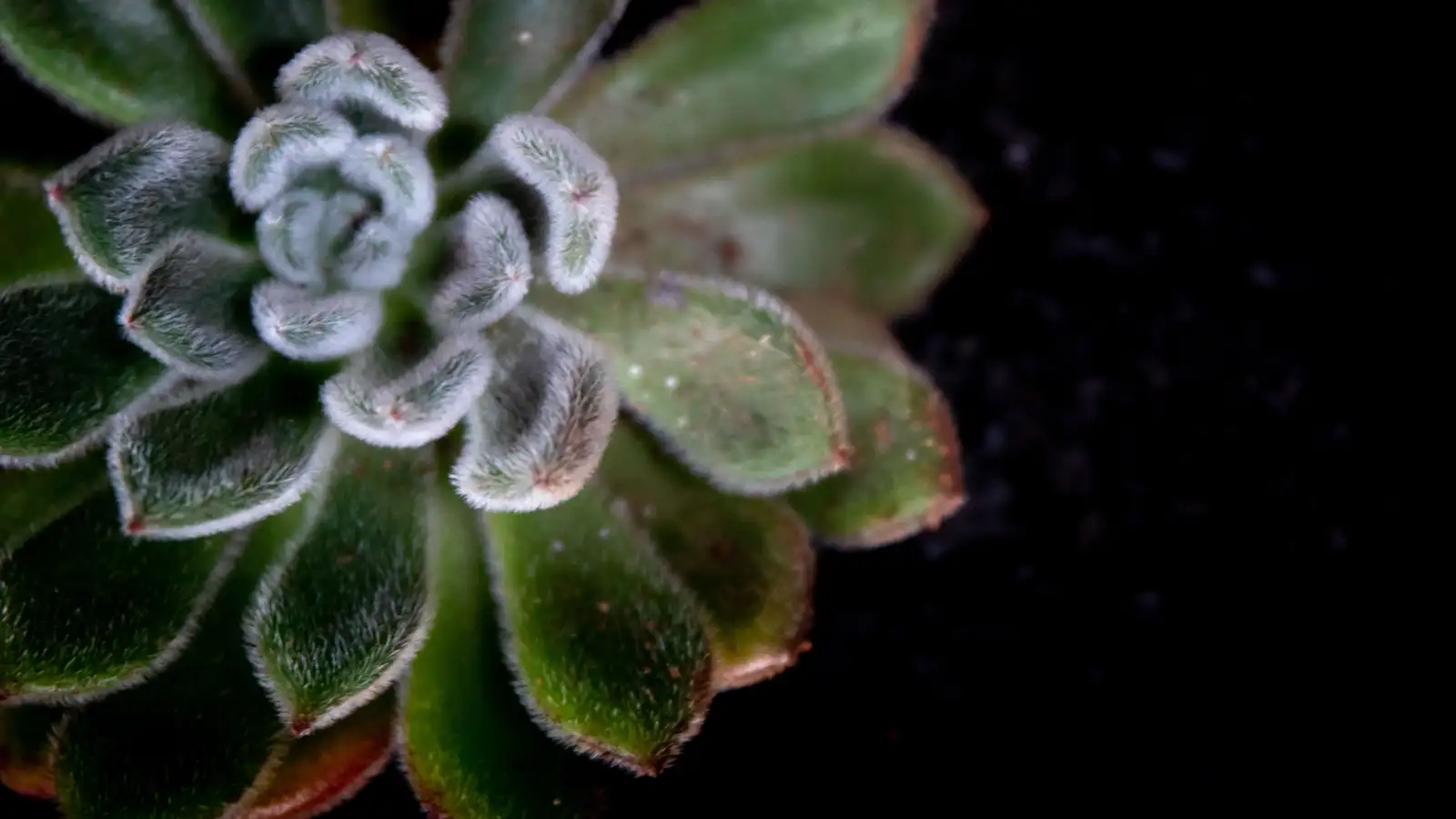
Cutting off powdery mildew leaves can make it worse
Removing powdery mildew leaves from succulents often spreads spores and opens wounds. Here's when to cut, when to leave it, and how to propagate clean leaves.
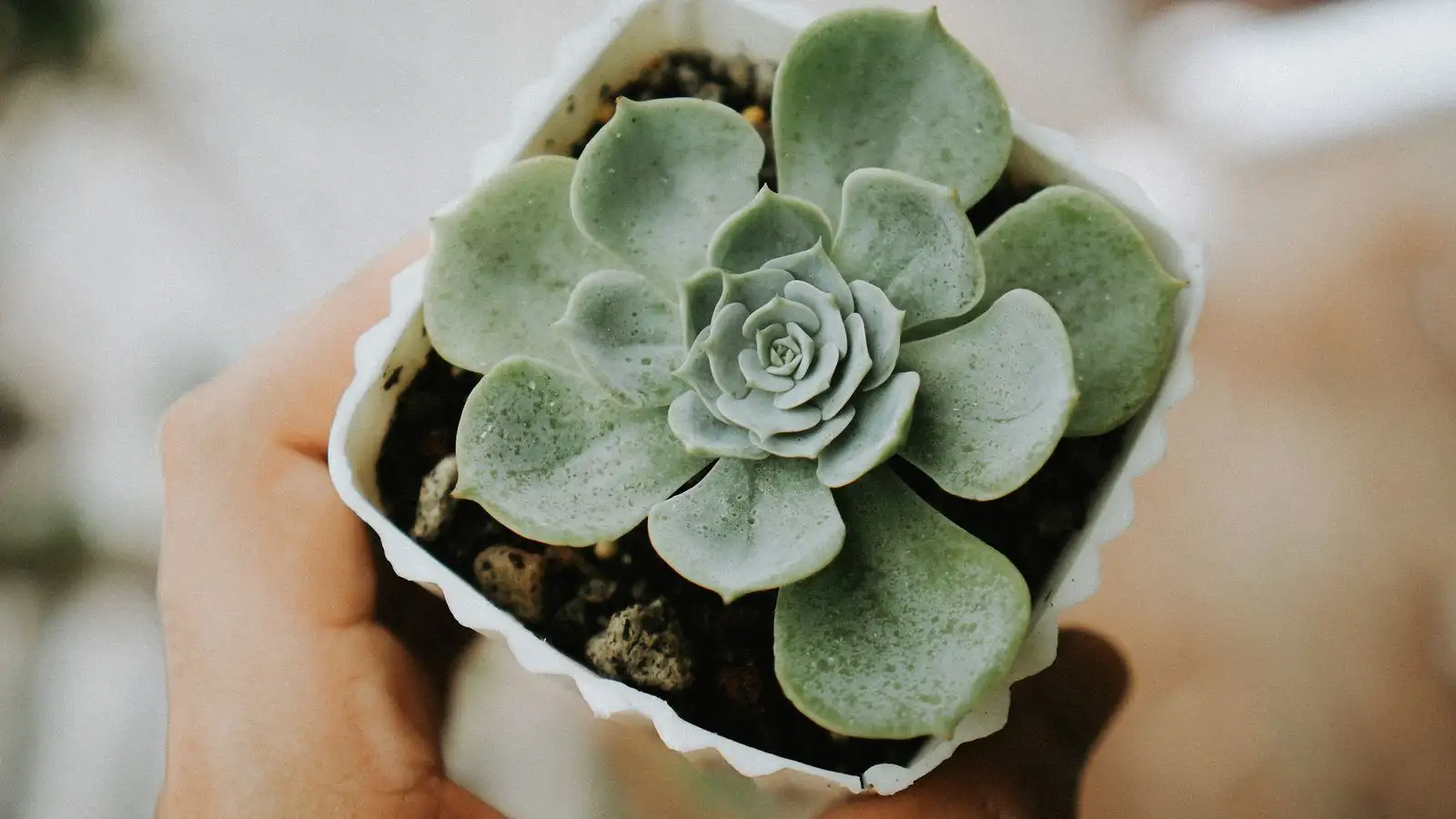
Beat powdery mildew on succulents without harsh chemicals
Isolate, strip bad leaves, dab 70% isopropyl on spots, then alternate insecticidal soap or neem oil every 7-14 days without burning the leaves.
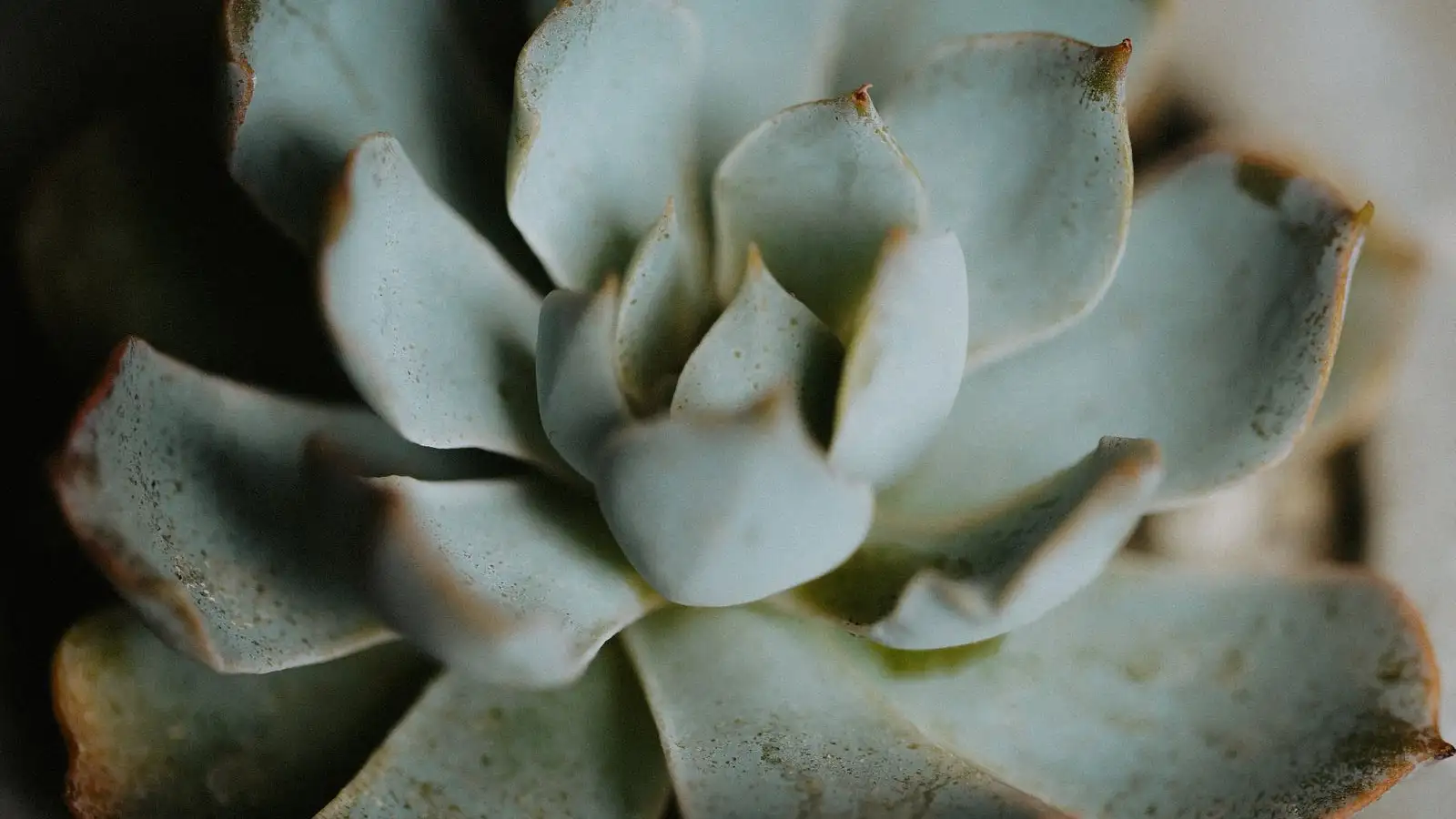
Is that white fuzz on your succulent powdery mildew or not?
Tell powdery mildew from mealybug wax, hard-water crust, and edema blisters using texture, location, and how each one behaves when you wipe or poke it.
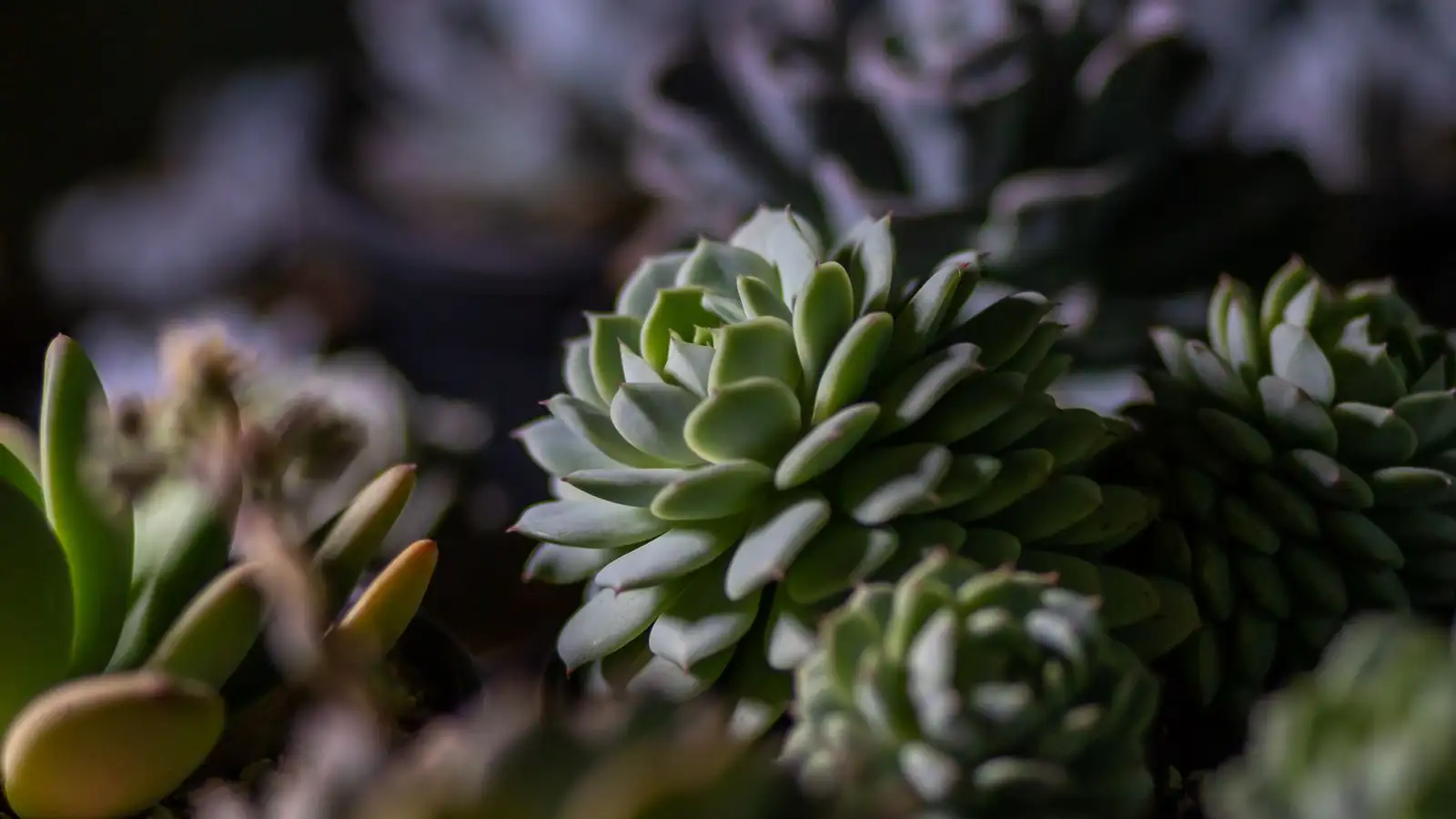
What fungicide experts choose for powdery mildew on succulents
Powdery mildew on succulents: when sulfur, copper, or chlorothalonil is the right call, how temperature and coverage decide the outcome, and the label rules.