What fungicide experts choose for powdery mildew on succulents
Sulfur is the first chemical answer for powdery mildew on succulents, and it works — as long as the air is below 85°F when it lands on the leaf. Copper is a protectant that keeps clean tissue clean and does very little once the white coating has already taken hold. Chlorothalonil is the broad-spectrum, contact-acting fallback for an outbreak that has moved past the point where the gentle options were going to save it. The active ingredient is not the hard part. The hard part is the temperature at the moment you spray, whether you got both sides of every leaf, and whether you read the label instead of a comment thread.
The morning I stopped guessing
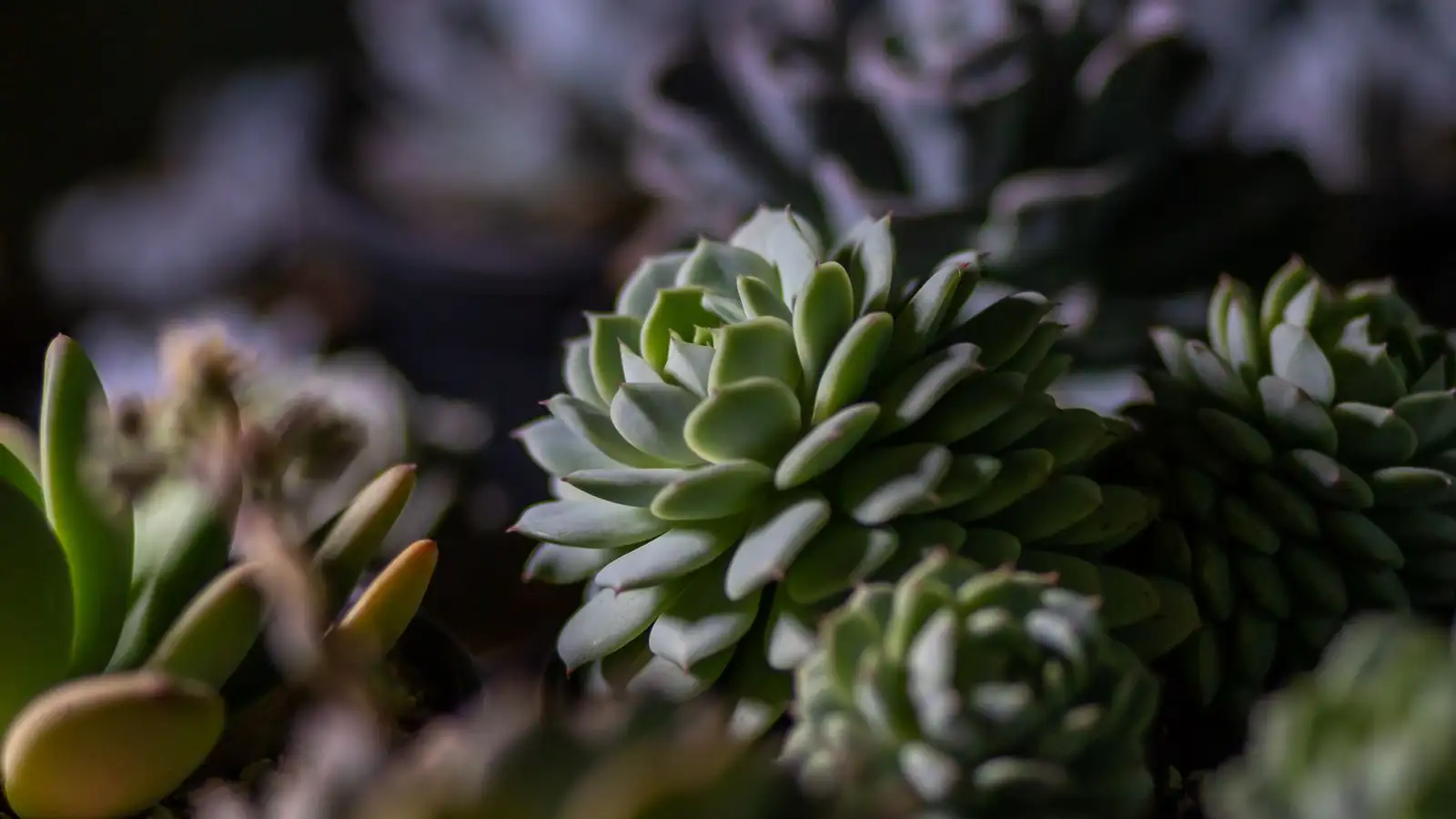
I keep a bench of Echeveria and a few Crassula against the south wall of a shed, and once a summer the powdery mildew finds them. It shows up first as a faint gray bloom on the older leaves near the crown. It does not wipe off with a finger the way dust or hard-water residue does — rub it and it smears, leaving a slightly darker patch underneath and a leaf that looks duller than the one beside it.
The first time it happened I did everything organic. I pulled the worst leaves, sprayed a baking soda mix, then neem, moved a small clip fan to blow across the bench, gave the pots more space. It slowed. It didn't stop. Two weeks later the newest leaves were coming in slightly cupped and the coating had moved into the tight center of two rosettes where I could not have wiped it out if I'd tried.
That is the point where organic methods have failed, and it deserves a clearer definition than most people use. It is not when you spot the first white patch. It's when you have already fixed airflow, already stripped the infected leaves, already tried a labeled organic option, and the infection is still advancing into new growth. Spraying a chemical on day one is a waste of a tool you only get a few uses of per season. Spraying one on day twenty, after you've watched it spread into leaves that were clean last week, is the actual use case.
Temperature is the gate
Sulfur on a hot leaf is phytotoxic. Above roughly 85°F, the combination of sulfur and heat damages tissue — you get brown, papery patches along the margins, and those never heal because succulent leaves don't regrow. I've done this. I sprayed what I thought was a mild morning, and the thermometer on the bench was already reading 87 by the time I finished the last pot. By the next afternoon the outer leaves of three plants had gone crisp along the edges, and that damage looked worse than the mildew ever had.
Now the thermometer goes out with me instead of the bottle. I check it, I check the forecast for the next two days, and if the day is heading over the threshold, I wait. Evening after the sun comes off the bench is my preference in midsummer, because the leaves have the whole night to dry before the heat returns. Early morning before the sun hits the bench is the other window, and it's the better one in spring and fall when nights are cool enough that wet leaves sit there for hours.
Treat that number as a hard gate. If you have no way to know how warm the leaf surface is, you have no way to know whether you're allowed to spray today.
Sulfur, copper, chlorothalonil: what each one actually does
Sulfur is the workhorse for early powdery mildew. It's effective, it's cheap, and it leaves a visible pale residue on the leaves that people panic about and wash off — don't. That film is the protection. It works on contact with the fungus and it needs to be on the tissue before or right as the infection is starting.
Copper is a protectant in a stricter sense. It shields healthy tissue from spores landing on it, and it is noticeably weaker once the mildew is established and feeding on the leaf. The other thing about copper is that it doesn't break down and disappear the way some products do — it accumulates in the soil. In a field that gets rotated, that's manageable. In a 4-inch pot that a succulent lives in for three years, it's not, which is why I treat copper as a limited tool and not a routine.
Chlorothalonil is broad-spectrum and contact-acting, and it's what I reach for when the infection is already in the crown and I need something that covers a wider range of fungal problems while I'm at it. Two things come with it. It's toxic to fish, and that isn't only about a koi pond — it's about where your runoff goes. Rinsing a sprayer into a gutter that drains to a creek is the same problem at smaller scale. And like the others, it is a protectant more than a cure. It keeps spores from establishing on the next leaf; it doesn't erase what's already there.
Which one you pick is a smaller decision than whether the label conditions are met.
The application itself
Read the label the whole way through before you open anything, including the part about what it can and cannot be tank-mixed with. If the label doesn't list a partner, the answer is no — I don't care what someone online swears by. And mix at the label rate. More is not more effective; it burns leaves, it's a waste of product, and applying above the labeled rate is illegal.
Gloves and eye protection go on before the cap comes off, not after. If you're mixing powder, the dust is the part you're protecting yourself from. Afterward, everything goes back into a locked cabinet or a high shelf, out of reach of kids and pets, in the original container with the label intact.
For the spray itself: fine mist, not a drench. The goal is coverage, not saturation. Powdery mildew lives on the surface of the leaf, so the underside matters as much as the top — with a rosette, that means tilting the pot and spraying up into the gap between the leaves rather than raining down on the crown. Get the whole plant, both surfaces.
And keep it off the soil as much as you can. Wet medium after a spray is how a mildew problem turns into a rot problem, and rot is what actually kills succulents.
After the spray, and when to stop
The interval on the label — the number of days before you can reapply — is not a suggestion. Reapplying early because you're anxious about the visible spots is how people burn plants that were on the mend. Give it the full window. Powdery mildew spores stay viable for a while, and a second application at the right time does more than three rushed ones.
Expect the residue. Expect the old spots to stay visible on leaves that were already infected, because fungicide doesn't un-spot a leaf. What you're watching is the new growth. If the leaves coming in after treatment are clean and normally shaped, it worked, even if the plant still looks ugly for a month.
Here's the part I think gets lost. Fungicide buys time; it doesn't fix the reason the mildew showed up. Powdery mildew on succulents is a crowding and airflow disease more than a wetness disease — it likes still air and plants packed close enough that leaves touch. If I spray and don't change anything else, I'm back to spraying in six weeks. So the same week I treat, I thin the bench, I open the spacing, and I keep air moving. That's the actual cure. The bottle is what holds the line while the environment catches up.
Which is also why organic methods still win in the long run when they're paired with those changes — and why they lose when they're used as a substitute for them.
Educational content only: check with a qualified horticulturist, licensed pesticide applicator, or your local extension office before acting on anything specific.

Your succulent can survive powdery mildew if you act fast
A white flour-like patch on a succulent is powdery mildew. Confirm it in two seconds, treat it the same day, and keep it off the rest of your collection.
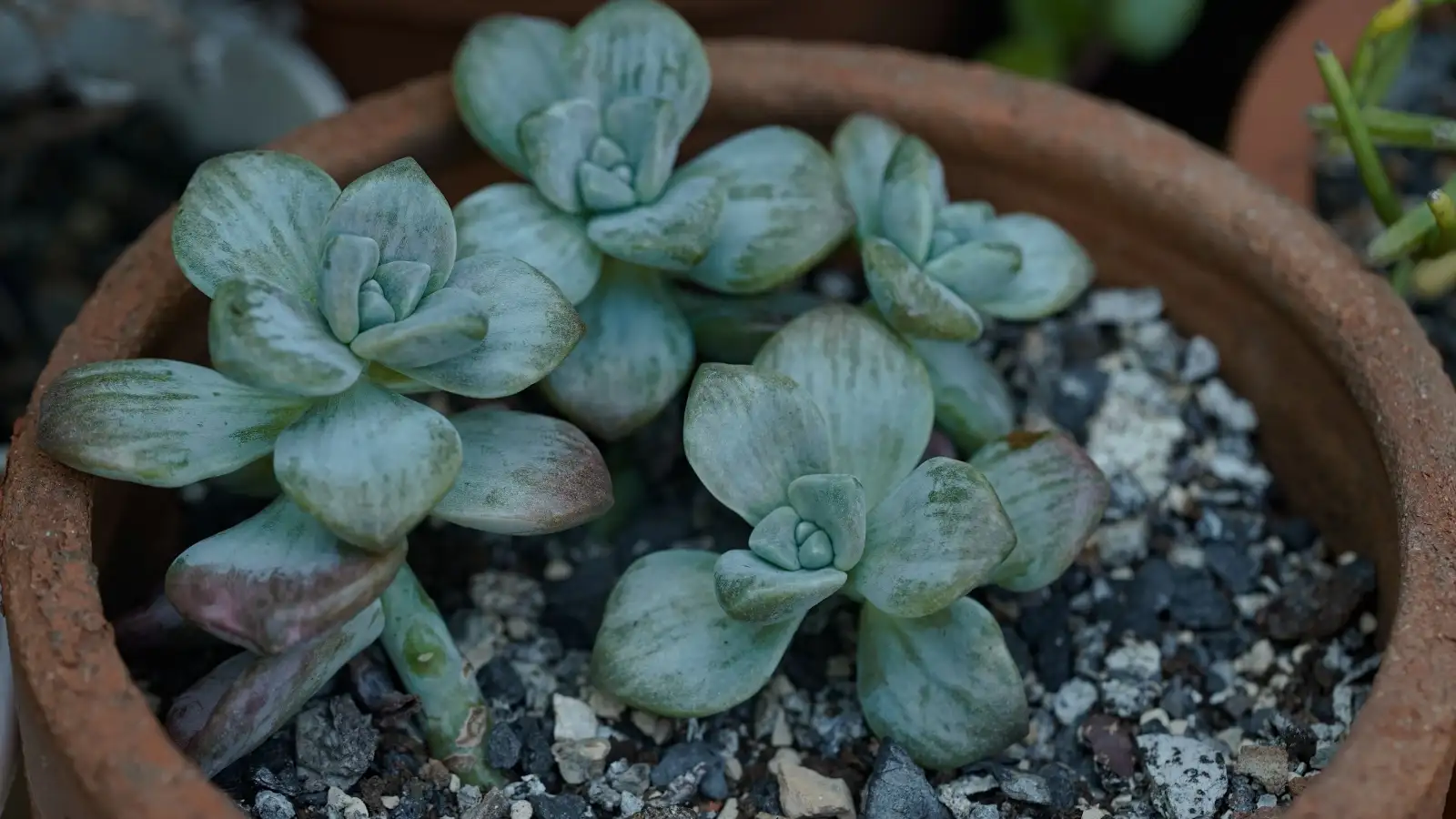
The reason your succulent's powdery mildew keeps coming back
Powdery mildew returns when the microclimate around your succulent still fits the fungus: high humidity, still air, and temperature swings. Fix the conditions.
Stop powdery mildew spreading to other succulents now
Powdery mildew spreads on air, hands, and tools. A practical quarantine and 70% alcohol hygiene protocol to keep it off the rest of your succulent shelf.
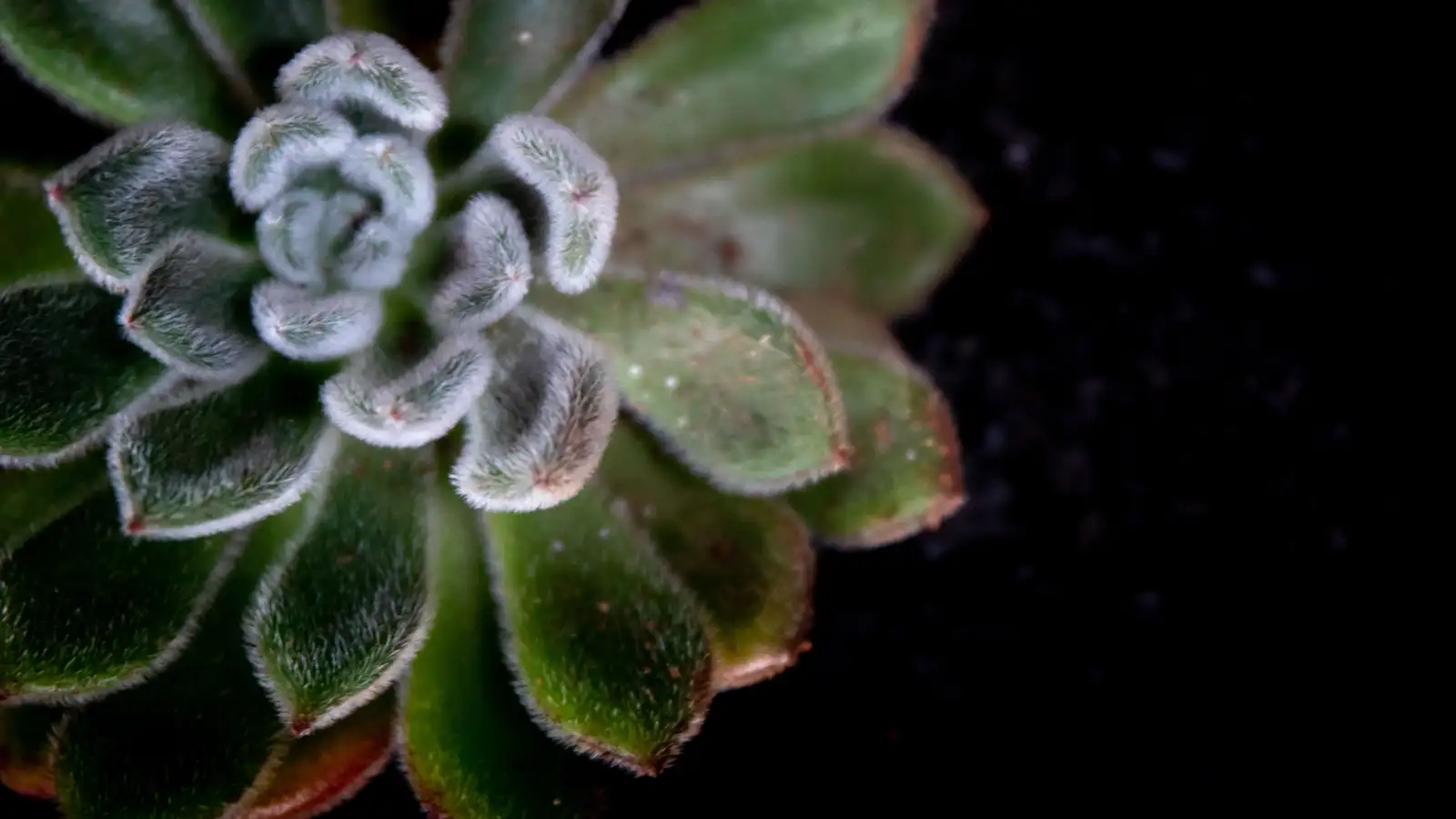
Cutting off powdery mildew leaves can make it worse
Removing powdery mildew leaves from succulents often spreads spores and opens wounds. Here's when to cut, when to leave it, and how to propagate clean leaves.
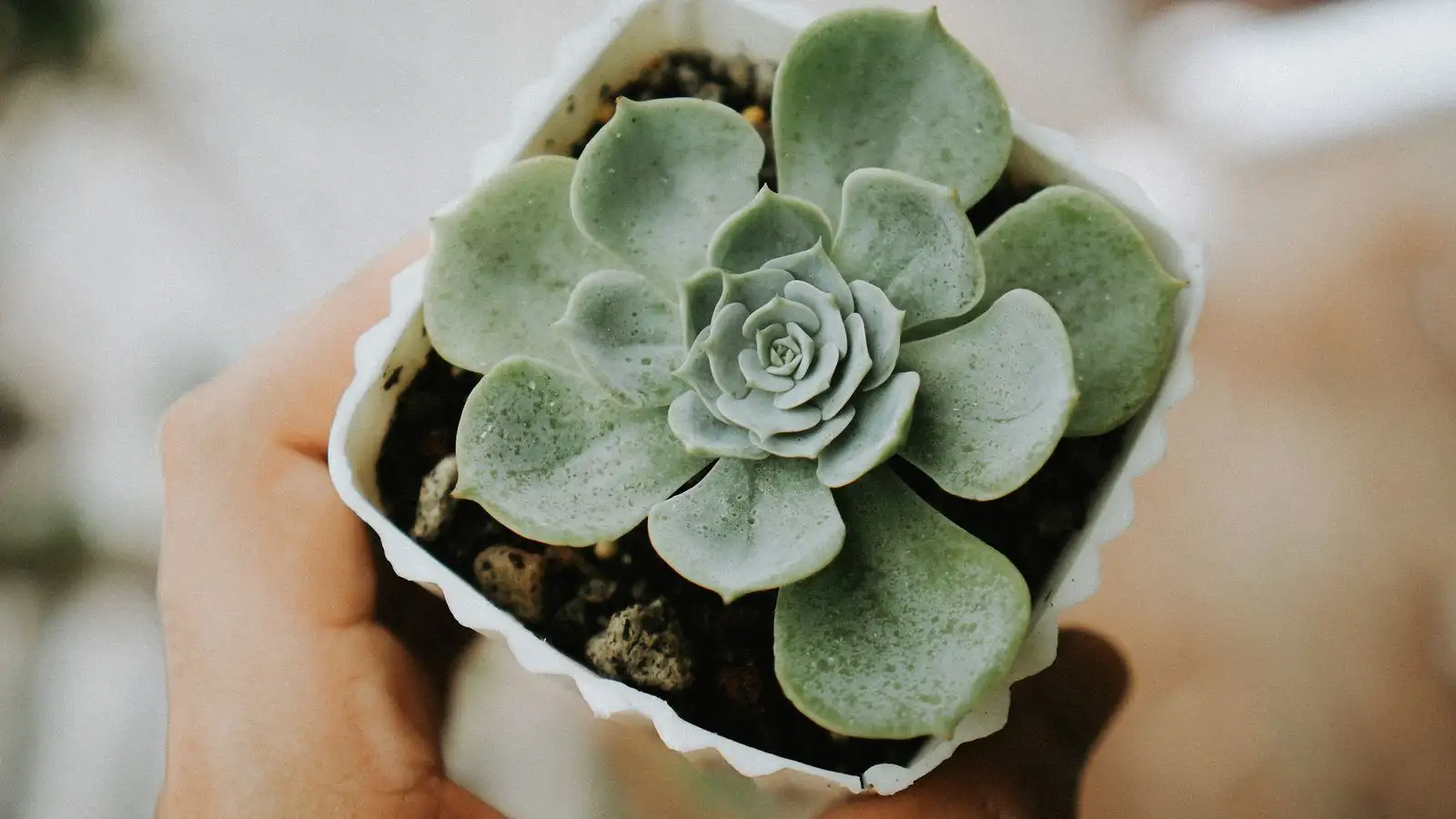
Beat powdery mildew on succulents without harsh chemicals
Isolate, strip bad leaves, dab 70% isopropyl on spots, then alternate insecticidal soap or neem oil every 7-14 days without burning the leaves.
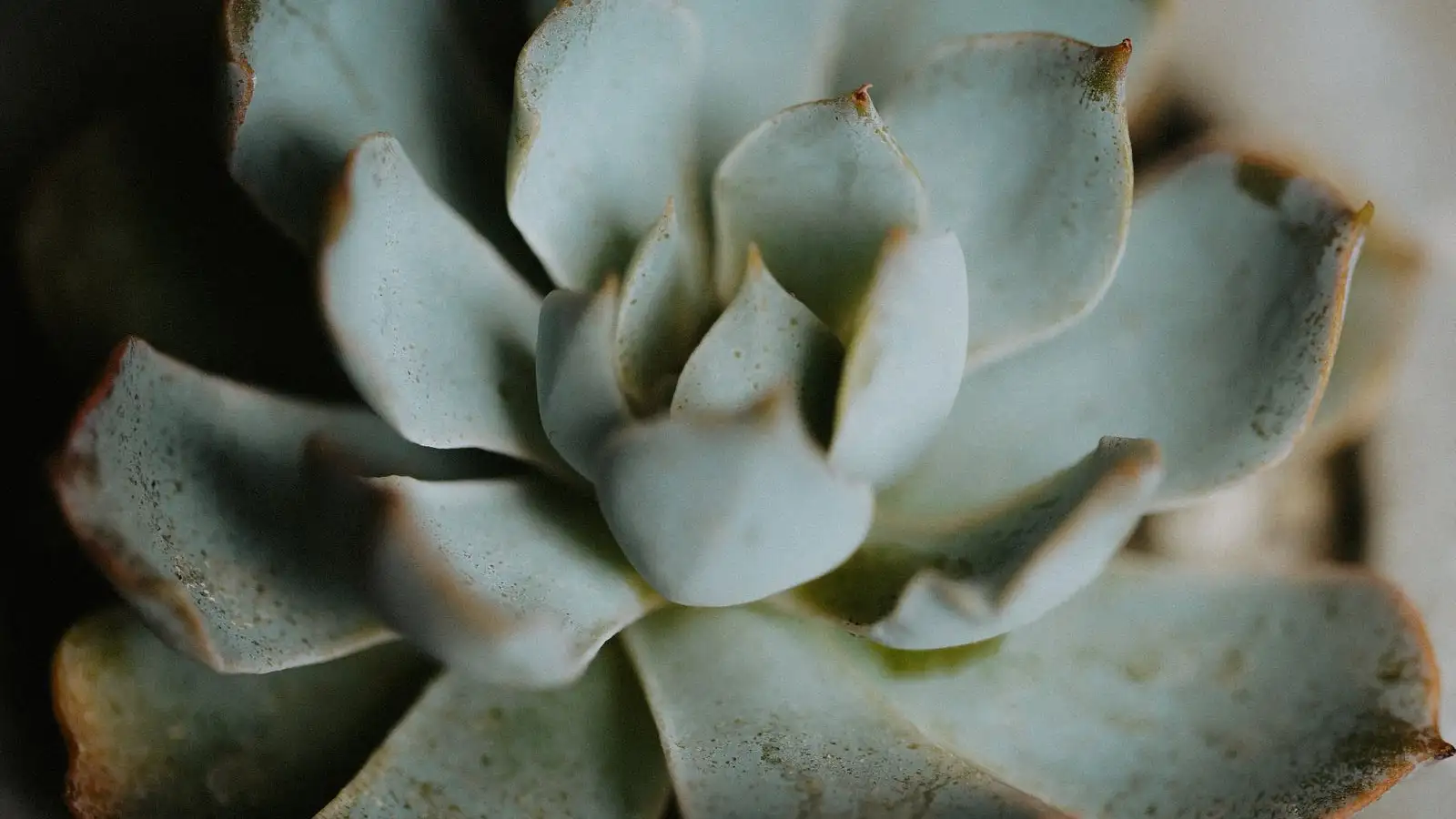
Is that white fuzz on your succulent powdery mildew or not?
Tell powdery mildew from mealybug wax, hard-water crust, and edema blisters using texture, location, and how each one behaves when you wipe or poke it.