Four Steps to Eliminate Fungus Gnats from Succulent Pots
Fungus gnats in a succulent collection get eliminated by running four things at once, on every pot, for about four weeks: keep the top inch of medium dry between waterings and never let a pot stand in water, hang yellow sticky traps to kill adults and read the population trend, drench with Bti to kill the larvae in the soil, and bring in beneficial nematodes only if the trap count stops falling. The larvicide repeats on a five-to-seven-day rhythm set by the gnat life cycle, not by the plants' watering schedule, and every pot in the house gets treated on the same day. The pot that looks cleanest is usually the one keeping the infestation alive.
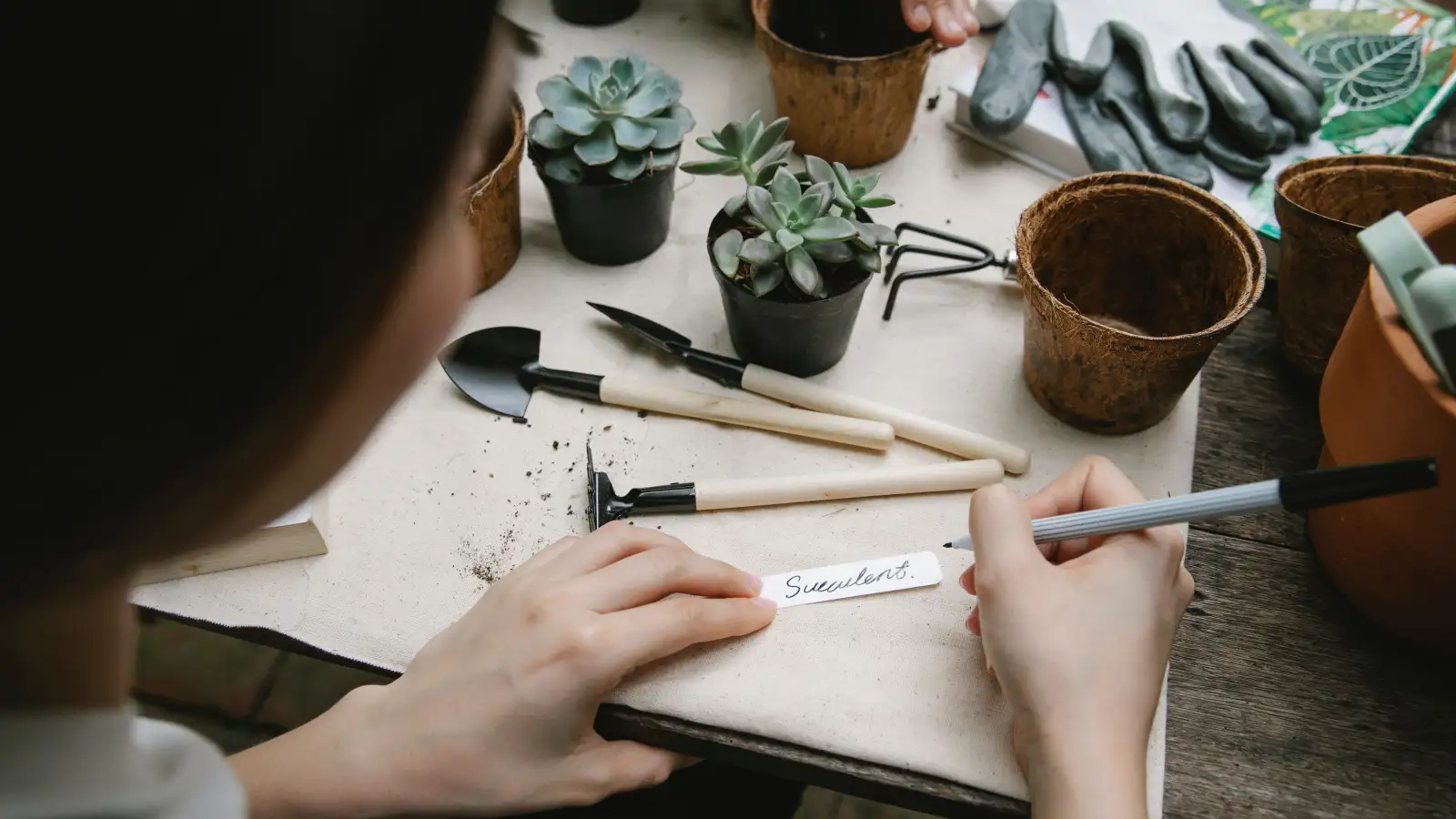
I found mine with a fingernail. Tap the rim of a pot, wait two seconds, and watch the grit. Two or three small dark flies lift off, ride the air toward the window, and stick to the glass. That is not a couple of strays. By the time adults are that easy to startle, larvae were pupating in that soil a week ago.
So I go down the shelf in order, tapping each rim, and I write the count on a strip of masking tape stuck to the pot. The pots with a fresh layer of pumice on top are quiet. The ones with a bare, dark, damp-looking surface are the ones that produce flies. It is almost never random.
The rest you can feel with the pot's weight. A four-inch terracotta full of gritty mix is surprisingly light when it is ready for water; a plastic nursery pot still holding the mix it came in is not. Lift the pot in one hand and slide the other under the drainage hole. If the bottom is cool and heavy, the saucer underneath has been holding water, and that is a nursery, not a drainage system. Empty every saucer and cache pot the day you start.
The two problems, and why drying it out is not the whole answer
This is where the standard advice falls apart. Adults lay eggs in the top inch or two of moist, organic-rich medium, and the fix is to keep that layer dry. But the plant in the pot is a succulent, and keep it dry taken literally means root loss, shriveled leaves, and a plant that is now weak enough to attract everything else in the room.
The move is not less water. It is moving the water down.
I water from the saucer, or I set the pot in a tub for a few minutes and then let it drain completely, so the root zone gets what it needs and the surface stays dry. Under the grit, the top inch stays crumbly. An adult gnat landing on dry pumice has nothing to lay eggs into.
A quarter inch of coarse grit or pumice spread over the whole surface does more for gnat control than anything in a spray bottle. So does pulling every dead leaf out from under a rosette. One black, wet leaf sitting on the soil is a nursery with a roof over it. And if the mix is mostly peat or coir, it holds water far longer than it looks like it should, which is why repotting into something grittier fixes a gnat problem that kept coming back for years.
Traps do two jobs
Yellow sticky traps kill adults. They also tell you whether the other three steps are working, and that second job matters more.
I lay the cards flat, on a short stake, an inch above the grit rather than standing tall above the plant. Adults are weak fliers. They hop along the soil surface, and a horizontal card right there catches several times what a vertical one at canopy height does.
Then I count. Same day of the week, same time, count the new dots on each card. Do not clean the card and do not swap it the moment it fills up. A card that is striped with gnats in the first week is good news: those adults are dead and not laying. What you are looking at is a curve, and the curve should fall, flatten around week three, and then go quiet.
Replace a card when it is coated, or after two or three weeks, whichever comes first. Dust and dry indoor air kill the adhesive, and a dead trap that still looks yellow is lying to you.
Bti and the five-to-seven-day rhythm
Bti, Bacillus thuringiensis israelensis, is a bacterium that produces a toxin specific to fly larvae. It is not a poison for the plant, the pets, or your nematodes. It is a gut toxin that only matters to a larva that eats it. It is sold as ring-shaped dunks and as granules.
I drop a dunk in a gallon jug of tap water and let it sit overnight. The next time those pots are due for water, that jug is what they get. Not the treated water plus a normal watering. Treated water instead of plain water. Follow the label for how much dunk per volume; that ratio is on the package and it is not something to eyeball.
Pour it low and slow over the whole surface so it actually soaks the top inch, which is where the larvae are. Not a flood. You are spending a watering on treatment, and it still has to dry on the plant's normal rhythm afterward.
The reason for the repeat is residual. Bti breaks down in water and in light, and one application only catches the larvae that eat it over the next few days. Eggs laid after that hatch into a clean pot. So: drench, wait five to seven days, drench again, wait five to seven, drench a third time. Three rounds covers a full generation at normal indoor temperatures. This is the part people skip, and it is the reason they still have gnats in March.
Where nematodes earn their place
Steinernema feltiae are tiny worms that hunt soil-dwelling larvae. They are a different tool, not a stronger version of Bti, and they come with their own requirements.
They need a film of water to move through, moderate soil temperatures, and they die fast in ultraviolet light. So I apply them in the evening, to a pot that is already due for water, and I keep the medium lightly moist for three to five days afterward.
That last part is the catch with succulents. If you would not normally water that plant for another ten days, nematodes are the wrong tool for that pot this week. I use them on the worst two or three pots, in a gritty mix that drains fast, on a plant that can take a few moist days without complaint. Never on anything already showing rot.
Two practical things. They are live animals: check the date on the package, keep them cold, and use them inside the window they came with. And do not mix them in the same jug as a Bti dunk, and be careful with fresh tap water if your utility uses chloramine, because unlike chlorine it does not gas off overnight. I fill a bucket the night before and let it sit.
The four weeks
Week 1. Day one, stop watering. Pull dead leaves, empty saucers and cache pots, topdress with grit, put traps out, and tap-test every pot so you know your starting count. No treatments yet. Around day five to seven, the first Bti drench goes onto every pot, whether or not it has flies.
Week 2. Second Bti drench, five to seven days after the first. Replace any card that is coated. Count again. This is usually the week the count starts to fall, but do not read too much into a single count.
Week 3. Third Bti drench. If the count is flat or climbing, switch the worst pots to nematodes, or move to a labeled product. If it is falling, keep going and keep your hands off the watering can.
Week 4. No treatment. Traps stay up, the top inch stays dry, and you water the way you normally would. This week is the test.
Weeks 5 and 6. Keep the traps up for one more full generation. You are done when you get zero new adults on the cards for about three weeks while watering normally and letting the top inch dry on your usual rhythm. An empty trap the day after a drench is not proof. An empty trap three weeks later, after real waterings, is.
Treat every pot on the same day
The most common reason this fails is one untreated pot. Not the infested one. The one on the bottom shelf that looks fine. Adults fly. A clean-looking pot with damp mix in the corner will reseed the whole shelf in a couple of weeks, and you will be back at week one wondering what went wrong.
So the schedule is not per plant. It is per house. Every pot on the same day, including the ones you are sure are clean, including the props, including the little pot of cuttings on the kitchen sill.
New plants get quarantined away from the rest for three to four weeks, and honestly, I repot them into my own gritty mix before they join the shelf. Bagged indoor potting soil is where most of these infestations walk into a home in the first place.
When the biological route is not enough
If you have run three Bti rounds with a genuinely dry surface and the trap count has not moved, or you are finding larvae clustered on a slice of raw potato you buried an inch into the soil, then the population is big enough that waiting costs you plants.
That is the point to use a product labeled for fungus gnats on indoor potted plants. Growth-regulator drenches break the cycle by stopping larvae from maturing. Contact larvicides kill what is already there. Either way, the whole point with a succulent is to apply the drench as that pot's regular watering, on the plant's own schedule, not as an extra drink on top of a pot that is already wet. Two drenches in one week will rot a succulent faster than the gnats ever would. An aerosol for the adults is a knock-down, not a fix. It clears the air for a few days while the soil keeps producing new ones.
Use label rates on the label interval, and do not double up products because nothing seems to be happening. Nothing seems to be happening for about three weeks, and then it does.
What I actually watch
Not the traps on day two. The surface. I want to see the top inch of grit go dry on schedule and stay that way, and I want the tap test to come up empty: rim tapped, nothing lifts. When that is true three weeks running with normal watering, the pot is clean. The flies were the visible part. The drying was the cure.
Educational content only: check with a qualified horticulturist, licensed pesticide applicator, or your local extension office before acting on anything specific.

Safe Fungus Gnat Treatments That Won't Harm Your Succulents
Oils and soaps burn succulent leaves. Choose soil drenches, Bti, or nematodes instead, read the full label, and know when to skip treatment entirely.
Hidden Root Damage Fungus Gnat Larvae Cause in Succulents
Clear, black-headed larvae in the top inch of soil chew root tips, causing yellowing, wilting, and stalled growth. Here is how to find them and read the damage.
Fungus Gnats Don't Cause Root Rot, But Here's What Does
Fungus gnats don't rot succulent roots. They signal the wet soil that does. How to tell larval damage from fungal rot and treat both problems in one move.
How Succulent Owners Can Keep Fungus Gnats Away for Good
Fungus gnats in succulents come from wet soil and unquarantined plants. A habit-by-habit prevention checklist built around drying the top inch.
Fungus Gnats or Fruit Flies? Identifying Flies on Succulents
Learn to tell fungus gnats from fruit flies, whiteflies, and shore flies on succulents by where they stand, how they fly, and the shape of the adult.
The Fungus Gnat Life Cycle Stage That Keeps Them Coming Back
Eggs hatch in 3 to 6 days, larvae feed for 10 to 14, pupae rest for 4 to 6. Here's the repeat schedule that ends fungus gnats in succulent pots for good.