The Pest That Yellows Succulent Leaves From Below the Soil
When a succulent yellows and nothing about its watering has changed, the cause is usually feeding damage below the soil line, not too much or too little water. Root mealybugs, crown mealybugs, and scale all tap sap directly out of the plant, and the yellowing they cause begins on roots you never see and works its way upward. That is why the plant can look thirsty, look overwatered, and answer to neither. Before changing a watering habit, unpot the plant and look at the root ball.
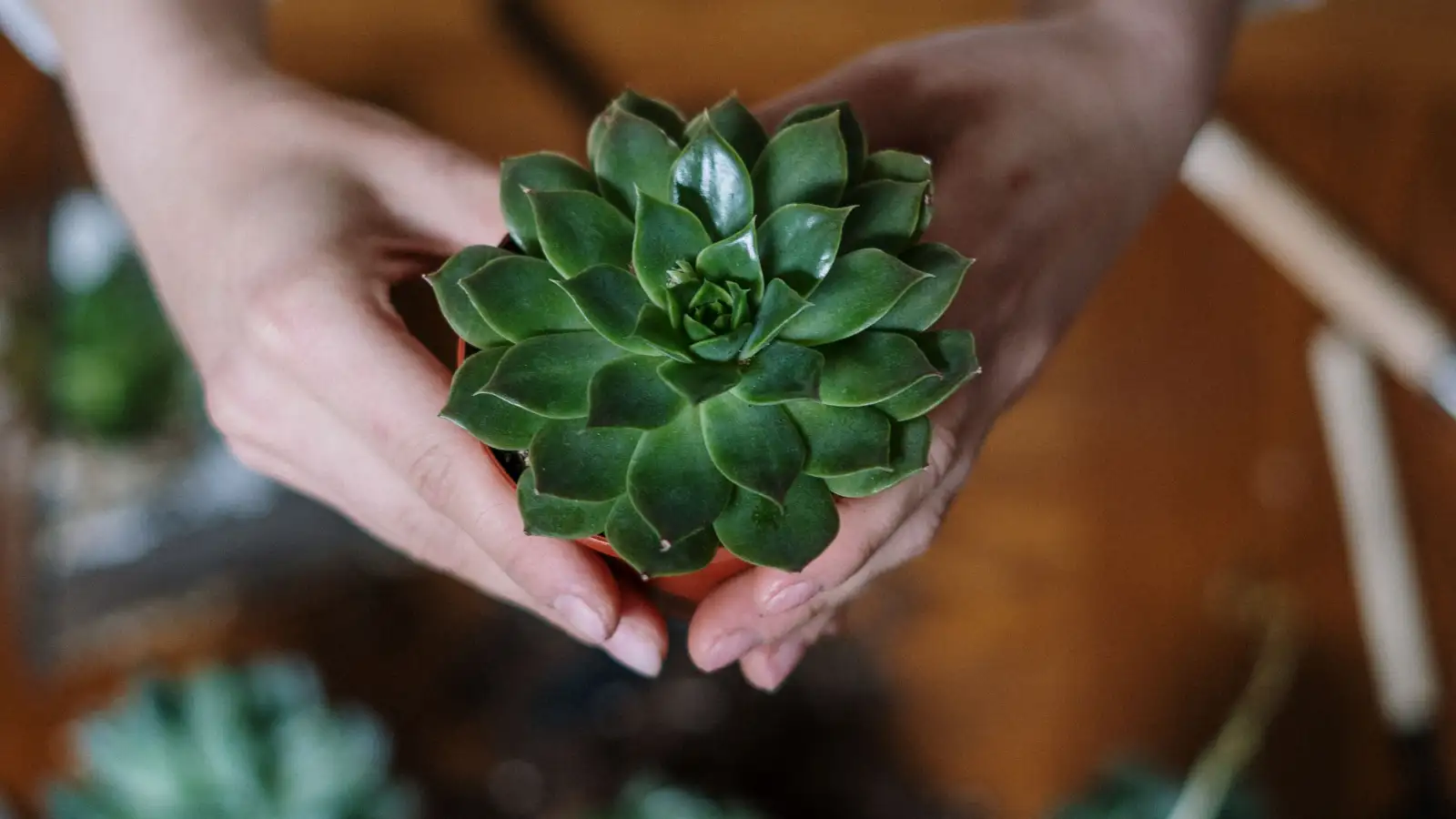
What the root ball tells you
I keep a sheet of newsprint on the bench and a dark plastic tray beside it for exactly this. Squeeze the sides of the pot, lay the plant on its side with one hand spread under the crown, and slide the pot off. If the mix is decent, most of it stays in a loose cylinder around the roots. If it is the peat-heavy stuff a nursery grew it in, it comes out as one wet brick and you have to work it apart with your fingers.
Do that work over the dark tray. The reason is contrast. Root mealybugs are white, and white on light brown mix under a bright kitchen light is nearly invisible. Against black plastic they show up immediately, and not as a dusting. It is a waxy, cottony coating packed into the crevices between roots and smeared along the root collar where the stem meets the soil. Some of it looks like tiny grains of rice. Some of it is just a grey-white film that scrapes off under a thumbnail the way candle wax does.
Perlite does not smear. That is the tell I use. If a white fleck crumbles to powder, it is part of the mix. If it streaks, it is an insect.
The roots themselves will be mixed. Some fine roots are pale and crisp and snap when you bend them. Others are tan and limp. Roots that mealybugs have been working on are usually clustered with wax and often brown and hollow, because the insect fed, the root died, and the plant lost that root's water uptake. The leaf fed by that root goes yellow.
This is where most people go wrong. A yellow leaf that came from a dead root looks exactly like a yellow leaf that came from too much water, because in both cases the plant cannot move water to the top. So the owner cuts back on watering. Then it gets worse, because now the plant is losing roots to a pest and drying out at the same time. I have done it. I have spent a month convinced a jade was overwatered when the real problem was crawling around under the surface the whole time.
The cotton and the bumps
Above-soil mealybugs gather where they are protected: in the leaf axils, under the lowest leaves, deep in the crown of a rosette, along the seam where two leaves meet. Look for white cottony clumps that are not fuzz from the plant. Smear one. It streaks slightly and feels tacky. That stickiness is honeydew, and honeydew brings the second problem: a black sooty film of mold that grows on the sugar. If the upper leaves have gone dull and there is a dark smudge you can wipe off with a wet paper towel, you are looking at the aftermath of a sap feeder, not sunburn.
Scale is quieter. On stems and on the undersides of leaves near the crown, it looks like small immobile bumps that appear to have grown out of the plant. Oval, tan or brown, sometimes just a shade darker than the stem. Flick one with a fingernail. A live scale pops off and leaves a small wet spot behind. A healed scar or a natural lenticel does not come off at all, or it flakes away dry. Ten seconds, and the question is settled.
Spider mites leave an entirely different signature. Look at the surface of the leaf rather than its color. Fine pale stippling, like someone pricked it with a pin over and over, and once the population is high, webbing in the crevices between leaves, around the crown, along the pot rim where a leaf touches. Mites do best in hot, dry, still air. Their damage is speckled and dry-feeling, and it never has the soft, translucent, water-soaked look of an overwatered leaf.
The order I fix it in
Strip the plant and throw the old mix away. Bag it, put it in the trash, do not compost it and do not shake it into the tray with your other pots. The insects live in the medium. That single step matters more than whatever you spray.
Wash the roots under lukewarm running water and work the wax off with your fingers or a soft brush. Trim anything brown and mushy back to firm tissue with clean snips. Then let the plant sit bare-root in shade for a day or two so the cuts callus over.
Swab the crown and axils with isopropyl alcohol on a cotton swab. The alcohol dissolves the wax and kills what it touches. It only works on contact, so it will not reach into crevices you cannot see. Plan on repeating it weekly for several weeks, because eggs hatch in waves.
Repot into fresh, gritty, fast-draining mix in a washed pot with a drainage hole. Fresh mix, clean pot. They came from the old soil; do not give them a return trip.
Quarantine it. Crawlers walk, and they will walk to the next pot on the shelf. Keep it on a different surface for three or four weeks and check the axils every time you water it.
If the infestation is heavy or the plant is one you would genuinely miss, a systemic product with imidacloprid as the active ingredient, applied as a soil drench or granules, moves through the plant and kills feeders over weeks rather than days. It is not a rescue for a plant already in freefall, and if that plant will ever flower outdoors, read the label's language on pollinators before you use it.
For above-ground insects, insecticidal soap or horticultural oil does the job only where it lands, so the spray has to coat the insect completely. Both can burn foliage in direct sun or in high heat, which is why I spray in the evening and keep the plant out of the window for a day. Follow the label. Forum recipes are how people lose plants.
And check for ants. Ants farm mealybugs and scale and carry crawlers from pot to pot. Ants on an indoor pot mean look at the plant, not at the ant.
When it is not pests, and when it is both
Honest limit first: if a plant drops its two oldest bottom leaves in summer, and those leaves go yellow and then thin and papery, that is the plant retiring old tissue. Normal. Overwatering also exists entirely on its own. The clear signs of a water problem are soft, translucent, glassy tissue; a base that squishes; soil that stays wet far longer than it used to; and yellow that appears right after you changed your watering. The clear signs of a pest are yellow paired with white wax, a tacky film, a sooty smudge, or webbing, especially on a plant that has been watered on the same schedule for months without complaint.
But here is the part that keeps people circling. The two are not exclusive. Root mealybugs do best in mix that stays damp, and a plant weakened by too much water is easier to colonize. Feeding wounds are open doors for rot. I have unpotted plants where the bottom of the root ball was rot and the top was mealybug, and treating only one of them would have lost the plant. If you find both, fix both: cut the rot, wash the roots, trash the mix, start clean.
One more limit worth saying out loud. Sometimes the right call is the bin. If the crown of a rosette is fully colonized, wax packed into the growing point and the base already soft, you are signing up for months of repeat swabbing to save a plant you could replace from a single leaf. Spend that effort on the ones you would actually miss.
Unpot first. It costs ten minutes and a sheet of newsprint, and it answers a question that a month of adjusting your watering schedule never will.
Educational content only: check with a qualified horticulturist, licensed pesticide applicator, or your local extension office before acting on anything specific.

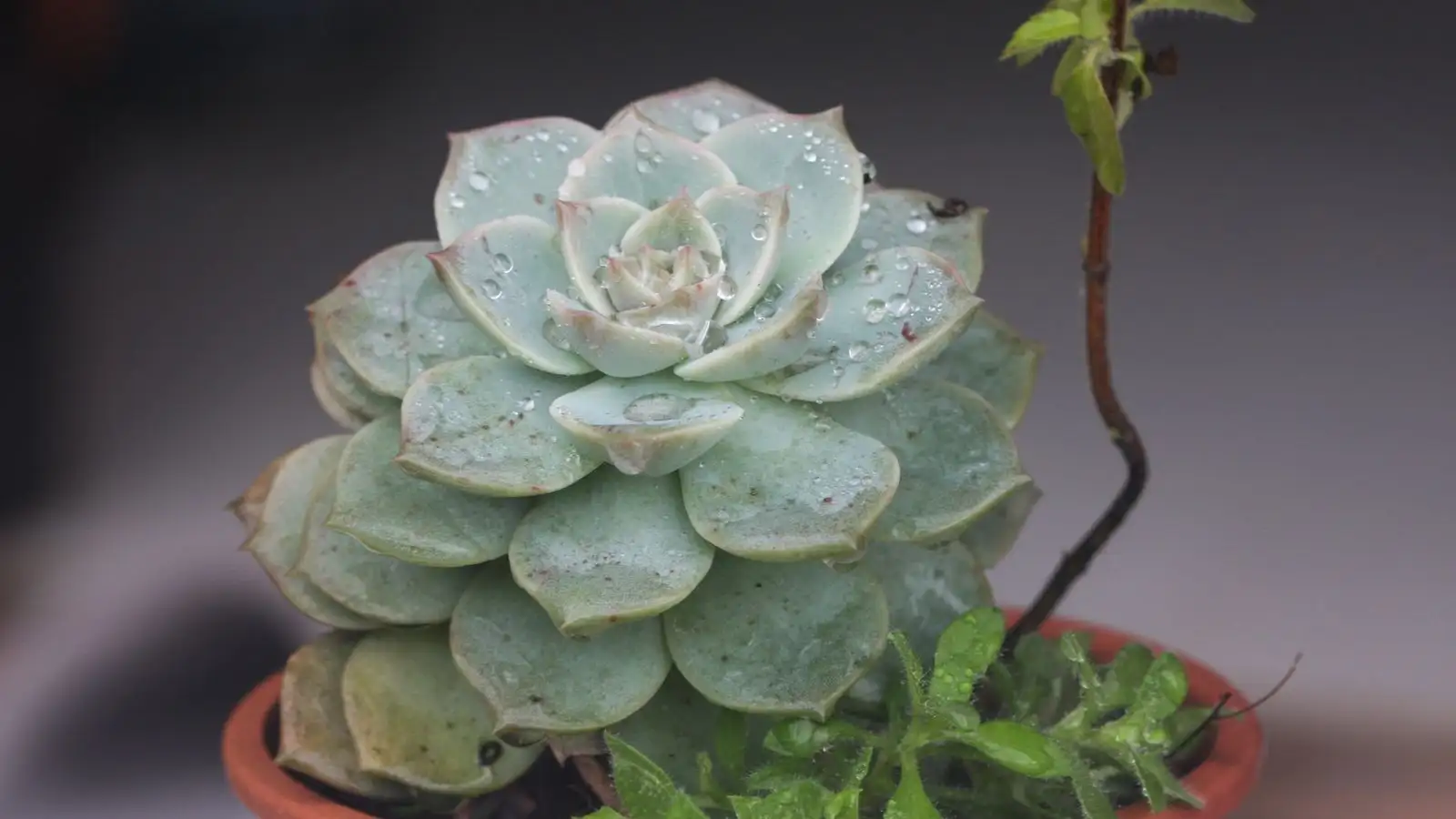
Your Succulent Turns Yellow and Soft, So Act in This Order
Squeeze the leaf where it meets the stem, then the stem at the soil line. Here's what that ten-second test means and how fast you need to act on it.
After the First Frost, Why Succulent Leaves Go Yellow
Cold injury shows up on sky-facing outer leaves a day or two after a freeze. Check the growing point in the center before you cut, move, or water anything.
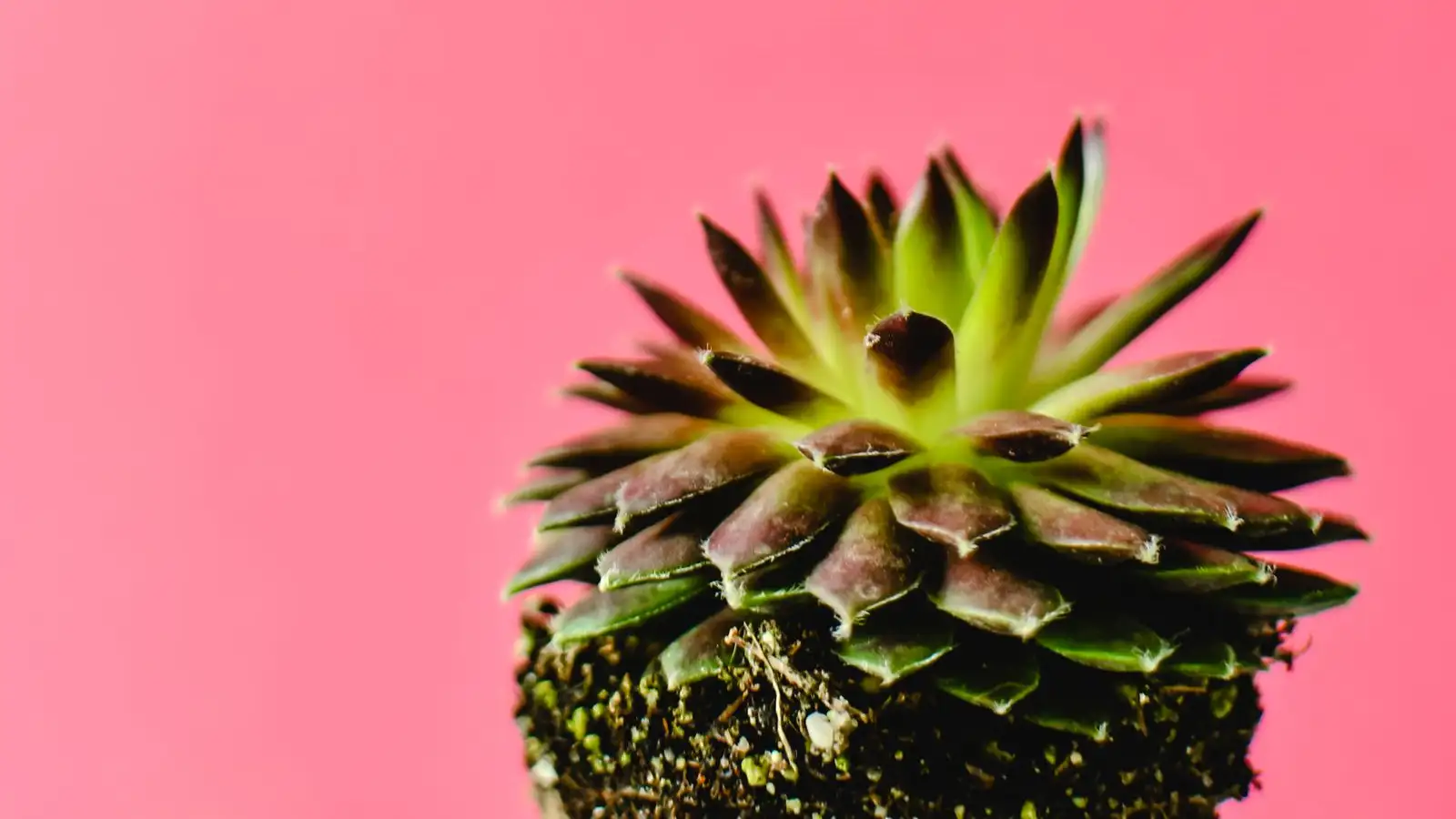
Yellow Leaves? Check the Roots Before You Cut the Stem
Yellow leaves on a soft succulent? Unpot first. Learn what healthy vs rotted roots look like, how far to cut, and when the cut face is ready for mix.
That Soft Yellow Leaf After Watering Isn't Rot — It's Edema
Raised corky blisters on lower succulent leaves after a deep soak are edema, not rot. How to tell them apart and why airflow beats spraying.
Don't Cut Every Yellow Leaf Off Your Succulent Yet
Yellow soft leaves never recover, but cutting too early can kill the plant. Confirm the cause first, then cut only firm green tissue to propagate.
Is a Squishy Stem Base on My Succulent Actually Rot?
Press the stem at the soil line, read the dent, and let the cut face tell you how far rot has traveled. A thumb test, a knife, and three verdicts.