Is a Squishy Stem Base on My Succulent Actually Rot?
A squishy stem base on a succulent is rot until your thumb and then a knife say otherwise, and the color of the leaves will not settle the question. Press the stem just above the soil line, then press again on the collar right where it disappears into the grit. If the tissue springs back and holds no dent, the plant is almost certainly fine, even with two or three yellow leaves at the bottom. If it gives under light pressure and stays dented, the rot started underground, and the only test left that means anything is a clean cut across the stem, taken an inch at a time, to see how high it has traveled.
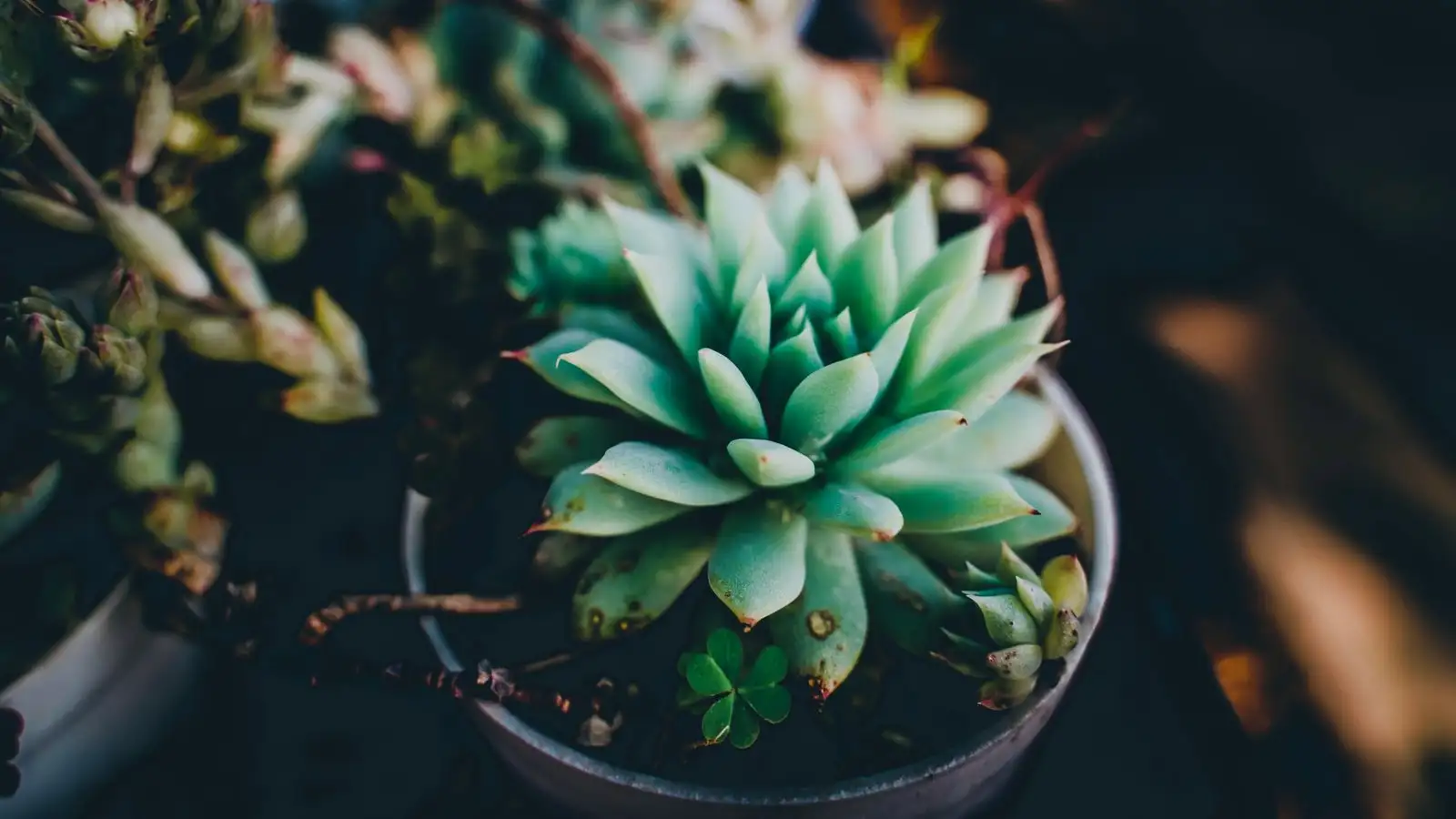
Where my thumb actually goes
I keep the plant on a sheet of newspaper on the kitchen counter, because this gets messy and I want to see what falls out. The pot comes out of the window, and the first thing I do is not look at it. I look at the base with my fingers. You should too.
Brush the top quarter inch of soil away from the stem with your index finger. Not a repot, not a root inspection, just push the grit back until you can see where green tissue ends and grit begins. That buried collar is where the interesting stuff happens, and on a lot of plants it is the only part of the base you've never actually looked at.
Now pinch. Thumb on one side, index finger on the other, at the level of the soil line, and squeeze about as hard as you'd squeeze a peach you're thinking of buying. Hold it a second. Let go. Then look at the spot you just squeezed and ask one question: did the dent stay?
A healthy base comes back. It might feel cool, it might feel dense, it might even feel slightly leathery if the plant has been dry for a month, but it fills out again and the surface goes smooth. A rotting base accepts the dent and keeps it, like a bruise in a peach. Sometimes the skin slides a little under your thumb, the way wet paper towel slides over a scrape. That sliding is the part that makes my stomach drop, more than the softness.
Soft and squishy are not the same word
This is the distinction I had to learn the slow way, and it's the one people skip.
Soft is a leather glove. It gives a little, it has some flex, it pushes back at you eventually. A plant that has gone two months without water has a soft base, and it is completely fine. So does a plant that was watered yesterday, in the other direction, because turgid tissue is swollen and firm rather than rock-hard. If you test right after watering you'll misread almost everything, which is why I aim for two or three days after a watering, when the tissue is settled.
Squishy is a grape. It doesn't push back. It has no spring, no resistance, and no opinion about your thumb. That's the verdict you're hunting for, and it's the one that means the knife comes out.
Press in four places, not one
Rot almost never starts evenly around a stem. It comes up from one section of the root system, so it arrives on one side first. A plant can be firm on the north face and mush on the south, and if you only squeeze once, in the spot that happens to be your habit, you'll call it healthy and lose a month.
So go around: soil line, a half inch up, other side, and then the underside of the crown, which is the bottom of the rosette where the leaves attach. That last one is the place rot shows up when it's already too late, and it's exactly the place nobody checks because you have to tip the pot toward you and look underneath. Tip the pot toward you and look underneath.
Three verdicts, three different afternoons
Firm base, thin dry yellow leaves at the bottom. Nothing is wrong. The oldest, lowest leaves on a succulent yellow and shrivel as the plant pulls water and nutrients back out of them. If the stem at the soil line is firm all the way around, those leaves are age and water turnover, not rot. I leave them until they're papery, then flick them off, and I do not change anything else about the plant's life because of them.
Firm above the soil, soft at and just below it. This is the common one, and it's the one where people fool themselves. The plant looks fine. The top is plump, the rosette is tight, the color is good. That's because rot starts below the soil line, in the roots, and works upward through the base. A succulent can look acceptable above ground for weeks while its base has already gone. When I find softness at the collar with firm tissue above it, I treat the roots as gone and I cut above the soft zone. The plant doesn't get to argue with me about it, because the top looking fine is exactly what a rotting base looks like from above.
Soft through, gives under the thumb like a grape. Rot is in the stem. That's not an afternoon of waiting to see; that's the knife today.
The cut is the only honest test
Here's what I do, and what I'd tell you to do at the counter with the newspaper under you.
A clean cut across a soft stem tells you more in two seconds than a week of watching. One slice, one pull, not a sawing motion that smears tissue. Then look at the face before it has time to oxidize on you.
Pale, firm, uniform, maybe a faint wet sheen like a cut apple. That's clean tissue. Whatever rot is in the plant has not reached that point, and it stops there.
Brown, black, watery, translucent, or crumbling. The rot has reached that point, and the face is telling you to go higher.
I take it in short sections, an inch or less at a time, and I check the face after every slice. It feels slow the first time. It stops feeling slow once you've cut three inches off a plant and found clean tissue on the fourth.
The dark ring is the part that fools people
Sometimes the cut face isn't obviously rotten. It's pale in the middle, pale near the edge, and then there's a ring, a thin dark outline running just inside the perimeter. Or the center is pale and there's a brown core running up the middle like a wick.
Either one means the rot has moved above the roots and is traveling inside the stem's vascular tissue. The plant is still structurally holding itself together, which is why the outside looked fine. This is the point where people stop cutting too early, pot the thing up, and find it collapsed a week later.
When I see a ring or a core, I wipe the blade and cut again, higher. And again, until the face comes up uniformly pale with no outline and no dark center. A pale face with a faint ring is a plant that needs one more slice, not a plant that needs a pot.
Wipe the blade. Every cut.
This is the one that matters most and gets skipped most.
The blade that just came out of rotting tissue is carrying that fungus on its surface. If you go straight back in for the next cut, you're dragging it up into the tissue above, which was clean a second ago. I keep a small glass of isopropyl on the counter and a rag, and I wipe the blade between every single slice. Not at the end. Between.
It costs you four seconds per cut, and it's the difference between a beheading that works and a beheading that just moves the rot two inches higher and gives it clean wood to move through. If you're going to do the cut at all, do the wipe.
What this test can't tell you
Being honest about the limits, because I've been wrong in both directions.
A firm stem base does not prove the roots are healthy. Root rot can sit in the root mass for a while before it climbs into the stem, and a plant with fully rotted roots and a firm base is a real thing. Different tell: the plant gets light in the pot, it rocks when you nudge the crown, or the whole thing lifts slightly because the roots aren't holding the soil. Firm base plus a wobbly plant means go look at the roots anyway.
And a soft base is not always rot. Plants just coming out of winter, plants that have been dry for two months, and seedlings with thin stems all read softer than a mid-summer plant two days after water. That's why the four-point check and the comparison against the other plants you handle matter. Your fingers calibrate on the plants you touch most often. If you only ever test a plant when you're worried about it, you have no baseline, and everything feels alarming.
On a caudex-forming plant or anything that naturally sits buried, the soil line is a different landmark than it is on a rosette succulent, and a soft neck above a fat root base means the same thing it means anywhere else. Cut above it.
The question at the top of this page has exactly one useful answer, and it isn't a color. Your thumb decides whether the knife comes out. The cut face decides how far up the plant gets to keep living.
Educational content only: check with a qualified horticulturist, licensed pesticide applicator, or your local extension office before acting on anything specific.

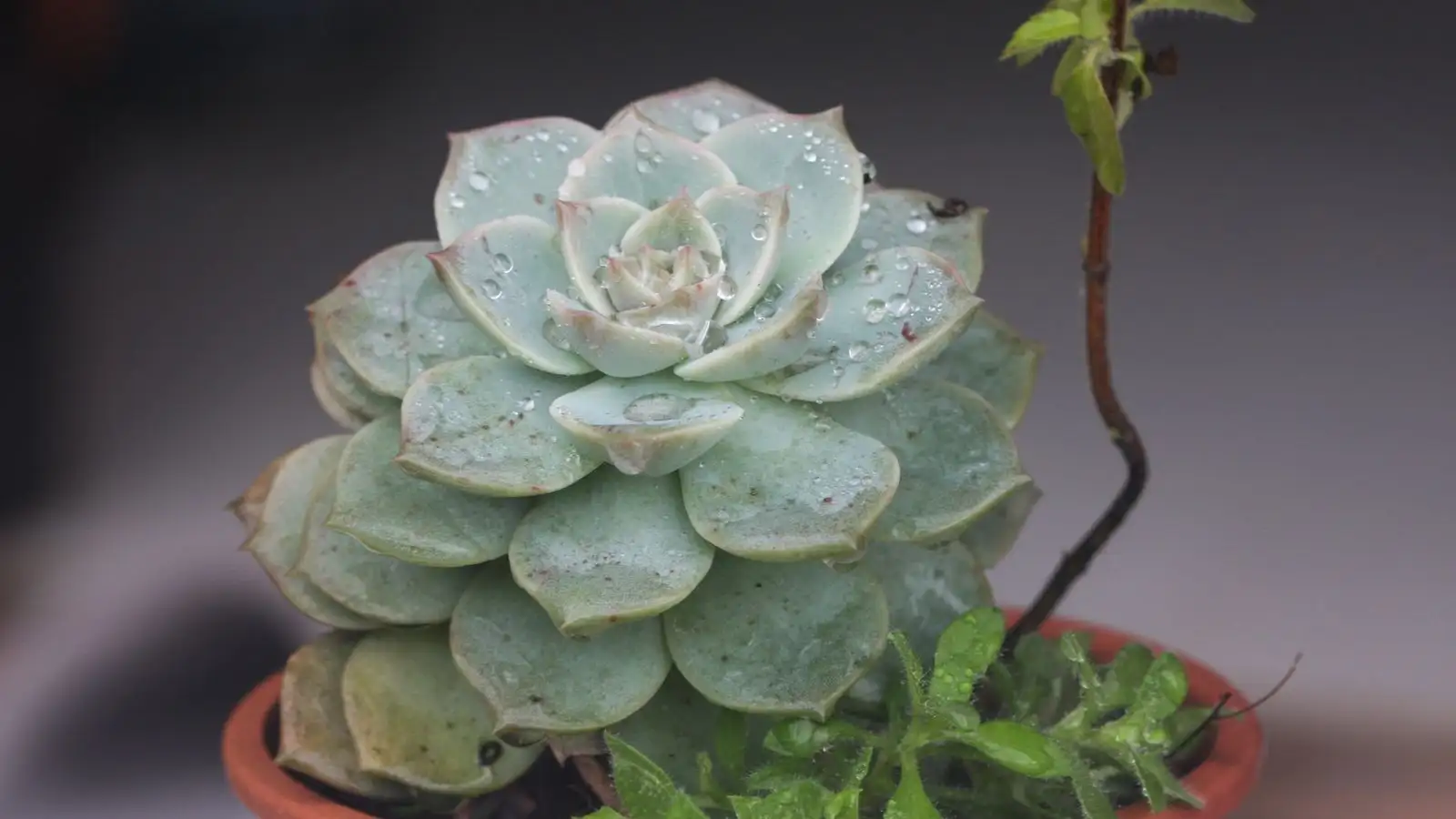
Your Succulent Turns Yellow and Soft, So Act in This Order
Squeeze the leaf where it meets the stem, then the stem at the soil line. Here's what that ten-second test means and how fast you need to act on it.
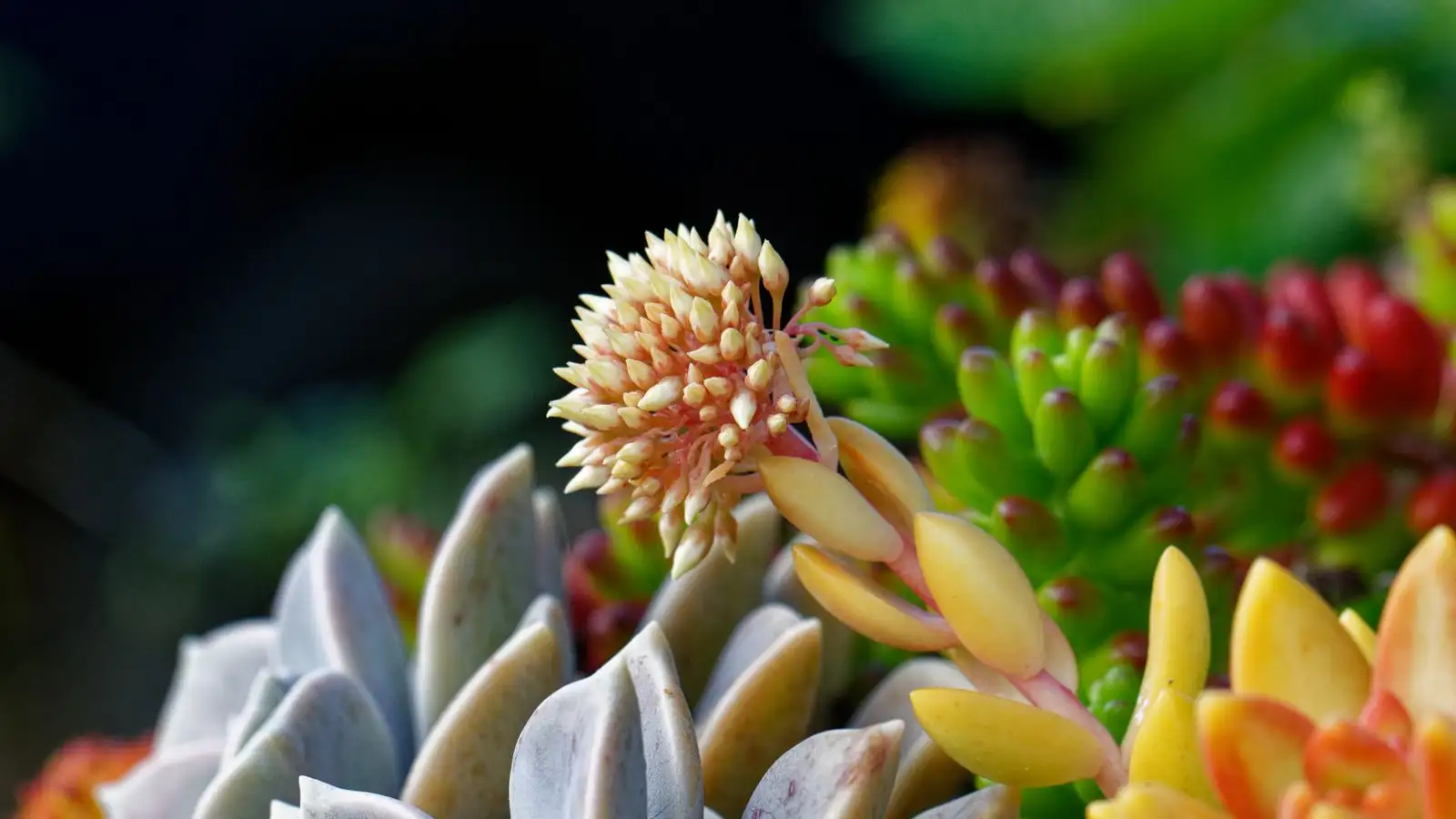
After the First Frost, Why Succulent Leaves Go Yellow
Cold injury shows up on sky-facing outer leaves a day or two after a freeze. Check the growing point in the center before you cut, move, or water anything.
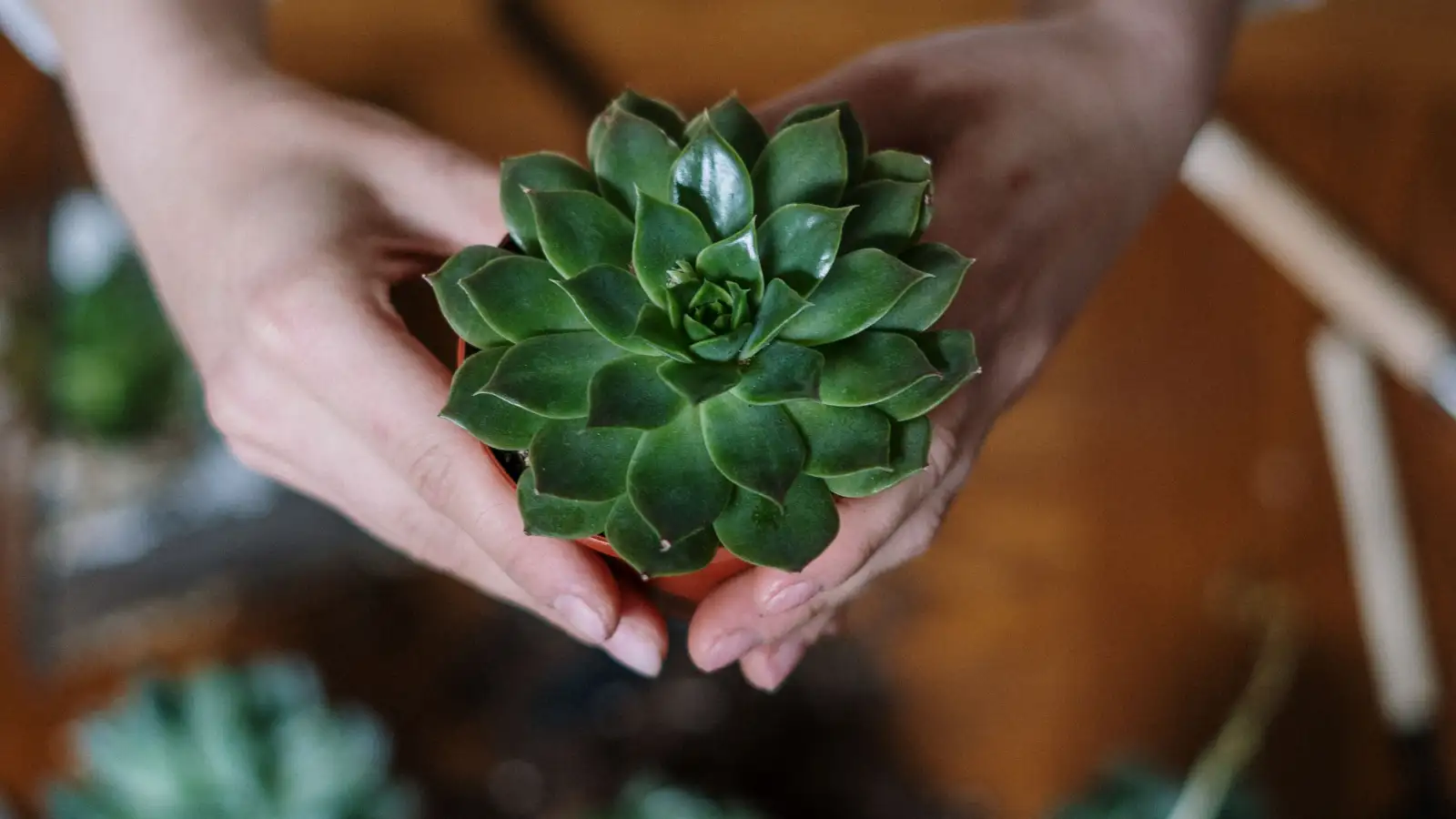
The Pest That Yellows Succulent Leaves From Below the Soil
Yellowing with no watering change usually means root mealybugs or scale feeding below the soil. How to check the root ball, read the wax, and treat.
Yellow Leaves? Check the Roots Before You Cut the Stem
Yellow leaves on a soft succulent? Unpot first. Learn what healthy vs rotted roots look like, how far to cut, and when the cut face is ready for mix.
That Soft Yellow Leaf After Watering Isn't Rot — It's Edema
Raised corky blisters on lower succulent leaves after a deep soak are edema, not rot. How to tell them apart and why airflow beats spraying.
Don't Cut Every Yellow Leaf Off Your Succulent Yet
Yellow soft leaves never recover, but cutting too early can kill the plant. Confirm the cause first, then cut only firm green tissue to propagate.