That Soft Yellow Leaf After Watering Isn't Rot — It's Edema
A soft yellow leaf on the lower, shaded part of a succulent, appearing right after a deep watering, is usually edema — a mechanical injury, not an infection. The roots pulled water up faster than the leaves could release it through transpiration, the leaf cells overfilled, and the ones that burst were sealed over by the plant with raised, corky scar tissue. Nothing needs to be sprayed. Rot is soft, translucent, and spreading, while edema is firm, rough, and stationary — so if the mark has a grainy raised texture and hasn't moved in a week, the fix is air moving across the pot and a watering rhythm that stops swinging from bone-dry to flooded.
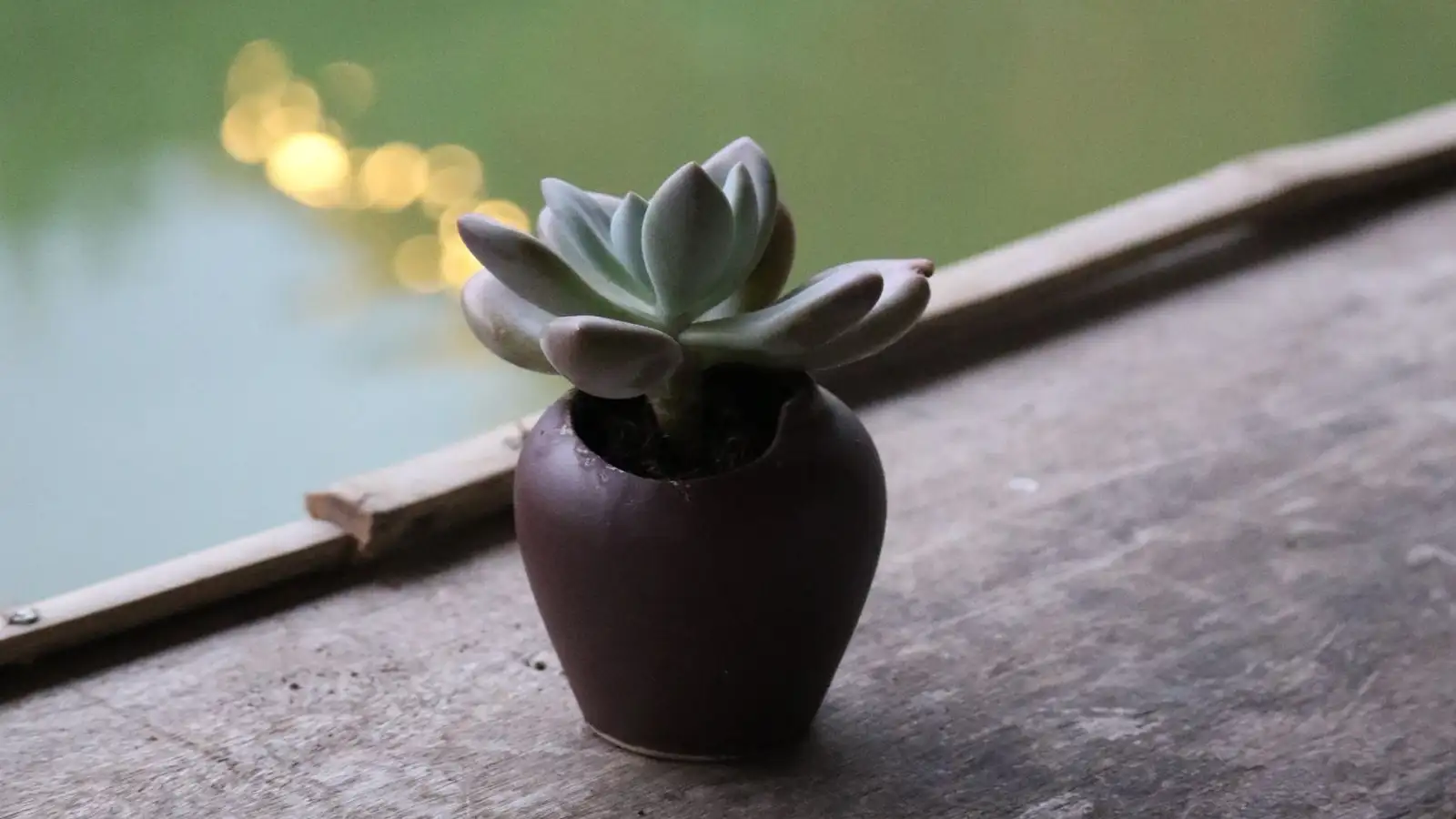
I check for it most mornings with a cup of coffee going cold on the windowsill. I tilt the pot toward the light and run my thumbnail along the underside of the lowest leaf, the one tucked under the canopy of newer growth. The morning after a heavy soak is when that leaf has something to say.
If it's edema, my thumbnail catches. There's a texture there — grainy, raised, sometimes like the skin of a toad and sometimes like fine sandpaper. It doesn't rub off, and it isn't wet. If I press it, it presses back. It has an edge, a line where the bumpy part stops and clean tissue starts. Sometimes the bumps trail along the midrib in a stitched line, following the veins, which makes sense once you know what made them.
Then I come back the next morning. Same edge. Same place. That's the whole diagnosis, honestly. Same place tomorrow.
What the mark actually is
Think about it as plumbing, not disease. Water moves into the roots by osmosis and gets pulled up through the xylem, and it leaves through the stomata as vapor. When the soil is suddenly wetter than the plant can keep up with, the water backs up in the leaf tissue. Cells in the mesophyll take on more water than their walls comfortably hold, and at some point the walls and the connections between cells give way. The leaking cell contents oxidize and darken, and then the plant does what it does with any wound: it suberizes the area, laying down cork.
Cork is the rough stuff. Cork is what you're feeling with your thumbnail.
The setup that produces it is almost always the same shape. A plant sits dry for a long stretch — a hot month, a forgotten vacation, a summer where I got lazy. Then it gets a thorough soak. The dried roots rehydrate fast, the soil goes from hydrophobic to saturated in one event, humidity in the room is high, air is still, and those old shaded leaves at the bottom aren't doing much transpiration anyway because they get the least light and the least airflow. Evening watering makes it worse, because the plant isn't pulling water out overnight. So does a cool wet stretch after a dry spell, and so does watering in a fresh repot hard on the first day.
The fresh stage looks alarming. A glassy, water-soaked patch, slightly darker than the leaf around it, like a bruise under the surface. Within a day or two it dries into a pale tan or grey crust. Give it a couple weeks and it's a permanent brownish scab, hard and dry, sitting on a leaf that is otherwise still plump and firm.
That's the other half of the signature: the leaf around the mark stays firm. It doesn't sink. It doesn't go limp at the base.
Rot reads completely differently under your hand
A leaf with rot bends. I can fold it between two fingers and it drapes, like a wet paper towel, and if I push with a thumb it gives way instead of resisting. The discoloration is soft and smeary — dark olive to black, sometimes with a translucent halo that creeps outward past the visible edge while I'm looking at it. Two days later it's bigger. Three days later the leaf has collapsed at the base and the stem underneath it feels loose in the pot.
And there's the smell. Sweet, sour, a little like a wet basement. Edema has no smell. It's dry cork on a live leaf.
So the three checks I run, in order: texture, edge, and time. Rough and raised = edema. Soft and smearing = rot. Same edge as yesterday = edema. New edge today = something else, and now I'm cutting.
Fungal and bacterial leaf spots will test you here, because they also have a defined edge early on. The difference is that they keep crossing tissue, and they often carry a ring — a darker margin with a lighter center, sometimes a yellow halo. They also show up on upper and newer leaves, not just the ones at the bottom that got shaded and overfilled.
Cold injury is the one that fools me
Both cold damage and edema leave translucent, water-soaked patches, and in the first day they look nearly identical. What separates them is what happened the night before. If a plant sat against a cold windowpane in January, or got left on a porch through a frost, that glassy patch is cold injury. If the plant spent the night in a warm room and the patch showed up after I watered it, it's edema. Edema doesn't care about the temperature. It cares about the watering event.
Cold injury also tends to hit the side that faced the glass, or the whole crown of a plant near a draft, and it can appear without any watering at all. Edema on a dry plant is not a thing.
What I actually do when I find it
The first thing is the hardest one, which is to do nothing except stop. Yellow and soft after watering reads as rot to most people, and the instinct is to water again because the leaf looks like it needs help. That's the move that turns a cosmetic scar into a real problem. The tissue is already wounded and the yellowing around it is chlorophyll breaking down. More water just refills the same bottleneck.
The second thing is air. I keep a small clip fan running on low, oscillating, aimed so it moves air across the pot rather than blasting the plant. The goal is to keep the boundary layer around the leaves from sitting still and humid. Pots that sit in a dead corner against a wall get moved. A crowded shelf of plants packed shoulder to shoulder with no gap between pots is a humid microclimate, and spacing them out costs nothing.
The third thing is flattening the swing. Not a schedule — the swing is the problem. A plant that goes bone-dry and then gets flooded is going to edema again, and one that gets moderate water at a steadier interval mostly won't. I water in the morning when the plant is going to be transpiring all day rather than at night when it isn't. And I lean toward a gritty, fast-draining mix, because a mix that holds water in a dense pocket right under the crown keeps the roots wet long after the leaves have stopped pulling. Repotting into something coarser and more open isn't a cure, but it lowers how often this shows up.
One caveat I've earned the hard way: cracked epidermis is a doorway. If an edema patch splits the leaf surface open and stays wet, that's an entry point for fungus. It doesn't happen often, and it's not a reason to spray preemptively — but it is a reason to keep watching a plant instead of writing it off as cosmetic and forgetting about it for a month.
The other thing I'd tell anyone: don't pick at the cork. I've peeled one off to see what was underneath, and it tears healthy tissue with it and leaves a bigger wound than the one I started with. Spraying a fungicide on it does nothing, because there's no pathogen to kill, and wetting the leaf feeds the exact condition that caused the injury.
What doesn't come back
The scar is permanent. That leaf will not go back to green, and no amount of fixing the watering will reverse it. I leave those leaves on unless they're shading new growth or fully spent, because a scabbed leaf is still photosynthesizing and still feeding the plant.
The proof that you've got it right is new growth. Tight, evenly colored, no blisters, no glassy patches. When a rosette pushes a clean set of leaves through a watering cycle that would have marked it up a month ago, the airflow and the flatter watering are working. The old scars stay as a record. The scars are ugly and they're also harmless, and the only real mistake is mistaking them for something that needs a spray bottle.
Educational content only: check with a qualified horticulturist, licensed pesticide applicator, or your local extension office before acting on anything specific.

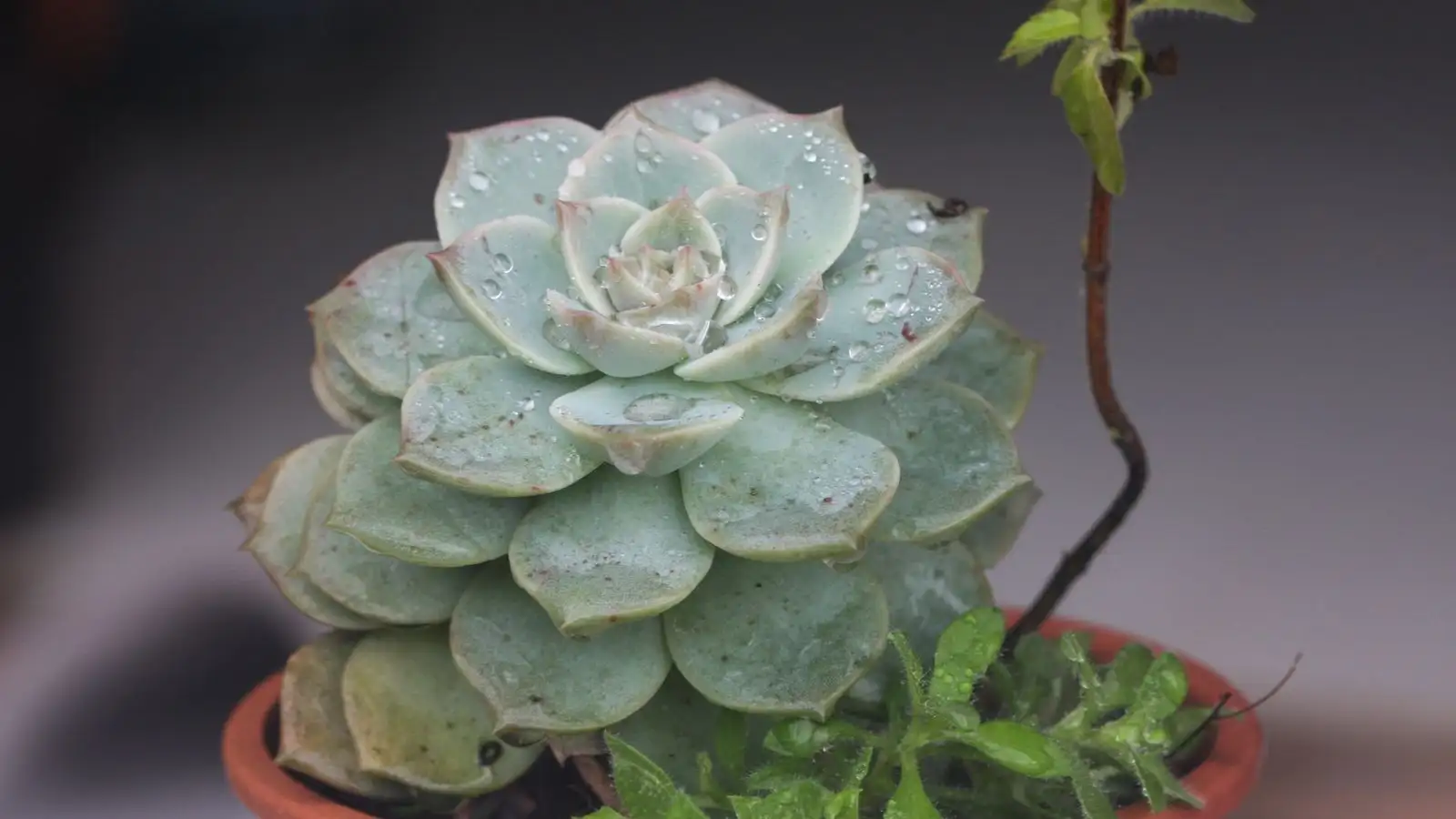
Your Succulent Turns Yellow and Soft, So Act in This Order
Squeeze the leaf where it meets the stem, then the stem at the soil line. Here's what that ten-second test means and how fast you need to act on it.
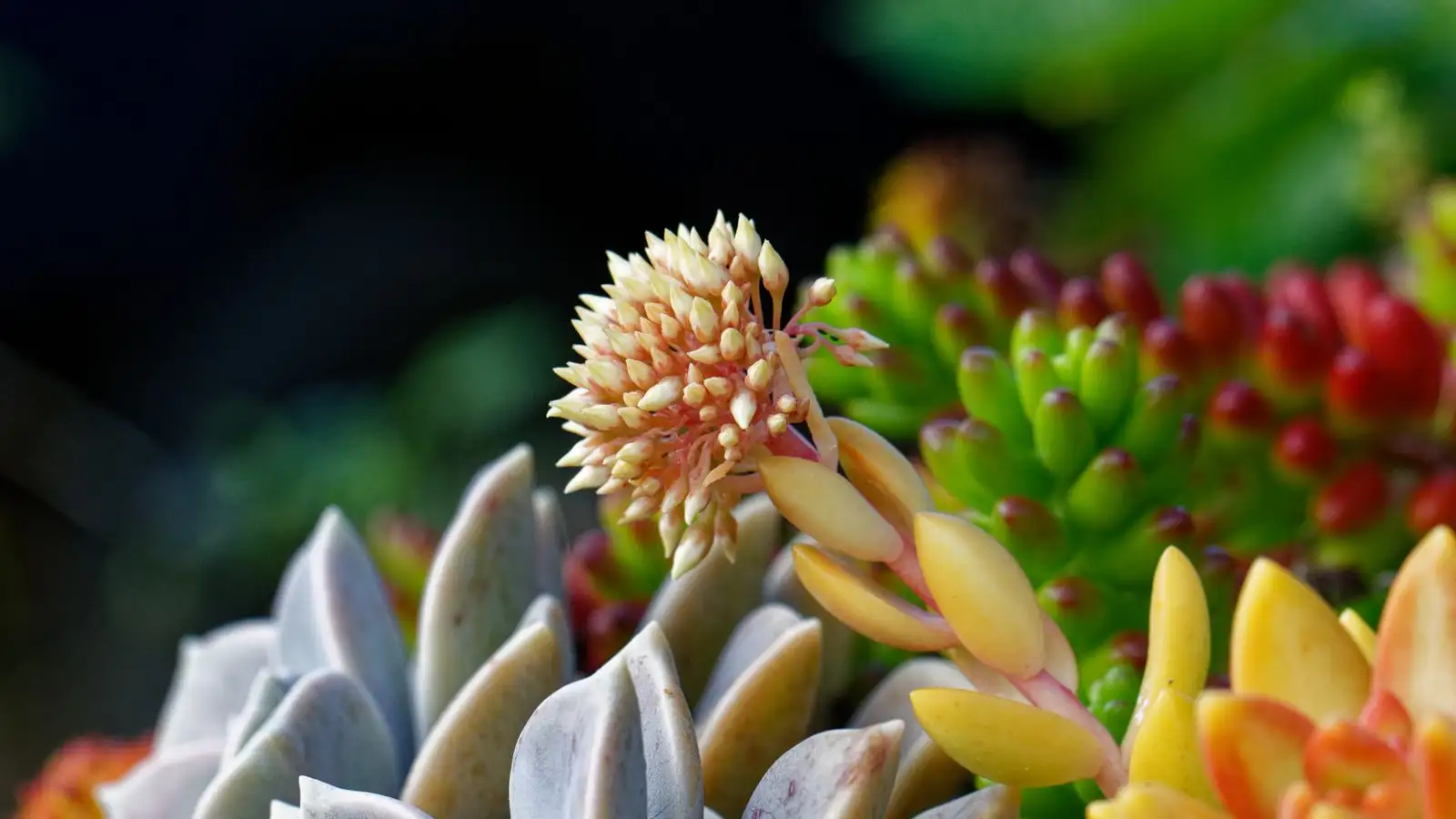
After the First Frost, Why Succulent Leaves Go Yellow
Cold injury shows up on sky-facing outer leaves a day or two after a freeze. Check the growing point in the center before you cut, move, or water anything.
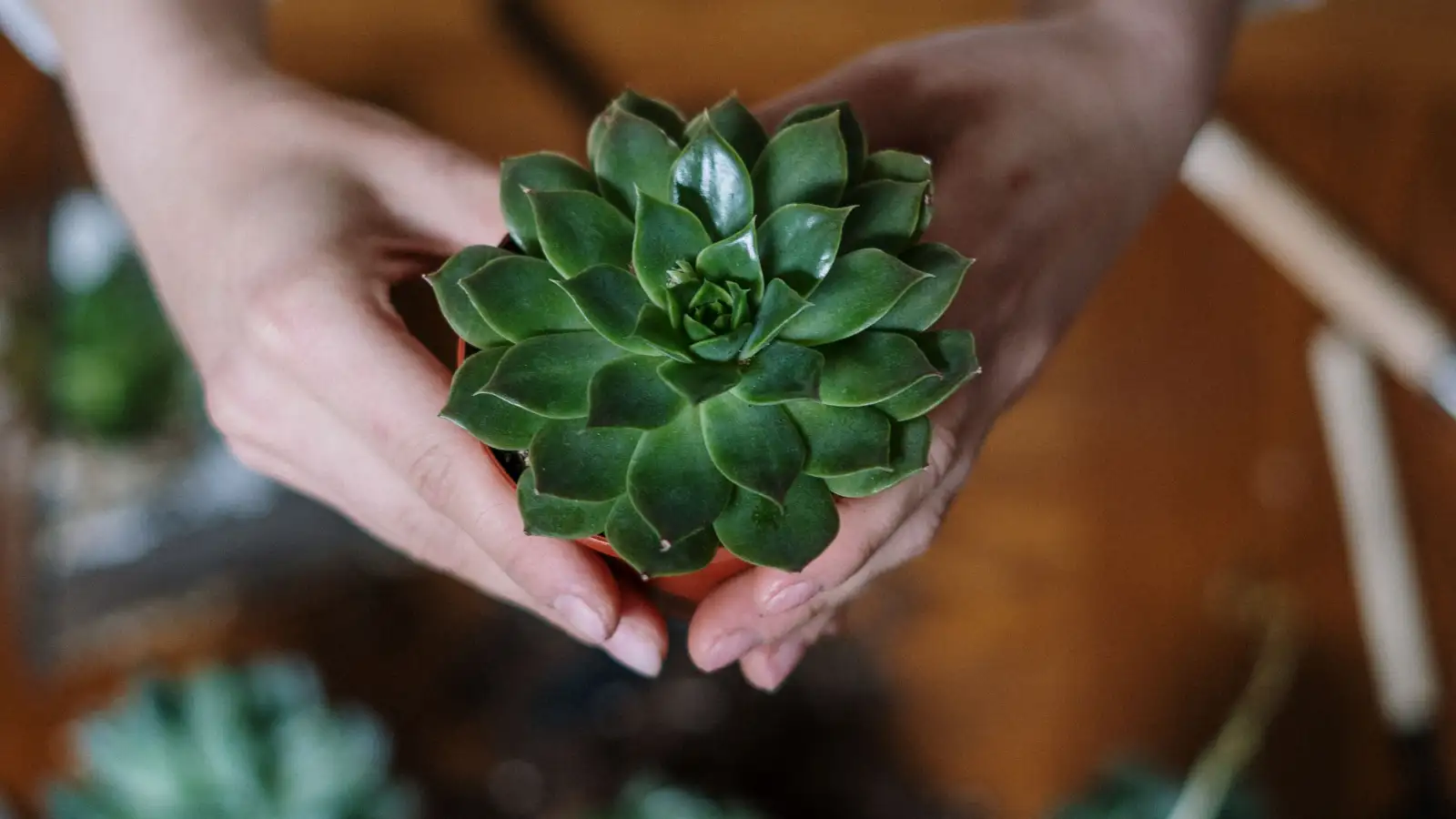
The Pest That Yellows Succulent Leaves From Below the Soil
Yellowing with no watering change usually means root mealybugs or scale feeding below the soil. How to check the root ball, read the wax, and treat.
Yellow Leaves? Check the Roots Before You Cut the Stem
Yellow leaves on a soft succulent? Unpot first. Learn what healthy vs rotted roots look like, how far to cut, and when the cut face is ready for mix.
Don't Cut Every Yellow Leaf Off Your Succulent Yet
Yellow soft leaves never recover, but cutting too early can kill the plant. Confirm the cause first, then cut only firm green tissue to propagate.
Is a Squishy Stem Base on My Succulent Actually Rot?
Press the stem at the soil line, read the dent, and let the cut face tell you how far rot has traveled. A thumb test, a knife, and three verdicts.